Dhaka 4:37 am, Sunday, 19 April 2026

Trump vs. Zelensky: Who stands where after the heated White House meeting?

Reporter Name
  • Update Time : 05:10:16 am, Saturday, 1 March 2025
  • / 588 Time View

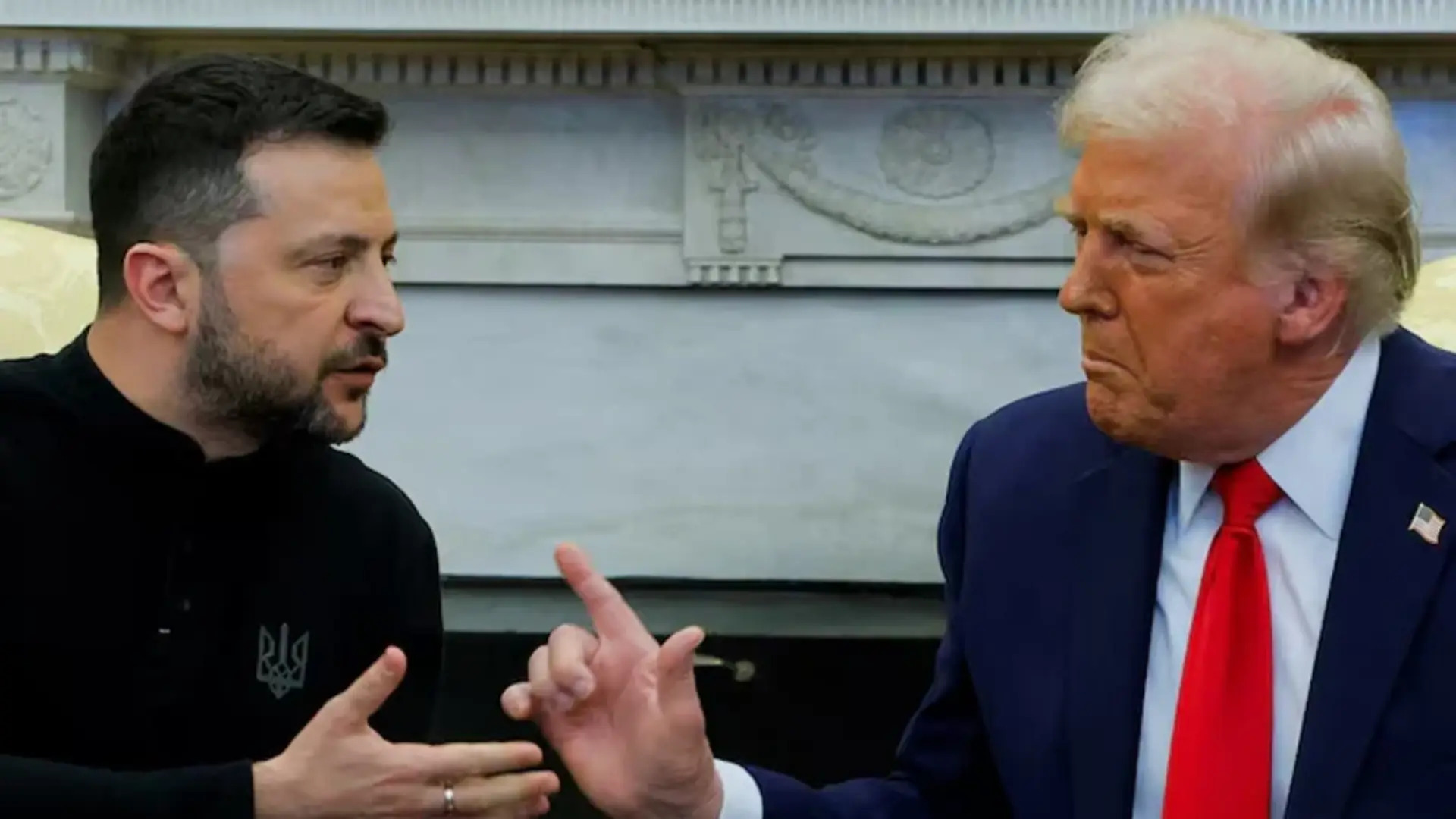
A heated exchange and chaos marked the meeting between Ukrainian President Volodymyr Zelensky and former U.S. President Donald Trump at the White House, drawing global reactions, as reported by Reuters.


Following the confrontation on Friday (February 28), Zelensky posted on X, thanking the U.S., its president, Congress, and citizens for their support, emphasizing Ukraine’s need for peace and commitment to achieving it.


Canadian Prime Minister Justin Trudeau reaffirmed Canada’s support for Ukraine, condemning Russia’s “illegal and unjust” invasion and highlighting Ukraine’s fight for democracy, freedom, and sovereignty. German Chancellor Olaf Scholz stressed that no one desires peace more than Ukrainians and reassured Ukraine of Germany and Europe’s backing in pursuing a just peace.


French President Emmanuel Macron, speaking in Portugal, acknowledged Ukraine’s suffering due to Russia’s aggression and recalled the initial challenges of aiding Ukraine and imposing sanctions on Russia. He insisted that nations supporting Ukraine—such as the U.S., Europe, Canada, and Japan—deserve respect for defending Ukraine’s sovereignty and security.


Italian Prime Minister Giorgia Meloni warned that divisions among Western allies weaken their position, benefiting those seeking the collapse of their civilization. She called for an urgent meeting among the U.S., Europe, and allies to address the ongoing crisis.


UK Prime Minister Keir Starmer’s spokesperson reaffirmed Britain’s unwavering support for Ukraine’s security and sovereignty, committing to a peaceful resolution for Kyiv. Australian Prime Minister Anthony Albanese echoed similar sentiments, pledging continued support for Ukraine’s fight against authoritarian aggression.


Hungarian Prime Minister Viktor Orbán expressed support for Trump, arguing that strong leaders establish peace while weak ones incite war, praising Trump’s “bold stance” for peace.


Danish Foreign Minister Lars Løkke Rasmussen noted that while friends may have tough discussions, public confrontations only serve Kremlin interests.


European Commission President Ursula von der Leyen reassured Zelensky that his dignity reflects the courage of the Ukrainian people and that he is not alone. Moldovan President Maia Sandu emphasized that Russia’s invasion is a clear act of aggression, and Ukraine is not only defending its freedom but also protecting others.


Polish Prime Minister Donald Tusk extended solidarity, stating, “Dear Zelensky, dear Ukrainian friends, you are not alone.”


These global reactions underscore the West’s firm backing of Ukraine despite the recent diplomatic turbulence at the White House.
 

Please Share This Post in Your Social Media

Trump vs. Zelensky: Who stands where after the heated White House meeting?

Update Time : 05:10:16 am, Saturday, 1 March 2025

A heated exchange and chaos marked the meeting between Ukrainian President Volodymyr Zelensky and former U.S. President Donald Trump at the White House, drawing global reactions, as reported by Reuters.


Following the confrontation on Friday (February 28), Zelensky posted on X, thanking the U.S., its president, Congress, and citizens for their support, emphasizing Ukraine’s need for peace and commitment to achieving it.


Canadian Prime Minister Justin Trudeau reaffirmed Canada’s support for Ukraine, condemning Russia’s “illegal and unjust” invasion and highlighting Ukraine’s fight for democracy, freedom, and sovereignty. German Chancellor Olaf Scholz stressed that no one desires peace more than Ukrainians and reassured Ukraine of Germany and Europe’s backing in pursuing a just peace.


French President Emmanuel Macron, speaking in Portugal, acknowledged Ukraine’s suffering due to Russia’s aggression and recalled the initial challenges of aiding Ukraine and imposing sanctions on Russia. He insisted that nations supporting Ukraine—such as the U.S., Europe, Canada, and Japan—deserve respect for defending Ukraine’s sovereignty and security.


Italian Prime Minister Giorgia Meloni warned that divisions among Western allies weaken their position, benefiting those seeking the collapse of their civilization. She called for an urgent meeting among the U.S., Europe, and allies to address the ongoing crisis.


UK Prime Minister Keir Starmer’s spokesperson reaffirmed Britain’s unwavering support for Ukraine’s security and sovereignty, committing to a peaceful resolution for Kyiv. Australian Prime Minister Anthony Albanese echoed similar sentiments, pledging continued support for Ukraine’s fight against authoritarian aggression.


Hungarian Prime Minister Viktor Orbán expressed support for Trump, arguing that strong leaders establish peace while weak ones incite war, praising Trump’s “bold stance” for peace.


Danish Foreign Minister Lars Løkke Rasmussen noted that while friends may have tough discussions, public confrontations only serve Kremlin interests.


European Commission President Ursula von der Leyen reassured Zelensky that his dignity reflects the courage of the Ukrainian people and that he is not alone. Moldovan President Maia Sandu emphasized that Russia’s invasion is a clear act of aggression, and Ukraine is not only defending its freedom but also protecting others.


Polish Prime Minister Donald Tusk extended solidarity, stating, “Dear Zelensky, dear Ukrainian friends, you are not alone.”


These global reactions underscore the West’s firm backing of Ukraine despite the recent diplomatic turbulence at the White House.