Rooppur Nuclear Plant’s First Unit Supplies 350 MW to National Grid in Trial Run

- Update Time : 10:38:36 am, Tuesday, 17 November 2026
- / 55 Time View
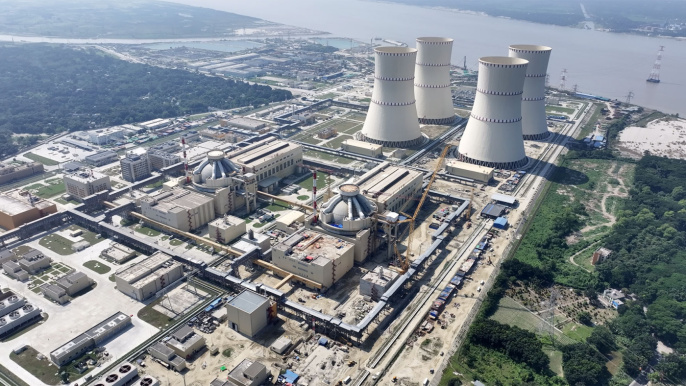

Electricity generated by the first unit of Bangladesh’s first nuclear power plant, the Rooppur Nuclear Power Plant, has been connected to the national grid on a trial basis following a lengthy process of technical operations and complex testing.
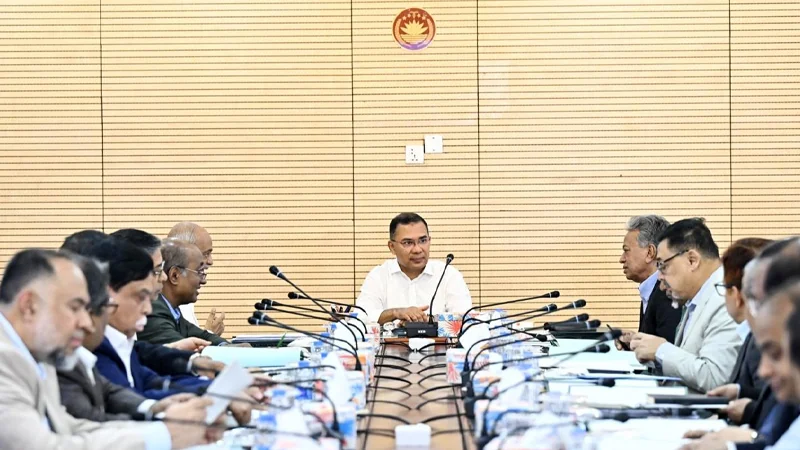
The unit began supplying 350 megawatts of electricity to the national grid for the first time at 3:00pm on Tuesday in the presence of Science and Technology Minister Fakir Mahbub Anam.
The trial connection marks a significant milestone in the plant’s power generation and grid integration process. Under the initial testing plan, electricity will be supplied to the national grid for approximately eight to 10 hours.
During this period, engineers will conduct key technical tests to assess the performance and stability of the plant’s turbine, generator and integrated operational systems connected to the national grid.
The plant will subsequently be disconnected from the national grid for further technical examinations. After a break of approximately 28 hours, it will be reconnected for another four to six hours to complete necessary technical and operational tests.
At every stage, the performance of different plant systems, the turbine and generator, and their coordination with the national grid will be closely examined.
If the results of all technical tests are satisfactory and the scheduled work at this stage is completed, the plant will require approval from the Bangladesh Atomic Energy Regulatory Authority (BAERA) before proceeding to the next phase of trial operations.
Subject to BAERA’s approval, the plant will be reconnected to the national grid on a trial basis to continue the next stage of electricity supply.
Under the agreement with the Russian contractor, the first unit will undergo a 10-month trial operation. Once the process is completed, the unit is expected to begin commercial electricity supply at full capacity on a permanent basis. The first unit will then be temporarily handed over from the Russian contractor to the Bangladesh Atomic Energy Commission.
Subsequently, the Nuclear Power Plant Company Bangladesh Limited (NPCBL) will begin operating as the plant’s designated operator following a government notification.
Each of the two units at the Rooppur Nuclear Power Plant has a generation capacity of 1,200 megawatts, giving the facility a combined capacity of 2,400 megawatts. The plant is expected to make a significant contribution to meeting the country’s growing electricity demand, strengthening energy security and ensuring sustainable power generation.
The trial grid connection is being viewed as a historic step forward for Bangladesh’s power and energy sector, marking further progress in the country’s adoption of nuclear power generation technology.
Trial Connection Does Not Mean Full Commercial Operation
The grid connection of the first unit means that electricity generated by the unit is being supplied to the national power grid for the first time on a trial basis. However, this does not mean the plant is beginning full-scale commercial operation.
Rather, it marks the beginning of a phased testing process to gradually increase the unit’s generation capacity in accordance with the guidelines and standards of the International Atomic Energy Agency (IAEA).
At this stage, the first unit will supply approximately 350 megawatts of electricity to the national grid for several hours, in compliance with design and regulatory requirements. Further licences and approvals from BAERA will be required to gradually increase generation capacity to 100 per cent.
It may take several months to raise the unit’s generation capacity to full output. During this period, the functionality of critical equipment, including the reactor, turbine and generator, as well as automated control systems, will be tested and evaluated.
For these tests, the first unit will be temporarily shut down at planned intervals, while electricity generation and supply may be increased or reduced as required. However, consumers will be able to use the electricity supplied to the grid throughout the testing period.
The plant will not be able to ensure uninterrupted and stable baseload electricity supply to the national grid during the trial phase. To maintain grid balance amid temporary shutdowns and fluctuations in electricity supply from the first unit, the grid operator, PGCB, will take the necessary measures.