Bangladesh Among Top Four Countries Facing Severe Food Insecurity : UN Report

- Update Time : 04:08:49 pm, Monday, 4 August 2025
- / 572 Time View

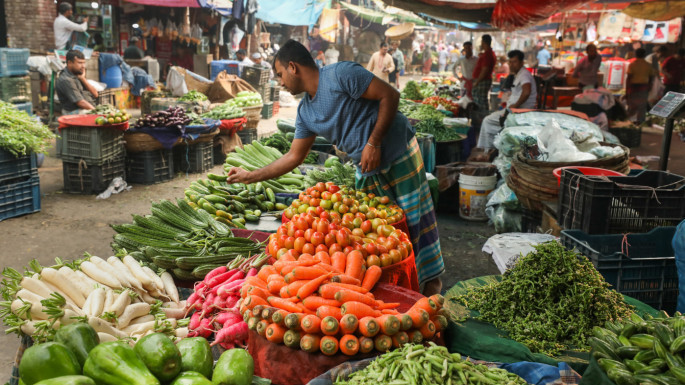
Bangladesh has been ranked fourth globally in terms of severe food insecurity, according to the Global Report on Food Crisis 2025, released jointly by five United Nations agencies—FAO, IFAD, WFP, WHO, and UNICEF.
In a separate FAO assessment, Bangladesh was again listed among the top ten countries most affected by food crises, placing it behind only Nigeria, Sudan, and the Democratic Republic of the Congo.
Millions Lack Access to Healthy Diets
Despite some gains in recent years, the situation remains dire. The reports indicate that around 77.1 million people in Bangladesh still lack access to a nutritious, balanced diet. Moreover, over 10% of the population remains malnourished, though this figure has dropped from 15.1% in 2004–2006 to 10.4% in 2022–2024.
The cost of maintaining a healthy diet in Bangladesh has also increased, reaching $4.49 per person per day, up from $4.33 the previous year. This is the second-highest in South Asia, just behind Bhutan. The estimate is based on the minimum daily requirement of 2,330 kilocalories using locally sourced food.
Regional Context
Within South Asia, Bangladesh fares better than Pakistan—where 60% of the population lacks access to a healthy diet—but worse than India (40%), Nepal (9%), and Sri Lanka (7.4%). The Maldives performs best in the region, with only 1% of its population affected.
Among children under five in Bangladesh:
-
10% are underweight
-
25% are stunted (short for their age)
For comparison:
-
India: 33% stunted
-
Pakistan: 37%
-
Nepal: 25%
-
Afghanistan: 28%
National Reaction
In response to the findings, Bangladeshi officials pushed back, citing the country’s strong food stockpiles and questioning the data methodology.
“We maintain adequate reserves,” said Md Mahbubur Rahman, Director General of the Food Planning and Monitoring Unit. “We plan to engage with the UN to better understand how Bangladesh ended up so high on this list. This may reflect issues of affordability and access, rather than availability.”
Economist Dr. Hossain Zillur Rahman offered a critical perspective: “The state has focused on macroeconomic indicators while neglecting real, household-level food insecurity. Many people are quietly reducing their food intake, not by choice but out of necessity.”
Global Landscape
The FAO estimates that 295 million people across 53 countries and regions are currently facing acute food insecurity. In terms of total affected population, Bangladesh ranks fourth. However, in proportional terms, Gaza, South Sudan, Yemen, and Haiti are the worst affected—Gaza being the most extreme case, with 100% of its population experiencing food crisis conditions.
A Call for Systemic Change
Despite advances in food production and income levels over the past few decades, the latest reports underline that Bangladesh’s food security challenges are far from resolved. Experts warn that addressing access, affordability, and nutrition must now be prioritized as part of national policy reform.