Dhaka 6:00 pm, Friday, 26 June 2026

Contractor Irregularities Push Million-Dollar Highway Toward Ruin

Niloy Mridha
  • Update Time : 06:16:20 am, Sunday, 24 August 2025
  • / 507 Time View

Highways Crumble Under Monsoon, Floods, and Overloaded Trucks Despite Rising Budgets

Every year, Bangladesh’s highways collapse under the combined strain of seasonal monsoon rains, recurring floods, and the relentless pressure of overloaded freight trucks. Yet, despite increased allocations, only a fraction of government funds are actually spent on repairs. The result: highways riddled with potholes, slowing trade, damaging vehicles, and turning daily commutes into ordeals.


Following last year’s political upheaval, the Roads and Highways Department (RHD) blacklisted several contractors linked to the previous ruling party over corruption allegations. The move revealed just how dependent road maintenance had become on a powerful network of politically connected firms. Repair and renovation across much of the country stalled as a result.


Repair Funds Remain Unused


For fiscal year 2024–25, the government allocated Tk 2,615 crore for highway repairs. Only 42% of that (Tk 1,095 crore) has been utilized. Out of a target of 2,200 kilometers of road repairs, more than 1,200 kilometers remain neglected.


By comparison, nearly the entire Tk 2,100 crore allocation was spent the previous year. Officials cite contractor blacklisting and tendering delays in the aftermath of the 2024 uprising as major reasons for the shortfall.


One senior RHD official admitted:


> “Routine and periodic maintenance virtually stopped. Tender evaluations dragged on, complaints piled up, and in many areas reliable contractors were simply unavailable.”


Case Study: Khulna–Satkhira Highway


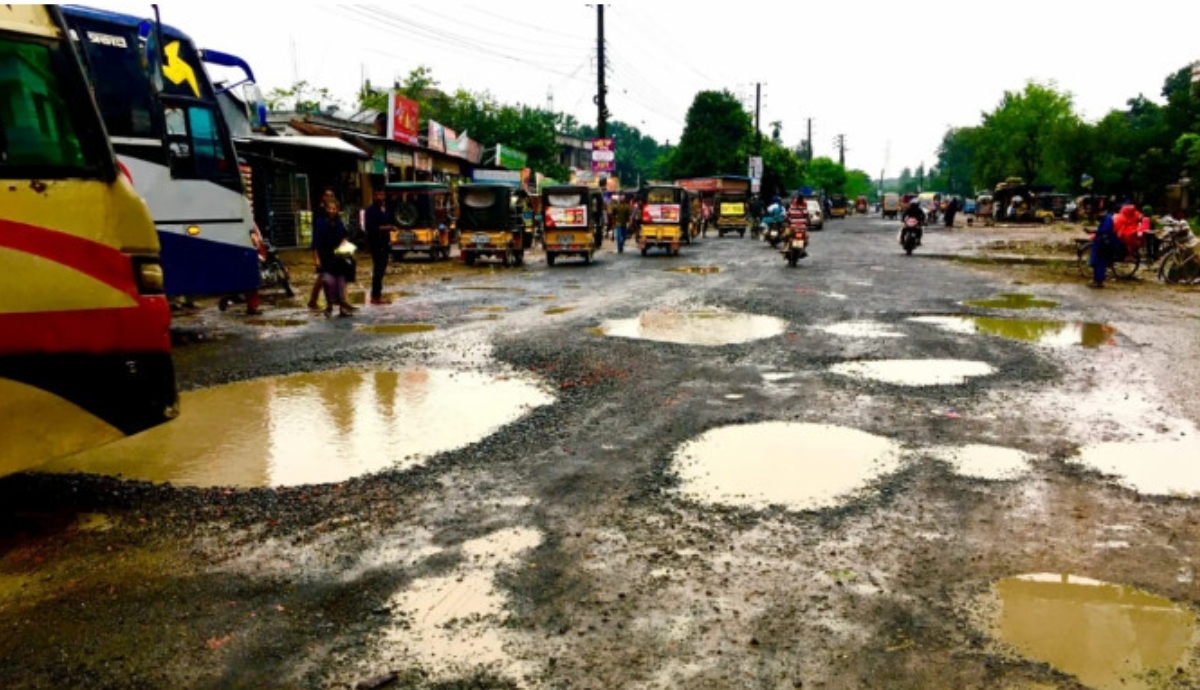
Perhaps nowhere is the crisis more visible than on the Khulna–Satkhira highway. From the Zero Point to Koya, what should be a national highway now looks more like a muddy track. Asphalt has peeled away, huge craters fill with rainwater, and vehicles crawl at walking speed.


The situation is equally dire on the Jessore–Khulna, Satkhira–Shyamnagar, Elenga–Hatikumrul–Rangpur, and Dhaka–Sylhet highways.


Business and Agriculture Hit Hard


The Jessore–Khulna road from Basundia to Chingutia (five kilometers) is nearly impassable. Constant rains have turned potholes into mud traps. Thousands of vehicles travel daily under accident risk, paralyzing port-based trade and disrupting fertilizer supply to farmers.


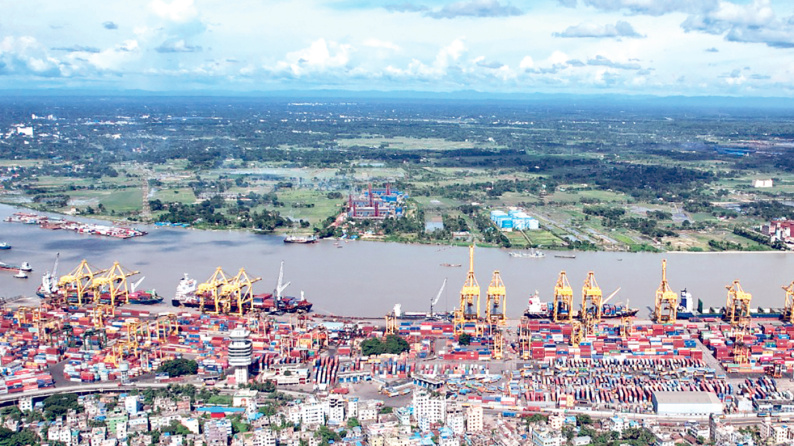
The road is critical for linking the country’s largest land port (Benapole), inland river port (Nawapara), seaport (Mongla), and Satkhira’s Bhomra land port. Despite Tk 321 crore in repairs completed in 2023, and another Tk 172 crore in ongoing work, large sections are already breaking down again.


Truck driver Rajib Hossain explained:


> “Driving between Chingutia and Basundia is a nightmare. Every day trucks break down, parts get damaged, and accidents happen.”


Local business leader Noor-e-Alam Babu warned:


> “With fertilizer and food supply chains disrupted, farmers face losses—and this could even trigger food shortages.”


Structural Problems and Delays


Officials admit that weak soil and overloaded vehicles cause rapid damage. Based on BUET recommendations, concrete paving is being introduced in sections, though completion could take up to 18 months.


Meanwhile, the Satkhira–Shyamnagar highway (62 km) is little more than a series of water-filled craters. Stop-gap patchwork has failed, and full-scale repairs will only begin after monsoon season.


Contractor Blacklist Fallout


After years of allegations that the same politically tied firms monopolized contracts—often submitting false documents—RHD blacklisted 43 contractors in 2024. But the purge delayed 175 tenders in FY2024–25. In many districts, tenders had to be reissued due to lack of competition.


An RHD official admitted anonymously:


> “The vetting process isn’t finished yet, but we expect contractor-related issues to be resolved this year so repair work can proceed without disruption.”


Rising Repair Costs


Experts warn that delays multiply costs.


> “A job that could cost Tk 30 today will cost Tk 100 next year if neglected,” explained a senior engineer.


Last year alone, 1,200 kilometers of neglected highways are now slated for priority repairs, but the budget only allows for 2,500 kilometers nationwide.


Inadequate Funds, Overloaded Trucks


Out of RHD’s 22,000 km network, at least 10,000 km need urgent repairs. Proper maintenance requires Tk 7,000 crore annually, but allocations hover around Tk 2,000 crore.


Adding to the strain, Bangladesh raised truck weight limits to 23 tons, compared to the global norm of 16 tons. In reality, many trucks exceed even that, causing asphalt depressions, water pooling, and road collapse.


Experts Call for Performance-Based Road Fund


BUET transport expert Prof. Shamsul Haque argues that Bangladesh must move away from reactive patchwork repairs toward performance-based maintenance contracts.


> “In developed countries, contractors are hired in advance with strict conditions—no potholes, no cracks, markings must remain intact. Payments are released only after performance verification.”


He added that many countries maintain a dedicated road fund financed by tolls, license fees, and donor contributions, reducing reliance on government budgets.


New Projects Eating into Maintenance


Large-scale construction projects are also diverting funds from urgent repairs.


For instance, the Dhaka–Sylhet highway has deteriorated badly, especially the Ashuganj to Sarail–Bishwaroad section. Vehicles now need 7–8 hours to travel 12 kilometers due to craters and congestion.


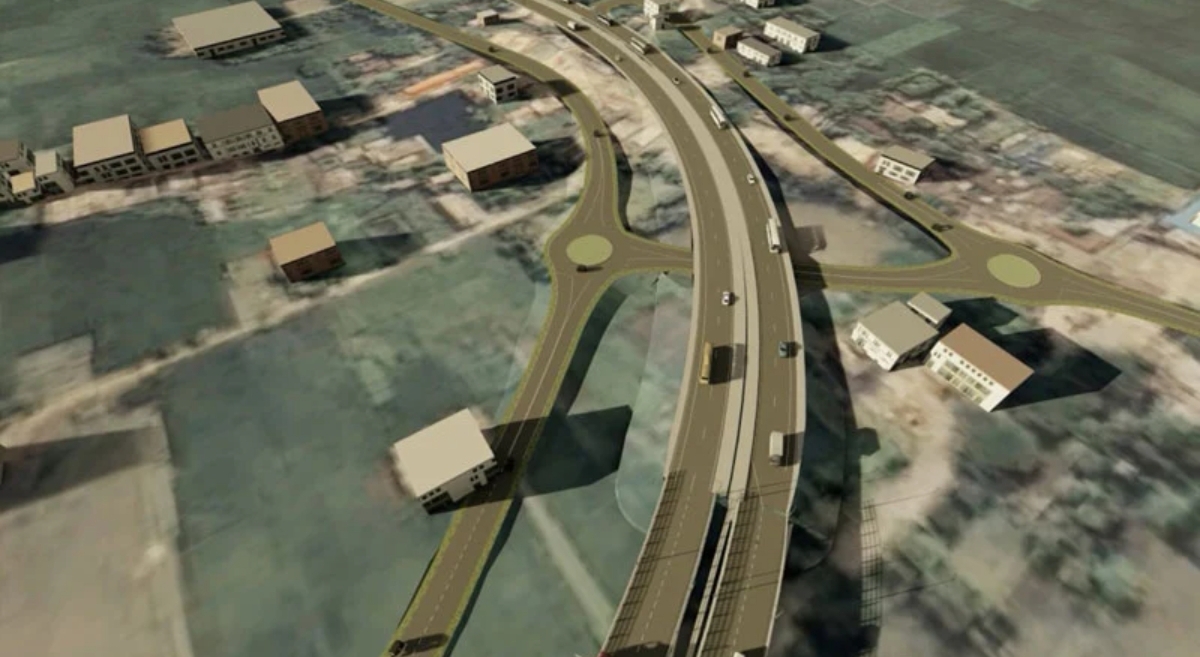
Similarly, the Elenga–Rangpur four-lane project has been damaged by heavy rains. Asphalt-based stretches are already pockmarked, while concrete sections remain intact.


Conclusion


Bangladesh’s highways are trapped in a cycle of neglect: delayed maintenance, soaring costs, overloaded vehicles, and misplaced priorities. Without a dedicated road maintenance fund and stronger accountability, trade, agriculture, and everyday life will continue to suffer.

 

Tag :

Please Share This Post in Your Social Media

10

Contractor Irregularities Push Million-Dollar Highway Toward Ruin

Update Time : 06:16:20 am, Sunday, 24 August 2025

Highways Crumble Under Monsoon, Floods, and Overloaded Trucks Despite Rising Budgets

Every year, Bangladesh’s highways collapse under the combined strain of seasonal monsoon rains, recurring floods, and the relentless pressure of overloaded freight trucks. Yet, despite increased allocations, only a fraction of government funds are actually spent on repairs. The result: highways riddled with potholes, slowing trade, damaging vehicles, and turning daily commutes into ordeals.


Following last year’s political upheaval, the Roads and Highways Department (RHD) blacklisted several contractors linked to the previous ruling party over corruption allegations. The move revealed just how dependent road maintenance had become on a powerful network of politically connected firms. Repair and renovation across much of the country stalled as a result.


Repair Funds Remain Unused


For fiscal year 2024–25, the government allocated Tk 2,615 crore for highway repairs. Only 42% of that (Tk 1,095 crore) has been utilized. Out of a target of 2,200 kilometers of road repairs, more than 1,200 kilometers remain neglected.


By comparison, nearly the entire Tk 2,100 crore allocation was spent the previous year. Officials cite contractor blacklisting and tendering delays in the aftermath of the 2024 uprising as major reasons for the shortfall.


One senior RHD official admitted:


> “Routine and periodic maintenance virtually stopped. Tender evaluations dragged on, complaints piled up, and in many areas reliable contractors were simply unavailable.”


Case Study: Khulna–Satkhira Highway


Perhaps nowhere is the crisis more visible than on the Khulna–Satkhira highway. From the Zero Point to Koya, what should be a national highway now looks more like a muddy track. Asphalt has peeled away, huge craters fill with rainwater, and vehicles crawl at walking speed.


The situation is equally dire on the Jessore–Khulna, Satkhira–Shyamnagar, Elenga–Hatikumrul–Rangpur, and Dhaka–Sylhet highways.


Business and Agriculture Hit Hard


The Jessore–Khulna road from Basundia to Chingutia (five kilometers) is nearly impassable. Constant rains have turned potholes into mud traps. Thousands of vehicles travel daily under accident risk, paralyzing port-based trade and disrupting fertilizer supply to farmers.


The road is critical for linking the country’s largest land port (Benapole), inland river port (Nawapara), seaport (Mongla), and Satkhira’s Bhomra land port. Despite Tk 321 crore in repairs completed in 2023, and another Tk 172 crore in ongoing work, large sections are already breaking down again.


Truck driver Rajib Hossain explained:


> “Driving between Chingutia and Basundia is a nightmare. Every day trucks break down, parts get damaged, and accidents happen.”


Local business leader Noor-e-Alam Babu warned:


> “With fertilizer and food supply chains disrupted, farmers face losses—and this could even trigger food shortages.”


Structural Problems and Delays


Officials admit that weak soil and overloaded vehicles cause rapid damage. Based on BUET recommendations, concrete paving is being introduced in sections, though completion could take up to 18 months.


Meanwhile, the Satkhira–Shyamnagar highway (62 km) is little more than a series of water-filled craters. Stop-gap patchwork has failed, and full-scale repairs will only begin after monsoon season.


Contractor Blacklist Fallout


After years of allegations that the same politically tied firms monopolized contracts—often submitting false documents—RHD blacklisted 43 contractors in 2024. But the purge delayed 175 tenders in FY2024–25. In many districts, tenders had to be reissued due to lack of competition.


An RHD official admitted anonymously:


> “The vetting process isn’t finished yet, but we expect contractor-related issues to be resolved this year so repair work can proceed without disruption.”


Rising Repair Costs


Experts warn that delays multiply costs.


> “A job that could cost Tk 30 today will cost Tk 100 next year if neglected,” explained a senior engineer.


Last year alone, 1,200 kilometers of neglected highways are now slated for priority repairs, but the budget only allows for 2,500 kilometers nationwide.


Inadequate Funds, Overloaded Trucks


Out of RHD’s 22,000 km network, at least 10,000 km need urgent repairs. Proper maintenance requires Tk 7,000 crore annually, but allocations hover around Tk 2,000 crore.


Adding to the strain, Bangladesh raised truck weight limits to 23 tons, compared to the global norm of 16 tons. In reality, many trucks exceed even that, causing asphalt depressions, water pooling, and road collapse.


Experts Call for Performance-Based Road Fund


BUET transport expert Prof. Shamsul Haque argues that Bangladesh must move away from reactive patchwork repairs toward performance-based maintenance contracts.


> “In developed countries, contractors are hired in advance with strict conditions—no potholes, no cracks, markings must remain intact. Payments are released only after performance verification.”


He added that many countries maintain a dedicated road fund financed by tolls, license fees, and donor contributions, reducing reliance on government budgets.


New Projects Eating into Maintenance


Large-scale construction projects are also diverting funds from urgent repairs.


For instance, the Dhaka–Sylhet highway has deteriorated badly, especially the Ashuganj to Sarail–Bishwaroad section. Vehicles now need 7–8 hours to travel 12 kilometers due to craters and congestion.


Similarly, the Elenga–Rangpur four-lane project has been damaged by heavy rains. Asphalt-based stretches are already pockmarked, while concrete sections remain intact.


Conclusion


Bangladesh’s highways are trapped in a cycle of neglect: delayed maintenance, soaring costs, overloaded vehicles, and misplaced priorities. Without a dedicated road maintenance fund and stronger accountability, trade, agriculture, and everyday life will continue to suffer.