Dhaka 11:40 am, Thursday, 26 February 2026

The Liberation War must ultimately prevail

Staff Correspondent:
  • Update Time : 02:53:18 am, Tuesday, 16 December 2025
  • / 191 Time View

Liberation Must Still Prevail

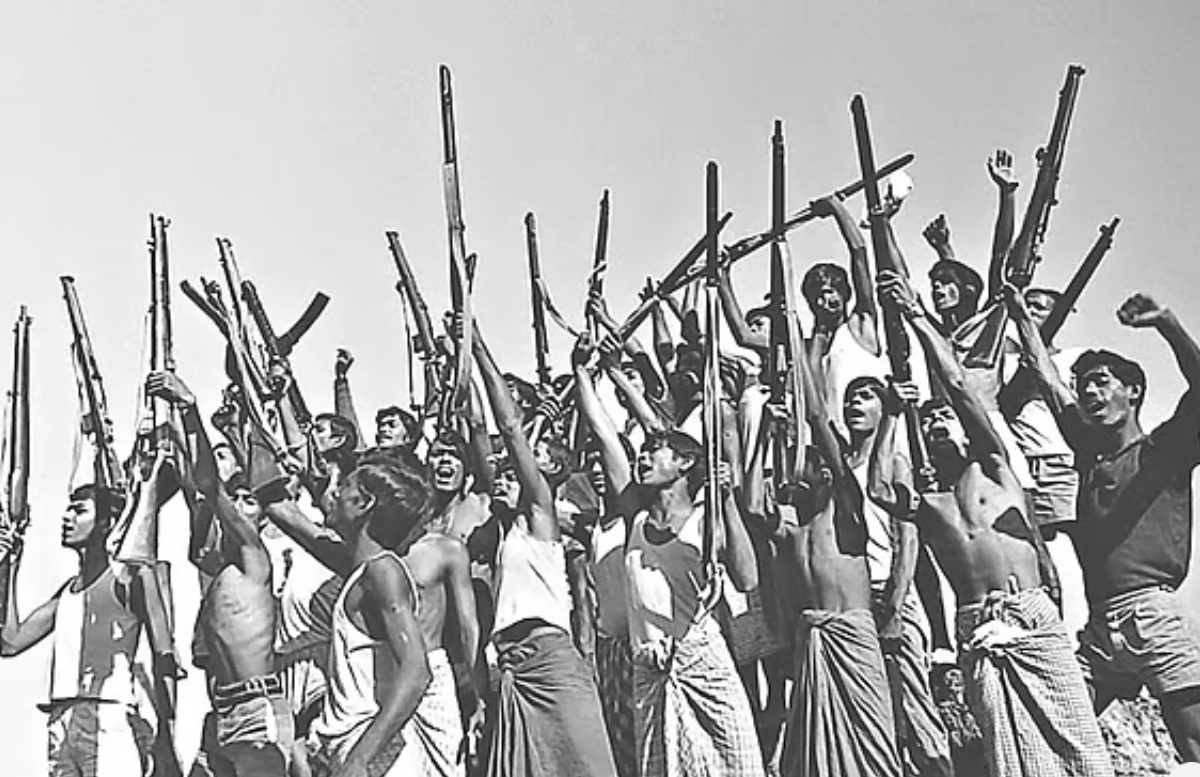
The war of independence ended with victory, but certainty did not follow. In December 1971, the fighters celebrated, yet many were left directionless. The battlefield was won, but the roadmap for a just society remained unclear. Freedom fighters scattered, each trying to find a place in a nation still struggling to define itself.

Soon after the war, a striking article appeared in a small publication titled Grenade, written by Abu Taher, a former sector commander. Its headline—“Freedom Fighters Will Have to Win Again”—provoked discomfort. Had the heroes of 1971 already begun to lose?

Taher argued that despite defeating Pakistan’s army, the fighters failed to dismantle the old administrative machinery that stood against popular liberation. Political power quietly returned to familiar hands. As a poet once observed, liberation credentials became paperwork rather than lived commitment.

This pattern did not end in 1971. The uprisings of 1990 and 2024 followed a similar trajectory. Each movement raised hopes of economic justice and social transformation, yet none delivered a program strong enough to relieve the daily pressure bending the backs of ordinary people. Victory, again and again, turned hollow.

After the fall of military rule in 1990, those who collaborated with authoritarian power were never meaningfully held accountable. Discredited elections over the past decade and a half were enabled by the same entrenched officials. Whether future elections will truly break free from that legacy remains uncertain.

In Bangladesh, fighters and opponents repeatedly blur into one another after moments of upheaval. This is not only a failure of struggle—it is a betrayal of victory. Time and again, power has drifted back to old bureaucratic and market elites, while the fighters are blamed for outcomes they did not control.

Following the July 2024 uprising, a familiar tactic returned: reframing reformist pressure by attacking the legacy of 1971. The narrative of “1971 versus 2024” was deliberately constructed. Universities—once intellectual partners in the birth of Bangladesh—became spaces where even foundational figures were questioned. This was not organic debate but a calculated ideological ambush.

Ironically, the student-led movements against inequality never opposed the spirit of 1971. On the contrary, they drew strength from its courage and unity. Their demand echoed an old question: why does prosperity concentrate while deprivation spreads? Today, economic data shows poverty rising again, even as wealth rapidly accumulates in the hands of a small minority.

This imbalance lies at the heart of Bangladesh’s recurring crises. Growth without fair distribution breeds unrest. A country where nearly one-third live in poverty cannot indefinitely suppress mass uprisings.

Yet political actors poised to benefit from recent movements appear reluctant to confront inequality through fiscal reform. Instead, many turn toward religious symbolism and identity politics—debating who belongs, rather than how to ensure healthcare, education, and dignity for all.

The chant of “36 July” once symbolized an inclusive civic identity. Still, polarization remains politically useful: religion versus culture, men versus women, university versus madrasa, majority versus minority. These divisions strengthen organizations while leaving structural injustice untouched.

History shows a troubling consistency. In 1972, victorious fighters were sent home while old state structures were preserved. In 2024, a cultural war pushed July’s fighters to the margins of electoral politics. Once again, those who risked everything are sidelined once the moment passes.

This suggests a painful truth: freedom fighters are defeated not on the battlefield, but afterward. Yet surrender is not an option. Every defeat demands renewed clarity, unity, and preparation.

Freedom fighters must win—not to profit from history, not to silence dissent, not to bow to foreign powers—but to build a democratic, sovereign, and just Bangladesh in a changing world. This was the unspoken promise between the living and the dead.

December 16 remains a guiding milestone because it carries centuries of collective longing. That same spirit connected 1971, 1990, and July 2024—memories bound together like monsoon clouds over Bangladesh.

True liberation remains unfinished. Colonial-era state structures, entrenched inequality, exclusionary politics, and unaccountable power still block the path forward. Today’s freedom fighters—past, present, and future—stand before urgent responsibilities: dismantling unjust systems, reducing inequality, protecting pluralism, defending livelihoods and nature, and reforming elections to ensure genuine participation.

Geopolitical pressures—from global trade conflicts to regional hostility—add new challenges. Facing them will require unity, realism, and courage.

Only a renewed national democratic alliance, grounded in the shared values of 1971, 1990, and 2024, can move these goals forward. No generation has yet fully succeeded—but Bangladesh has never abandoned them.

That persistence itself is the country’s deepest truth. And only by embracing it can liberation finally, fully, prevail.
Tag :

Please Share This Post in Your Social Media

The Liberation War must ultimately prevail

Update Time : 02:53:18 am, Tuesday, 16 December 2025

Liberation Must Still Prevail

The war of independence ended with victory, but certainty did not follow. In December 1971, the fighters celebrated, yet many were left directionless. The battlefield was won, but the roadmap for a just society remained unclear. Freedom fighters scattered, each trying to find a place in a nation still struggling to define itself.

Soon after the war, a striking article appeared in a small publication titled Grenade, written by Abu Taher, a former sector commander. Its headline—“Freedom Fighters Will Have to Win Again”—provoked discomfort. Had the heroes of 1971 already begun to lose?

Taher argued that despite defeating Pakistan’s army, the fighters failed to dismantle the old administrative machinery that stood against popular liberation. Political power quietly returned to familiar hands. As a poet once observed, liberation credentials became paperwork rather than lived commitment.

This pattern did not end in 1971. The uprisings of 1990 and 2024 followed a similar trajectory. Each movement raised hopes of economic justice and social transformation, yet none delivered a program strong enough to relieve the daily pressure bending the backs of ordinary people. Victory, again and again, turned hollow.

After the fall of military rule in 1990, those who collaborated with authoritarian power were never meaningfully held accountable. Discredited elections over the past decade and a half were enabled by the same entrenched officials. Whether future elections will truly break free from that legacy remains uncertain.

In Bangladesh, fighters and opponents repeatedly blur into one another after moments of upheaval. This is not only a failure of struggle—it is a betrayal of victory. Time and again, power has drifted back to old bureaucratic and market elites, while the fighters are blamed for outcomes they did not control.

Following the July 2024 uprising, a familiar tactic returned: reframing reformist pressure by attacking the legacy of 1971. The narrative of “1971 versus 2024” was deliberately constructed. Universities—once intellectual partners in the birth of Bangladesh—became spaces where even foundational figures were questioned. This was not organic debate but a calculated ideological ambush.

Ironically, the student-led movements against inequality never opposed the spirit of 1971. On the contrary, they drew strength from its courage and unity. Their demand echoed an old question: why does prosperity concentrate while deprivation spreads? Today, economic data shows poverty rising again, even as wealth rapidly accumulates in the hands of a small minority.

This imbalance lies at the heart of Bangladesh’s recurring crises. Growth without fair distribution breeds unrest. A country where nearly one-third live in poverty cannot indefinitely suppress mass uprisings.

Yet political actors poised to benefit from recent movements appear reluctant to confront inequality through fiscal reform. Instead, many turn toward religious symbolism and identity politics—debating who belongs, rather than how to ensure healthcare, education, and dignity for all.

The chant of “36 July” once symbolized an inclusive civic identity. Still, polarization remains politically useful: religion versus culture, men versus women, university versus madrasa, majority versus minority. These divisions strengthen organizations while leaving structural injustice untouched.

History shows a troubling consistency. In 1972, victorious fighters were sent home while old state structures were preserved. In 2024, a cultural war pushed July’s fighters to the margins of electoral politics. Once again, those who risked everything are sidelined once the moment passes.

This suggests a painful truth: freedom fighters are defeated not on the battlefield, but afterward. Yet surrender is not an option. Every defeat demands renewed clarity, unity, and preparation.

Freedom fighters must win—not to profit from history, not to silence dissent, not to bow to foreign powers—but to build a democratic, sovereign, and just Bangladesh in a changing world. This was the unspoken promise between the living and the dead.

December 16 remains a guiding milestone because it carries centuries of collective longing. That same spirit connected 1971, 1990, and July 2024—memories bound together like monsoon clouds over Bangladesh.

True liberation remains unfinished. Colonial-era state structures, entrenched inequality, exclusionary politics, and unaccountable power still block the path forward. Today’s freedom fighters—past, present, and future—stand before urgent responsibilities: dismantling unjust systems, reducing inequality, protecting pluralism, defending livelihoods and nature, and reforming elections to ensure genuine participation.

Geopolitical pressures—from global trade conflicts to regional hostility—add new challenges. Facing them will require unity, realism, and courage.

Only a renewed national democratic alliance, grounded in the shared values of 1971, 1990, and 2024, can move these goals forward. No generation has yet fully succeeded—but Bangladesh has never abandoned them.

That persistence itself is the country’s deepest truth. And only by embracing it can liberation finally, fully, prevail.