BNP Announces 9 Key Pledges, Family Card Included

- Update Time : 12:16:48 pm, Friday, 6 February 2026
- / 1279 Time View


Ahead of the 13th National Parliamentary Election, the Bangladesh Nationalist Party (BNP) has announced its election manifesto, outlining nine major commitments.
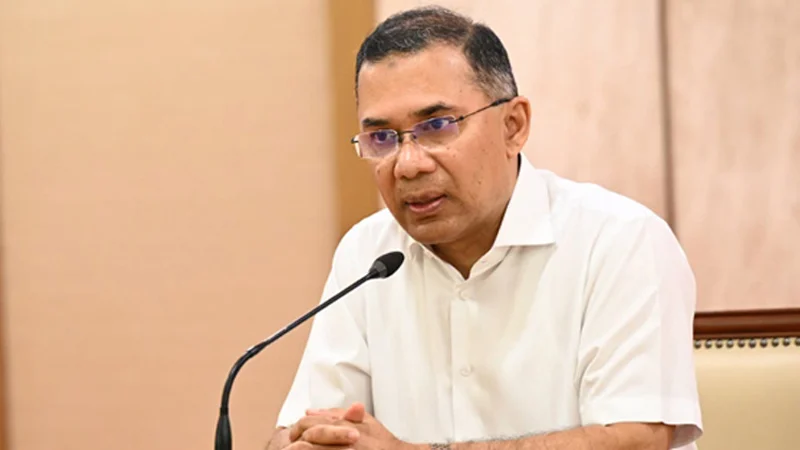
The manifesto was unveiled on Friday afternoon at the Sonargaon Hotel in Dhaka. BNP Chairperson Tarique Rahman formally presented the document on behalf of the party.
According to BNP leaders, the manifesto highlights nine priority pledges aimed at social protection, economic growth, and good governance.
The nine key commitments include:
To support marginalised and low-income households, a “Family Card” programme will be introduced, ensuring monthly assistance of BDT 2,500 or equivalent essential goods. The amount of support will be gradually increased over time.
To guarantee fair prices for agricultural produce, the party plans to strengthen subsidies, easy loans, crop insurance, and state-managed marketing through a “Farmer Card” system. Fisherfolk, livestock farmers, and small agribusiness owners will also be brought under this support framework.
To establish a transparent and people-friendly healthcare system, 100,000 health workers will be recruited nationwide. Quality treatment facilities, comprehensive maternal and child healthcare, and preventive medical services will be expanded at district and metropolitan levels.
To build a joyful and employment-oriented education system, a skills- and values-based education policy will be introduced. Primary education will receive top priority, teachers and students will get technological support, and a midday meal programme will be launched.
To secure the future of young people, the manifesto emphasises job creation, technical and language skill development, startup and entrepreneurship support, integration with global e-commerce platforms, and merit-based government recruitment.
Sports will be promoted as a viable profession through the expansion of sports infrastructure and training facilities at district and upazila levels.
To protect the environment and strengthen climate resilience, BNP plans to mobilise public participation for excavation and re-excavation of 10,000 kilometres of rivers and canals, plant 150 million trees within five years, and introduce modern waste management systems.
To reinforce religious and social harmony, a welfare and training-based honorarium system will be introduced for religious leaders of all faiths.
To boost the digital economy and global connectivity, the party proposes launching international payment systems such as PayPal, establishing regional e-commerce hubs, and expanding exports of “Made in Bangladesh” products.
BNP leaders stated that this manifesto is not merely an election promise, but a declaration of a new social and state contract. The party claims to stand for justice and humanity rather than retaliation, and asserts that people’s rights—not power—are at the heart of its politics.
The manifesto further pledges a governance model based on production over plunder, rights over fear, and fairness over discrimination.
BNP says that if entrusted with power by voters, it will build a Bangladesh where the value of voting is restored, terrorism, corruption, and inequality are eliminated, no one stands above the law, and every citizen can proudly say: “Bangladesh comes first.”