Government Allocates Tk 1,500 Crore Green Fund for Rooftop Solar Projects

- Update Time : 12:24:02 pm, Tuesday, 3 November 2026
- / 26 Time View
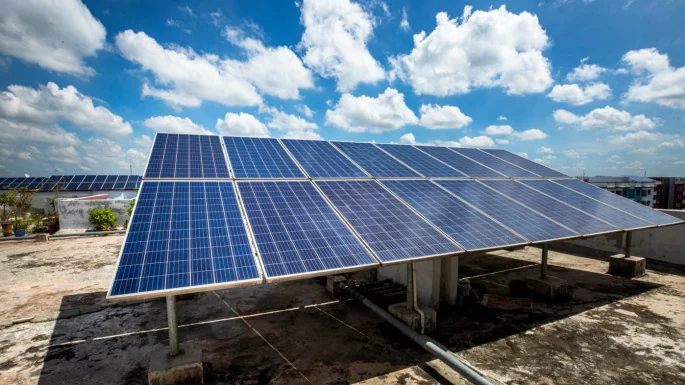

Entrepreneurs to receive loans at up to 6% interest with a repayment period of 12 years
The government has allocated Tk 1,500 crore from its existing green financing resources to support the installation of rooftop solar power systems across the country. Under the initiative, entrepreneurs will be eligible for loans at an interest rate of up to 6%, with a repayment period of 12 years.
The funding will come from the Bangladesh Bank’s Green Transformation Fund (GTF). Rather than financing individual projects directly, the government plans to accelerate rooftop solar adoption through three designated institutions: the Infrastructure Development Company Limited (IDCOL), Bangladesh Infrastructure Finance Fund Limited (BIFFL), and Palli Karma-Sahayak Foundation (PKSF).
Of the initial allocation, Tk 500 crore has already been released to IDCOL. The government also plans to provide funding to BIFFL and PKSF to facilitate investment in rooftop solar projects.
Speaking to The Business Standard (TBS) on Monday, November 2, Power Secretary Mirana Mahrook said the initial Tk 1,500 crore had been mobilised from existing green financing sources designated for low-carbon activities, rather than through fresh allocations from the national treasury.
She added that the government could gradually inject additional funds once the initial allocation is utilised, with a further Tk 500 crore potentially being released.
According to the Power Division’s proposed financing structure, private investors will contribute 20% of the total investment, while rooftop owners will provide another 20%. The remaining 60% will be financed through loans from the designated institutions.
The arrangement is intended to ensure that rooftop owners have a financial stake in the projects, encouraging a sense of ownership and motivating them to maintain the installed systems properly.
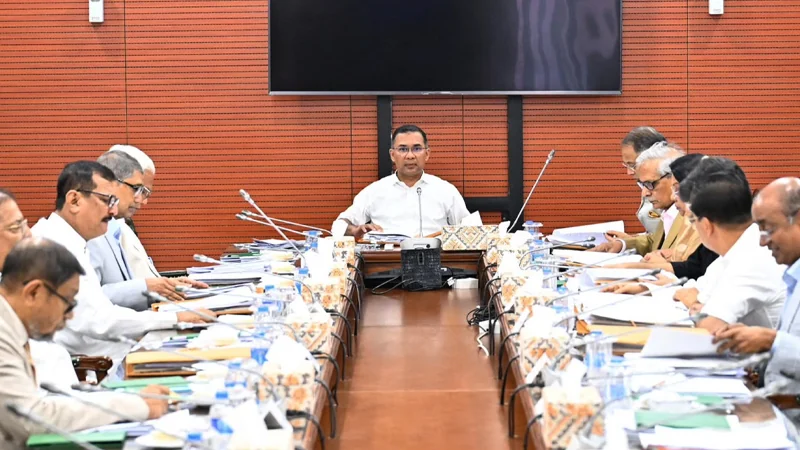
Amid rising fuel prices linked to the Iran-US conflict, the government is seeking to reduce dependence on fossil fuel-based power generation. At the same time, the Power Division is accelerating efforts to generate 3,000–4,000 megawatts of electricity from rooftop solar installations by February next year to address the growing risk of summer power shortages and load-shedding.
As part of the initiative, the Power Division and IDCOL have organised a two-day Solar Expo on November 3 and 4. Prime Minister Tarique Rahman inaugurated the event on Tuesday.
Imran Karim, chairman of Confidence Power and Energy PLC, welcomed the government’s low-interest financing initiative for rooftop solar entrepreneurs.
He said Bangladesh needed larger investments in the solar power sector to strengthen energy security alongside grid-level and sub-grid-level projects.
“An instalment facility spread over 12 years is a positive step. However, effective mechanisms must be in place to ensure proper loan recovery, transparent utilisation of funds and benefits for consumers,” he said.
He also called for consultations with relevant stakeholders to develop clear Standard Operating Procedures (SOPs) to ensure effective project implementation.
International and Domestic Lenders Show Interest in Solar Financing
The government is also seeking additional financing from international development partners and commercial banks to expand the programme.
The World Bank has pledged $500 million for the initiative. The government expects to receive the funding by March next year after the ongoing procedures are completed.
The proposed financing will combine several funding sources, including climate-related and green financing facilities.
The Asian Infrastructure Investment Bank (AIIB) has also made an initial commitment of $500 million, which is currently under process.
Power Division officials said loans from these institutions could carry relatively higher costs. Therefore, the government is considering combining funds from different sources to reduce the overall financing burden.
Discussions are also underway with domestic and international commercial banks, including HSBC, Citi and BRAC Bank. These institutions have expressed interest in offering relatively affordable financing for rooftop solar projects.
According to the Power Division, private banks are considering financing at interest rates of around 5%. If implemented, this could help mobilise additional resources from the domestic financial market.
Meanwhile, the Asian Development Bank (ADB) has initiated discussions with Bangladesh to establish a joint platform involving multiple development partners.
Under the proposed platform, ADB is considering an initial contribution of $250 million, with plans to expand the facility and mobilise several billion dollars in financing in the future.
Power Secretary Mirana Mahrook said the government was working to combine financing from different sources, including lower-interest funds, to provide affordable loans for various categories of rooftop solar users.
IDCOL has also been instructed to develop different financing products based on the types of rooftop solar installations.
Quality Control and Equipment Standards
Alongside financing, the government is working to ensure the quality of imported solar panels, batteries and other equipment amid concerns over the entry of substandard products into the market.
The Bangladesh Standards and Testing Institution (BSTI) has been brought into the initiative to oversee solar panel quality. Technical specifications have also been established for solar equipment.
IDCOL has introduced its own quality standards, which financing institutions must follow before approving loans.
Importers will also be required to submit written undertakings regarding the quality of the products they bring into the country.
The National Board of Revenue (NBR) has been involved in monitoring and verifying whether imported equipment meets the required standards during customs clearance.
The Power Division said legal restrictions prevent the government from specifying particular brands or countries of origin for solar panels and battery storage equipment.
Instead, strict technical requirements have been established for solar modules, using the quality benchmarks of leading manufacturers such as Jinko Solar and LONGi as references.
To strengthen BSTI’s technical capacity, the Power Division has assigned six engineers from the Bangladesh Power Development Board (BPDB) to the institution.
The engineers have received seven days of specialised training to monitor the implementation of equipment quality standards.
The Power Division has also started working on introducing insurance coverage for solar installations to protect panels and related equipment against natural disasters.
However, losses resulting from theft will remain the responsibility of the respective rooftop owners.