Dhaka 8:57 am, Sunday, 17 May 2026

Market crash, storage burden—where will potato farmers go?

Reporter Name
  • Update Time : 12:45:07 pm, Tuesday, 4 March 2025
  • / 515 Time View

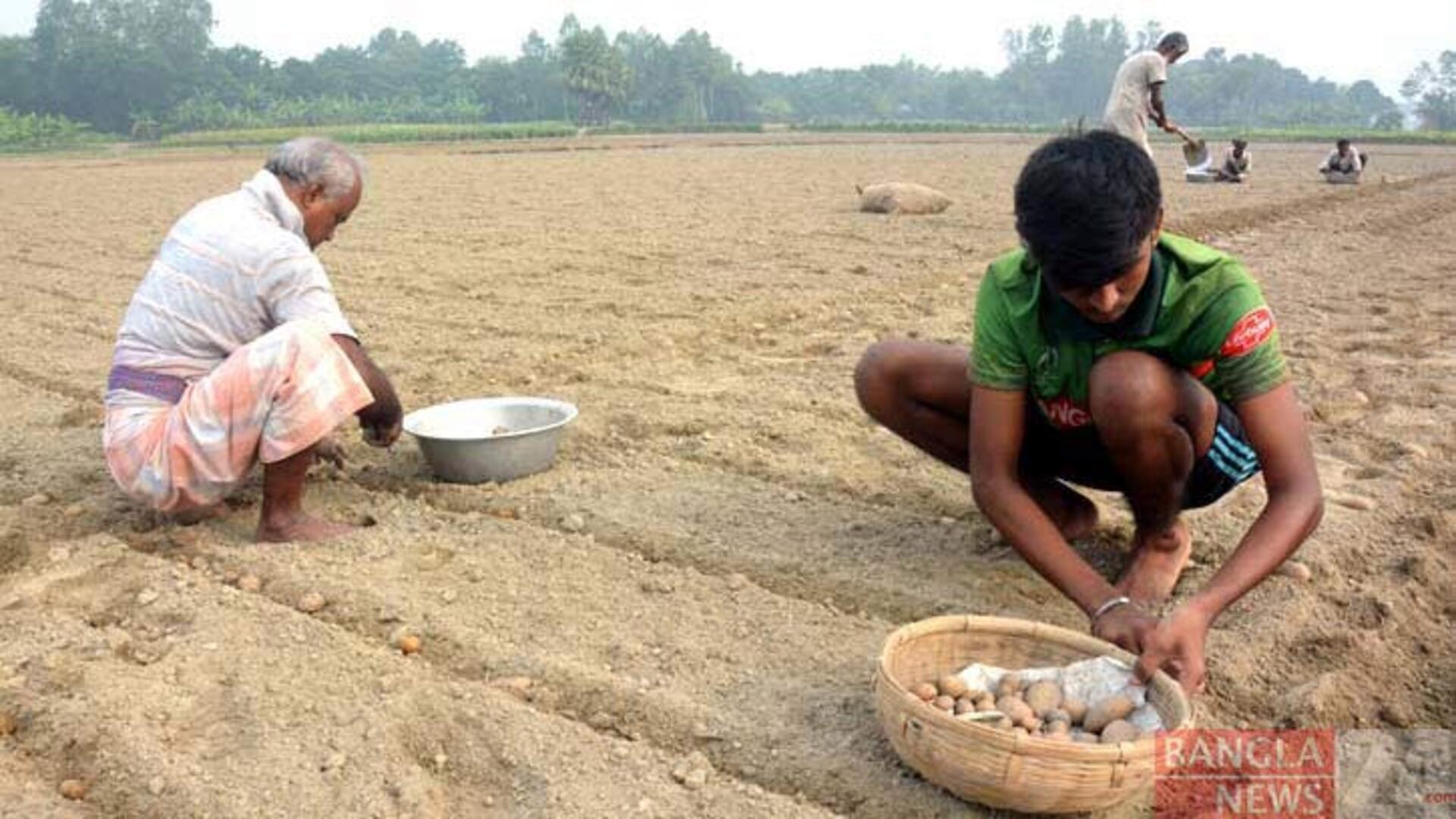
In Rangpur, farmers are facing heavy losses as they are forced to sell potatoes at Tk 11–12 per kg, despite a production cost of Tk 24 per kg. Experts blame the government’s unplanned market management for the crisis, while the agriculture department claims to have plans to ensure fair prices.


Farmer Badsha Mia from Sheikhpara in Rangpur City Corporation’s Ward 31 cultivated potatoes on two bighas of land, spending Tk 1.5 lakh. Despite a good harvest, he is frustrated by low market prices, fearing he won’t recover even half of his investment. He stated that storing potatoes in cold storage isn’t feasible either, as it costs Tk 8 per kg, leaving him in a difficult position.


Another farmer, Selim Mia, reported spending Tk 70,000 per bigha, producing around 3,000 kg of potatoes. This puts his per kg production cost at Tk 24, while the selling price remains at Tk 12, leading to a significant loss. He expressed frustration that despite their hard work, no one seems to care about their struggles.


Analysts criticize the government for its lack of control over the market, allowing syndicates to manipulate prices. Palash Kanti Nag, convener of the Farmers’ Struggle Council, pointed out that despite high yields, farmers are unable to cover their costs, raising concerns about market regulation. He remarked that even after the July uprising and the sacrifices made, no changes have been seen in market conditions.


Meanwhile, the Agriculture Marketing Department assures that plans are underway to link farmers with traders and explore export opportunities to stabilize prices. Assistant Director Md. Shakil Akhter stated that efforts are being made to connect Rangpur farmers with buyers and facilitate international exports.


This year, potato cultivation in Rangpur’s five districts covers 119,839 hectares—about 300 hectares more than the target—while the production target is nearly 2.8 million metric tons, slightly higher than last year.

 

Tag :

Please Share This Post in Your Social Media

Market crash, storage burden—where will potato farmers go?

Update Time : 12:45:07 pm, Tuesday, 4 March 2025

In Rangpur, farmers are facing heavy losses as they are forced to sell potatoes at Tk 11–12 per kg, despite a production cost of Tk 24 per kg. Experts blame the government’s unplanned market management for the crisis, while the agriculture department claims to have plans to ensure fair prices.


Farmer Badsha Mia from Sheikhpara in Rangpur City Corporation’s Ward 31 cultivated potatoes on two bighas of land, spending Tk 1.5 lakh. Despite a good harvest, he is frustrated by low market prices, fearing he won’t recover even half of his investment. He stated that storing potatoes in cold storage isn’t feasible either, as it costs Tk 8 per kg, leaving him in a difficult position.


Another farmer, Selim Mia, reported spending Tk 70,000 per bigha, producing around 3,000 kg of potatoes. This puts his per kg production cost at Tk 24, while the selling price remains at Tk 12, leading to a significant loss. He expressed frustration that despite their hard work, no one seems to care about their struggles.


Analysts criticize the government for its lack of control over the market, allowing syndicates to manipulate prices. Palash Kanti Nag, convener of the Farmers’ Struggle Council, pointed out that despite high yields, farmers are unable to cover their costs, raising concerns about market regulation. He remarked that even after the July uprising and the sacrifices made, no changes have been seen in market conditions.


Meanwhile, the Agriculture Marketing Department assures that plans are underway to link farmers with traders and explore export opportunities to stabilize prices. Assistant Director Md. Shakil Akhter stated that efforts are being made to connect Rangpur farmers with buyers and facilitate international exports.


This year, potato cultivation in Rangpur’s five districts covers 119,839 hectares—about 300 hectares more than the target—while the production target is nearly 2.8 million metric tons, slightly higher than last year.