Legal framework for banning Awami League being finalized: Asif Mahmud

- Update Time : 04:32:35 am, Saturday, 8 February 2025
- / 464 Time View


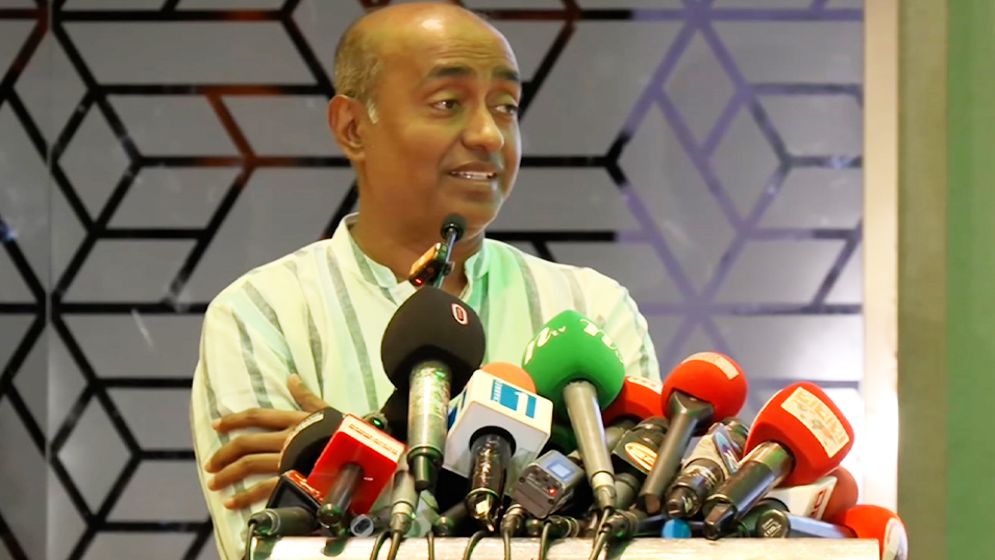
The interim government is expected to take steps soon to ban the Awami League, which was ousted by a student-led uprising, according to Asif Mahmud Sojib Bhuiyan, the Advisor for Local Government, Rural Development, and Cooperatives. He stated that the government has the authority to act against any party through executive orders, aside from judicial proceedings. However, the legal framework for the ban has not yet been determined.
In an interview published by the state news agency BSS on Friday, Asif Mahmud mentioned that the judicial process would likely confirm the Awami League’s involvement in the July-August massacre, paving the way for its ban and deregistration. He assured that the government would swiftly act in accordance with the people’s demands.
He further stated that political parties are reaching a consensus on banning the Awami League, reflecting a broad rejection of its undemocratic and authoritarian actions. He emphasized that the consensus, which formed before and after August 5, will make government decisions easier to implement.
He added that whether it be the general public or political parties, everyone represents the will of the people. After August 5, the people’s expectations must be prioritized. He also welcomed the BNP’s demand for banning the Awami League.
Regarding the formation of a new political party by student leaders who led the July uprising, the advisor said that past uprisings had failed to secure democratic rights because their leaders were not involved in subsequent governance. Considering this, many student leaders who spearheaded the movement have now decided to form a political party, especially since many did not join any existing political banners after August 5.
On the question of whether government representatives would be part of this new student-led party, he stated that no final decision had been made. However, the government’s position is clear—any official who joins the party must resign from their government post. As for his own participation, he mentioned that he had not yet decided and was still assessing the situation.
When asked about the potential conflict between government reforms and political parties’ demand for quick elections, he denied any contradiction, emphasizing that the government is committed to establishing a positive political structure. He noted that after August 5, people feared that handing power to any single party would lead to a repetition of past failures. However, he acknowledged that the government faces significant challenges due to the lingering presence of authoritarian influences across different state institutions.
He concluded by stressing that without necessary reforms, governing would be difficult for any party that comes to power through elections. Therefore, six major reform commissions are being prioritized, including constitutional reforms. Other public interest reforms are also being given equal importance.