Golden Gate Bridge: A Historic Engineering Marvel Still Vital for Modern Transport

- Update Time : 03:11:42 pm, Friday, 1 August 2025
- / 726 Time View
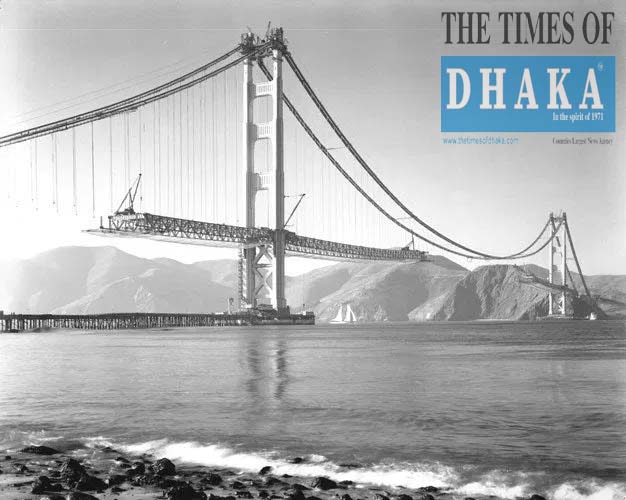


Ninety years after its construction began, the Golden Gate Bridge continues to play a crucial role in California’s transportation system, especially for freight and commercial activity.
Recognized as one of the “Seven Civil Engineering Wonders of the United States” by the American Society of Civil Engineers, the Golden Gate Bridge isn’t just an icon of design—it remains essential for both land and maritime trade.
A Challenging Start in 1933
Work on the Golden Gate Bridge officially commenced on January 5, 1933, marking the start of what would be nearly four and a half years of demanding and often dangerous construction.
One of the earliest setbacks came when a ship, the Sidney M. Hauptman, became disoriented in dense fog and collided with a key access structure, delaying progress by a month. Later that year, in October, stormy weather damaged several completed sections and submerged equipment. Another storm in December added 800 feet of damage to the site.
Tragedy also struck the workforce. In October 1936, a piece of heavy equipment collapsed, resulting in the death of worker Kermit Moore. Just four months later, a major accident caused 12 workers to fall into the water; only two survived.
Despite these difficulties, the final phases of construction moved forward without major disruption. Even an earthquake just days before completion did not cause structural damage.
On May 27, 1937, the bridge was officially opened to the public, with a pedestrian celebration followed by the start of vehicle traffic the next day.
Still a Key Transportation Link
Connecting San Francisco County to Marin County, the Golden Gate Bridge currently supports close to 40 million crossings annually, according to the Golden Gate Bridge Highway & Transportation District. Among these, an estimated 555,000 are freight truck crossings, based on U.S. Department of Transportation data.
In addition to serving road traffic, the bridge is also a gateway for maritime logistics. Many cargo ships sail underneath it en route to the Port of Oakland, a major trade hub on the U.S. West Coast. In 2015, the Benjamin Franklin, a then-record-breaking container ship capable of carrying 18,000 containers, passed under the bridge with just 20 feet of clearance.
New Investments for the Future
Recognizing its continued significance, the Federal Highway Administration announced in January 2025 a $400 million upgrade initiative under the Bridge Investment Program, funded by the Bipartisan Infrastructure Law. The upcoming improvements aim to reinforce key structural elements, enhance earthquake resistance, and ensure the bridge can safely serve future generations.
From its dramatic early days to its ongoing role in modern commerce, the Golden Gate Bridge stands as both a historical landmark and a vital corridor for California’s economy.