Dhaka 3:08 pm, Tuesday, 23 June 2026

Inflation management and its correlation with growth

Niloy Mridha
  • Update Time : 10:54:36 am, Saturday, 16 August 2025
  • / 418 Time View

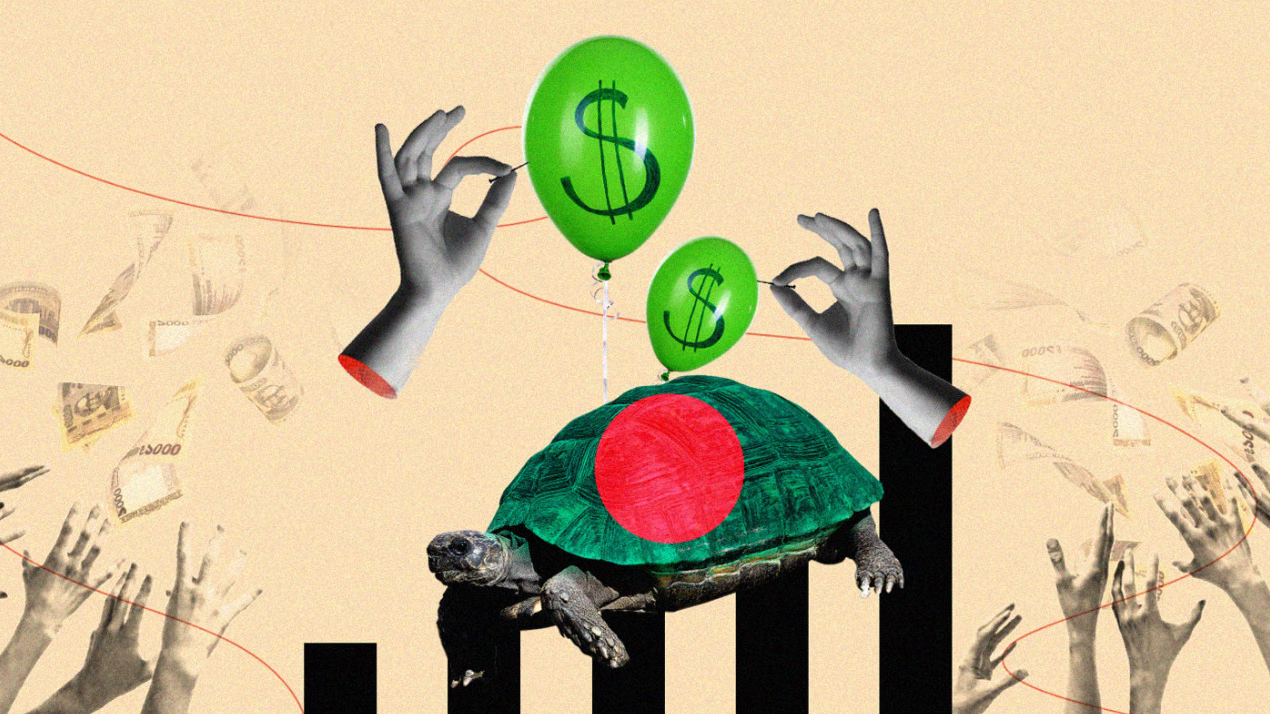
Bangladesh is currently navigating a challenging macroeconomic environment, marked by slowing GDP growth and persistently high inflation. The government has rightly prioritized controlling inflation, recognizing that, beyond hampering long-term growth and investment, high prices disproportionately affect low-income and vulnerable populations.

A key tool in the government’s strategy has been monetary policy, particularly the interest rate. After a long period of regulated rates, the Bangladesh Bank (BB) gradually allowed market forces to determine interest rates starting December 2023. BB now influences lending through its policy rate and overall monetary aggregates. Its current approach has been to raise interest rates to slow domestic credit growth, dampen aggregate demand, and thereby reduce inflation. The policy rate rose from 6.5% in September 2023 to 8.5% in May 2024 and then to 10% in December 2024, remaining unchanged since. Correspondingly, the average lending rate climbed from 7.8% in September 2023 to 12.2% in July 2025.

The effect on inflation has been notable. Private sector credit demand has dropped, while public sector borrowing has softened due to fiscal deficit control. Inflation, which peaked at around 11.7% in July 2024, has now eased to 8.6% as of July 2025. The BB has indicated it will maintain the current policy rate until inflation reaches its target range of 3–5%.

However, the sharp decline in private sector credit—from 9.8% in FY2024 to 6% in FY2025—raises concerns for economic growth. Falling GDP, reduced private investment, lower capital imports, and slowing private credit growth appear interlinked, suggesting the economy may be entering a recessionary phase, which could negatively impact employment and poverty reduction.

The relationship between inflation control and GDP growth is complex. While interest rate hikes help curb credit demand and reduce inflationary pressures, many other factors—domestic and international—also influence these outcomes. On the demand side, inflation is affected by interest rates, taxation, and fiscal deficits. On the supply side, it is influenced by exchange rates, global commodity prices, domestic production, and import availability. In Bangladesh, recent gains in inflation control from higher interest rates have been partially offset by slower domestic production and reduced imports. Achieving sustained inflation reduction will require a coordinated policy approach addressing both monetary and structural factors.

Regarding GDP growth, the slowdown cannot be solely attributed to higher interest rates. While rate hikes have constrained credit expansion, other elements—such as a weakened investment climate, political uncertainty, energy shortages, high trade protection, costly logistics, and skill shortages—play a larger role. Private sector credit growth closely follows the availability of profitable investment opportunities, which in turn depend on the broader investment climate.

Interest rates, though relatively high at 12%, reflect elevated inflation levels. Adjusted for inflation, the real borrowing rate is around 4%, comparable to rates in other middle-income countries such as India, Sri Lanka, Pakistan, Indonesia, and Vietnam. As inflation continues to ease, BB can consider lowering the policy rate, reducing nominal borrowing costs and supporting investment growth.

In short, while monetary policy is important for inflation control, sustainable economic recovery will require broader measures to improve the investment climate, ensure energy stability, and enhance productivity. With these steps, private credit growth and GDP can recover even under the current interest rate framework.
Tag :

Please Share This Post in Your Social Media

Inflation management and its correlation with growth

Update Time : 10:54:36 am, Saturday, 16 August 2025

Bangladesh is currently navigating a challenging macroeconomic environment, marked by slowing GDP growth and persistently high inflation. The government has rightly prioritized controlling inflation, recognizing that, beyond hampering long-term growth and investment, high prices disproportionately affect low-income and vulnerable populations.

A key tool in the government’s strategy has been monetary policy, particularly the interest rate. After a long period of regulated rates, the Bangladesh Bank (BB) gradually allowed market forces to determine interest rates starting December 2023. BB now influences lending through its policy rate and overall monetary aggregates. Its current approach has been to raise interest rates to slow domestic credit growth, dampen aggregate demand, and thereby reduce inflation. The policy rate rose from 6.5% in September 2023 to 8.5% in May 2024 and then to 10% in December 2024, remaining unchanged since. Correspondingly, the average lending rate climbed from 7.8% in September 2023 to 12.2% in July 2025.

The effect on inflation has been notable. Private sector credit demand has dropped, while public sector borrowing has softened due to fiscal deficit control. Inflation, which peaked at around 11.7% in July 2024, has now eased to 8.6% as of July 2025. The BB has indicated it will maintain the current policy rate until inflation reaches its target range of 3–5%.

However, the sharp decline in private sector credit—from 9.8% in FY2024 to 6% in FY2025—raises concerns for economic growth. Falling GDP, reduced private investment, lower capital imports, and slowing private credit growth appear interlinked, suggesting the economy may be entering a recessionary phase, which could negatively impact employment and poverty reduction.

The relationship between inflation control and GDP growth is complex. While interest rate hikes help curb credit demand and reduce inflationary pressures, many other factors—domestic and international—also influence these outcomes. On the demand side, inflation is affected by interest rates, taxation, and fiscal deficits. On the supply side, it is influenced by exchange rates, global commodity prices, domestic production, and import availability. In Bangladesh, recent gains in inflation control from higher interest rates have been partially offset by slower domestic production and reduced imports. Achieving sustained inflation reduction will require a coordinated policy approach addressing both monetary and structural factors.

Regarding GDP growth, the slowdown cannot be solely attributed to higher interest rates. While rate hikes have constrained credit expansion, other elements—such as a weakened investment climate, political uncertainty, energy shortages, high trade protection, costly logistics, and skill shortages—play a larger role. Private sector credit growth closely follows the availability of profitable investment opportunities, which in turn depend on the broader investment climate.

Interest rates, though relatively high at 12%, reflect elevated inflation levels. Adjusted for inflation, the real borrowing rate is around 4%, comparable to rates in other middle-income countries such as India, Sri Lanka, Pakistan, Indonesia, and Vietnam. As inflation continues to ease, BB can consider lowering the policy rate, reducing nominal borrowing costs and supporting investment growth.

In short, while monetary policy is important for inflation control, sustainable economic recovery will require broader measures to improve the investment climate, ensure energy stability, and enhance productivity. With these steps, private credit growth and GDP can recover even under the current interest rate framework.