Metro Rail or Monorail: Which System Is More Suitable for Dhaka?

- Update Time : 04:13:46 am, Tuesday, 27 January 2026
- / 353 Time View

Metro Rail and Monorail: Competing Visions for Urban Transport in Dhaka
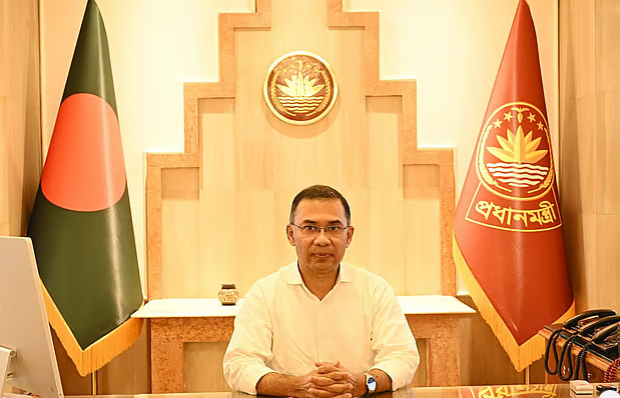
During the tenure of the Awami League government, Dhaka’s public transport network was expanded with the introduction of metro rail services. In contrast, the Bangladesh Nationalist Party (BNP) has proposed adding monorail systems alongside metro rail if it returns to power. BNP chairperson Tarique Rahman has outlined plans to connect monorail routes from areas such as Mohammadpur and Banani with existing metro lines.
Tarique Rahman formally presented this proposal on January 20 at a prayer gathering and discussion meeting organized by the Banani Society in memory of former prime minister Khaleda Zia. Earlier, in June, the Chattogram City Corporation also announced initiatives to introduce a monorail system in the country’s second-largest city. The proposed Chattogram project includes three routes totaling approximately 54.5 kilometers, with an estimated cost of at least Tk 250 billion. As part of the initiative, memorandums of understanding were signed with Orascom Construction and Arab Contractors.
The proposed routes in Chattogram include a 26.5-kilometer line from Kalurghat to the airport, a 13.5-kilometer stretch from City Gate to Shaheed Bashiruzzaman Square, and a 14.5-kilometer corridor from Oxygen to Firingibazar. Discussions are also underway about the feasibility of constructing a monorail system in Narayanganj, a major city adjacent to Dhaka.
Planning Background and Policy Context
With World Bank assistance, the government prepared a 20-year Strategic Transport Plan (STP) for Dhaka in 2005. This plan was later revised in 2014 with Japanese funding and technical support, resulting in the Revised Strategic Transport Plan (RSTP). Based on these plans, the previous government implemented several mass transit projects, including elevated and underground metro rail lines and bus rapid transit (BRT) corridors.
While some experts had suggested monorail options during the preparation of the STP, the plan ultimately prioritized metro rail, flyovers, and BRT systems. Accordingly, six metro rail lines were planned for Dhaka, with the Uttara–Motijheel line already in operation. This line currently carries around 400,000 passengers daily.
What Is a Monorail?
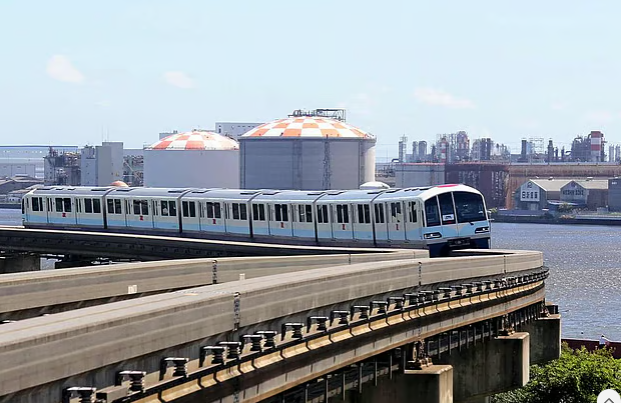
A monorail operates on a single beam rather than dual tracks. Unlike conventional rail or metro systems, it does not require two parallel lines. In metro rail systems, overhead power lines are often supported by large pillars, whereas monorails integrate power supply systems directly into the beam, reducing structural complexity.
Monorails generally require less space to construct and can be built more easily in narrow or densely developed urban areas. Another advantage is their ability to navigate curved routes with greater flexibility. Construction costs are typically lower than those of metro rail systems, making monorails attractive for specific urban corridors.
Complementing, Not Replacing, Metro Rail
Both metro rail and monorail are forms of mass transit, but experts argue that they serve different purposes. Dhaka’s high population density and unplanned growth make it impossible to construct metro rail on every corridor. In many older or congested neighborhoods—such as parts of Old Dhaka, Khilgaon, Goran, and Basabo—even buses struggle to operate due to narrow roads.
Transport specialists note that building metro rail in such areas would require underground construction, which is significantly more expensive, time-consuming, and risky. In contrast, monorails can be installed above narrow roads and winding streets with fewer disruptions.
However, monorails are not suitable for all cities or corridors. For example, Jakarta abandoned its monorail project due to concerns about whether it could handle passenger demand in a megacity. Still, monorails operate successfully in many countries, often as part of integrated transport systems that include metro rail, BRT, and elevated roads. Mumbai, for instance, runs both metro rail and monorail services.
Capacity and Cost Considerations
Professor Shamsul Hoque of the Civil Engineering Department at BUET points out that the Uttara–Motijheel corridor was the most straightforward and efficient route for Dhaka’s first metro line due to high passenger demand. Even then, high construction costs forced fares to be set higher than in neighboring countries. Future metro lines will include larger underground sections, further increasing costs and raising questions about affordability.
He argues that monorails should be considered as complementary options to connect densely populated neighborhoods. As an example, he notes that the existing metro line makes a wide detour near Bijoy Sarani to avoid obstacles. A monorail could have followed the main road with curved alignment at a lower cost.
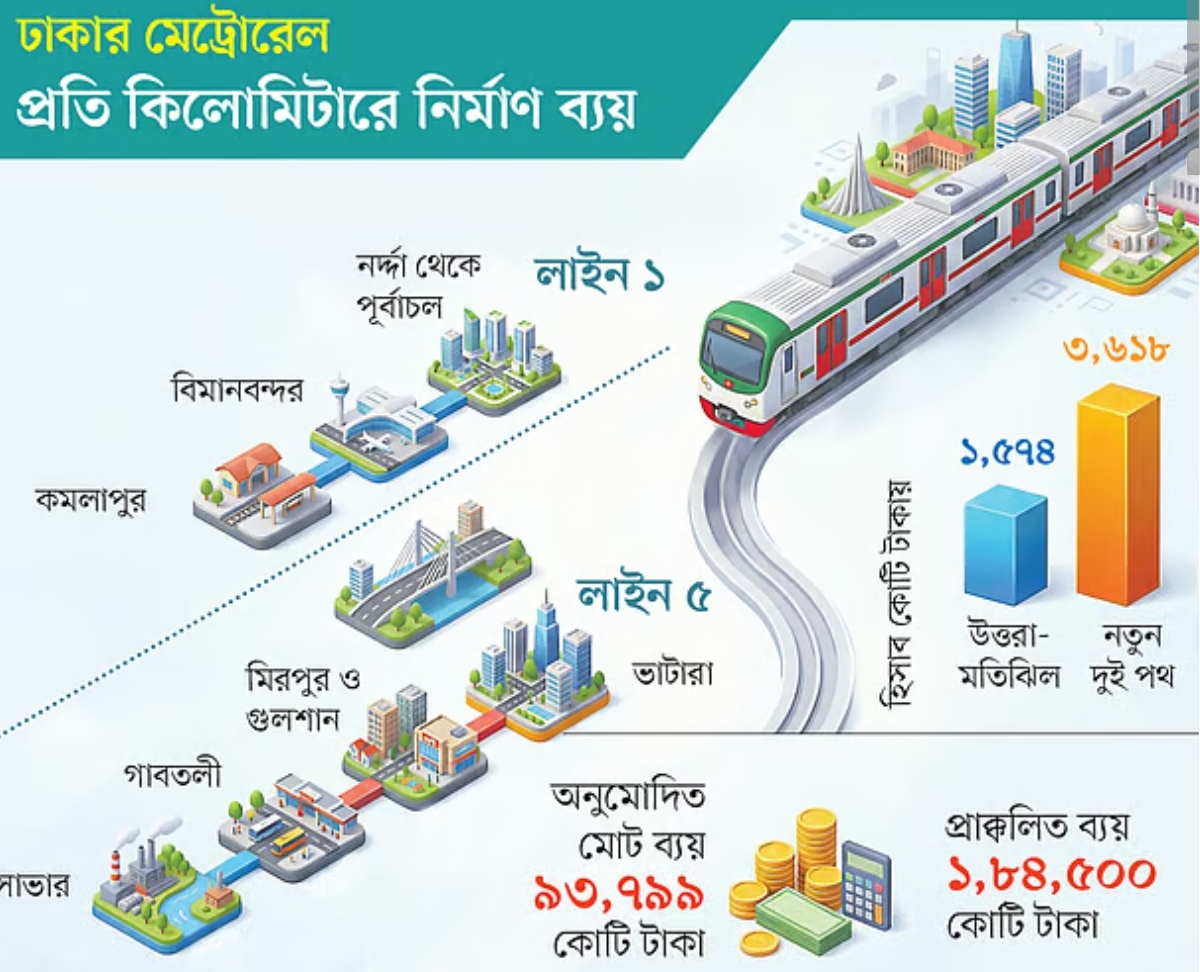
In Dhaka, metro rail construction has cost roughly Tk 15 billion per kilometer. By comparison, Mumbai’s monorail was built at about Tk 1.64 billion per kilometer. Mumbai’s monorail carries around 150,000 to 200,000 passengers daily, while Dhaka’s metro serves approximately 400,000 passengers per day.
Ongoing and Future Projects
Although the Uttara–Motijheel metro line is operational, it is being extended to Kamalapur. Additional lines are under construction or planning, including MRT Line-1 (from Kamalapur to the airport and from Narda to Purbachal) and MRT Line-5 (from Hemayetpur to Vatara via Mirpur and Gulshan). These projects include both elevated and underground sections, with estimated costs exceeding Tk 30 billion per kilometer.
Globally, construction costs vary widely. Egypt’s 96-kilometer monorail project is estimated at around $4.5 billion, with contractors responsible for operating and maintaining the system for 30 years. In Malaysia, Kuala Lumpur operates a successful monorail network, while similar systems exist in China, India, South Korea, the United States, Brazil, and the UAE.
The Bigger Debate
In Bangladesh, the high cost of large infrastructure projects—including metro rail—has drawn criticism, particularly when compared with neighboring countries. As a result, policymakers and experts continue to debate alternative and complementary transport solutions.
Rather than viewing metro rail and monorail as rivals, many experts believe Dhaka needs a multi-layered transport system. Metro rail should handle high-demand corridors, while monorails could serve narrower, densely populated areas where conventional metro construction is impractical. Together, they could help create a more inclusive and efficient urban transport network for the capital.