US Midterm Elections: A Critical Test of Trump’s Power and Constitutional Checks and Balances

- Update Time : 03:55:12 pm, Tuesday, 3 November 2026
- / 18 Time View

American democracy has survived numerous profound crises and political upheavals throughout its long history. However, its resilience should never be mistaken for invulnerability or permanence. The principles of checks and balances remain effective only when institutions uphold them faithfully and political leaders respect their constitutional boundaries.
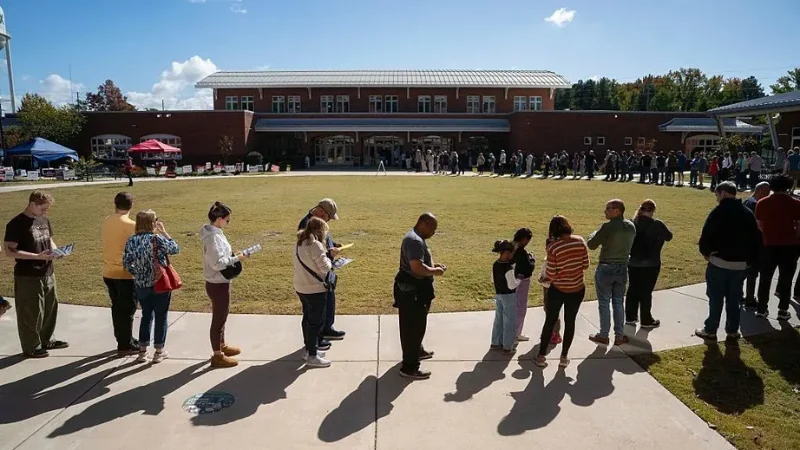
As Americans head to the polls on November 3 for the midterm elections, the United States faces a historic test of presidential power, constitutional accountability and democratic resilience. The election will determine more than which party controls Congress. Its significance extends far beyond partisan calculations.
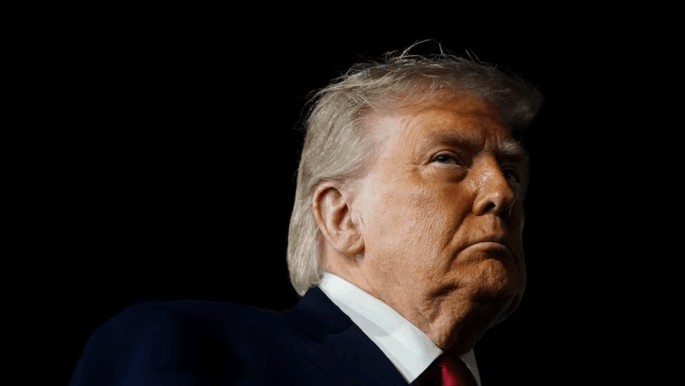
The central questions are whether the constitutional system of checks and balances can constrain President Donald Trump’s authority, how firmly election officials can resist political pressure from the administration, and whether the government will respect the people’s verdict even if the results go against its interests.
The Battle Over Election Administration
The Trump administration’s efforts to reshape the electoral process have faced substantial resistance from the courts.
According to an October 20 review by the Brennan Center for Justice, at least 34 federal district courts have temporarily or permanently blocked various administration initiatives, particularly measures involving election procedures and demands for voter registration records. The rulings have come from judges appointed by presidents of both parties, including judges nominated by Trump himself.
These decisions demonstrate that judicial oversight continues to serve as an important constitutional safeguard in the United States. However, the repeated legal battles also expose an underlying weakness: courts can intervene only after controversial policies have been introduced. As elections approach, states are often forced into difficult legal battles to challenge policies that create uncertainty.
The dispute intensified on October 26, when a federal appeals court declined to order California to segregate or suspend the ballots of nearly 20,000 registered voters. The Trump administration’s Justice Department had alleged that the voters might not be US citizens. However, the court ruled that the lower court had not been given sufficient opportunity to properly consider the government’s request. As a result, the underlying dispute remained unresolved.
The Trump administration maintains that its actions are intended to protect election transparency and integrity. However, there is a fundamental difference between investigating allegations of irregularities supported by specific evidence and restricting the voting rights of legitimate voters based on unsubstantiated suspicions.
An accurate voter registry is essential for election security. Equally important is ensuring that ordinary citizens are not mistakenly or unfairly challenged.
Repeated claims of election manipulation by an incumbent administration can seriously undermine public confidence in the entire electoral system, even when no evidence of wrongdoing emerges. The real danger is that, regardless of the facts, routine administrative procedures may begin to appear suspicious in the eyes of ordinary voters.
Congress and the Constitutional Balance of Power
Republicans currently hold narrow majorities in both chambers of Congress. This creates a clear possibility that Democrats could gain control of the House of Representatives and potentially the Senate.
If Democrats secure a House majority, they would gain significantly greater authority to investigate the Trump administration’s policies, subpoena senior officials and scrutinise executive decisions.
Contentious areas such as immigration restrictions, election administration, federal spending and the implementation of executive orders could face much closer scrutiny.
Such oversight could bring evidence of administrative misconduct into the public domain and compel policymakers to explain decisions that might otherwise remain largely unexamined. However, investigations alone do not automatically guarantee accountability. Subpoenas can trigger prolonged legal battles, and congressional hearings cannot force an administration to change its policies overnight.
Control of the Senate, meanwhile, would give Democrats considerable influence over presidential nominations and judicial appointments. Nevertheless, Trump would retain his presidential veto and substantial executive authority. Even if Democrats gained control of both chambers, there would be no guarantee that the president’s political agenda could be dismantled immediately.
The deeper question is whether Congress will fulfil its constitutional responsibilities independently or place unquestioning partisan loyalty above institutional accountability.
When one branch of government refuses to challenge the actions of another during a critical moment, the system of checks and balances cannot function effectively.
The Post-Election Test
Perhaps the most consequential confrontation will begin after the polls close.
Trump’s response to his defeat in the 2020 presidential election remains a deeply troubling precedent. He directly challenged the results, made baseless allegations of fraud and publicly pressured Georgia election officials to “find” enough votes to reverse his loss.
The episode culminated on January 6, 2021, when Trump supporters launched an unprecedented and violent attack on the US Capitol as Congress met in a joint session to formally certify the election results.
That history does not guarantee that the same events will be repeated in 2026. However, it makes close scrutiny of potential election disputes essential.
The greatest danger may not come from a single intervention capable of instantly overturning the results. Instead, it could emerge through a prolonged series of confrontations: repeated objections to ballot counts, political pressure on state officials, demands for successive investigations and attempts to portray routine electoral procedures as evidence of fraud.
Even if such efforts ultimately fail, they could delay the finalisation of results and weaken public confidence in democratic institutions.
Candidates have every right to pursue legitimate legal challenges to election results. Courts have a responsibility to examine credible evidence thoroughly, while election officials must promptly correct any documented irregularities.
But an allegation is not proof, and a president cannot invalidate a lawful result simply because he dislikes the outcome.
It is possible to seriously damage an electoral process without committing a single act of ballot fraud. Intimidating election workers, spreading unfounded suspicions and deliberately questioning established procedures can erode the shared public willingness to accept the outcome of a legitimate election.
The distinction between lawful scrutiny and malicious political interference is therefore fundamental. The credibility of a free election ultimately depends on objective evidence, consistent legal procedures and respect for the rule of law—not on whether the results favour the incumbent party.
The Judiciary Cannot Defend Democracy Alone
Judicial intervention demonstrates that constitutional safeguards have not fallen silent. Courts may strike down unlawful executive orders, but they cannot independently manage the enormous administrative responsibility of conducting elections across thousands of electoral jurisdictions. Nor can they guarantee that political leaders will comply with every ruling.
Similarly, public confidence cannot be restored through a handful of court decisions after prolonged efforts to discredit democratic and electoral institutions.
A functioning democracy depends on rigorous congressional oversight, accurate vote counting by election officials, an impartial judiciary and political leaders who respectfully accept results reached under the law.
The willingness of judges appointed by presidents from both parties to rule against the administration reinforces a fundamental constitutional principle: safeguards must never become subordinate to partisan loyalty. They remain effective only when state institutions apply the same laws equally, regardless of which political side benefits.
An even greater danger lies in the erosion of institutions from within. Repeatedly manufactured confrontations weaken public trust, undermine the morale of election workers and normalise a dangerous perception that constitutional obligations are not essential safeguards on the exercise of power but merely obstacles to political control.
A Verdict Beyond the Ballot
The upcoming midterm elections will not provide a final resolution to the broader struggle over the limits of presidential power.
If Republicans retain their congressional majorities, Trump will continue to enjoy legislative support, although judicial and state-level legal constraints will remain in place. If Democrats take control of one or both chambers, the administration will face substantially greater scrutiny, even as the president retains extensive executive powers.
No electoral outcome can automatically guarantee ideal constitutional governance. The real test is whether institutions fulfil their constitutional responsibilities with integrity and whether political leaders genuinely accept that presidential authority is neither unlimited nor permanent.
American democracy has survived profound crises and political upheavals throughout its history. But that resilience should never be treated as proof that the system is invulnerable or eternal. Checks and balances work only when institutions uphold them faithfully and political leaders respect their limits.
The midterm election is therefore about much more than the distribution of seats in Congress. The future of American democracy will depend on whether every vote is counted accurately under the law, whether electoral disputes are resolved through established procedures and whether the final results are accepted regardless of partisan interests.
The ballot box may determine which party controls Congress in Washington. What follows, however, will reveal to the world whether American institutions can still uphold the most fundamental principles of democratic governance: no president is above the law, no political party owns the electoral system, and no exercise of political power should be exempt from accountability.
Americans will vote on November 3 to shape the future composition of Congress. But a more enduring test will begin afterward: whether the constitutional system of checks and balances that has sustained American democracy for centuries can remain effective and unyielding at a moment of extraordinary political risk.
Author: Said Erekat is a Washington-based Palestinian journalist. From 2005 to 2010, he served as spokesperson for the United Nations Assistance Mission for Iraq. He currently serves as the Washington bureau chief of Jerusalem-based Al-Quds newspaper.