Trump’s Gaza Relocation Idea Faces Renewed Criticism

- Update Time : 02:47:48 pm, Wednesday, 29 January 2025
- / 429 Time View
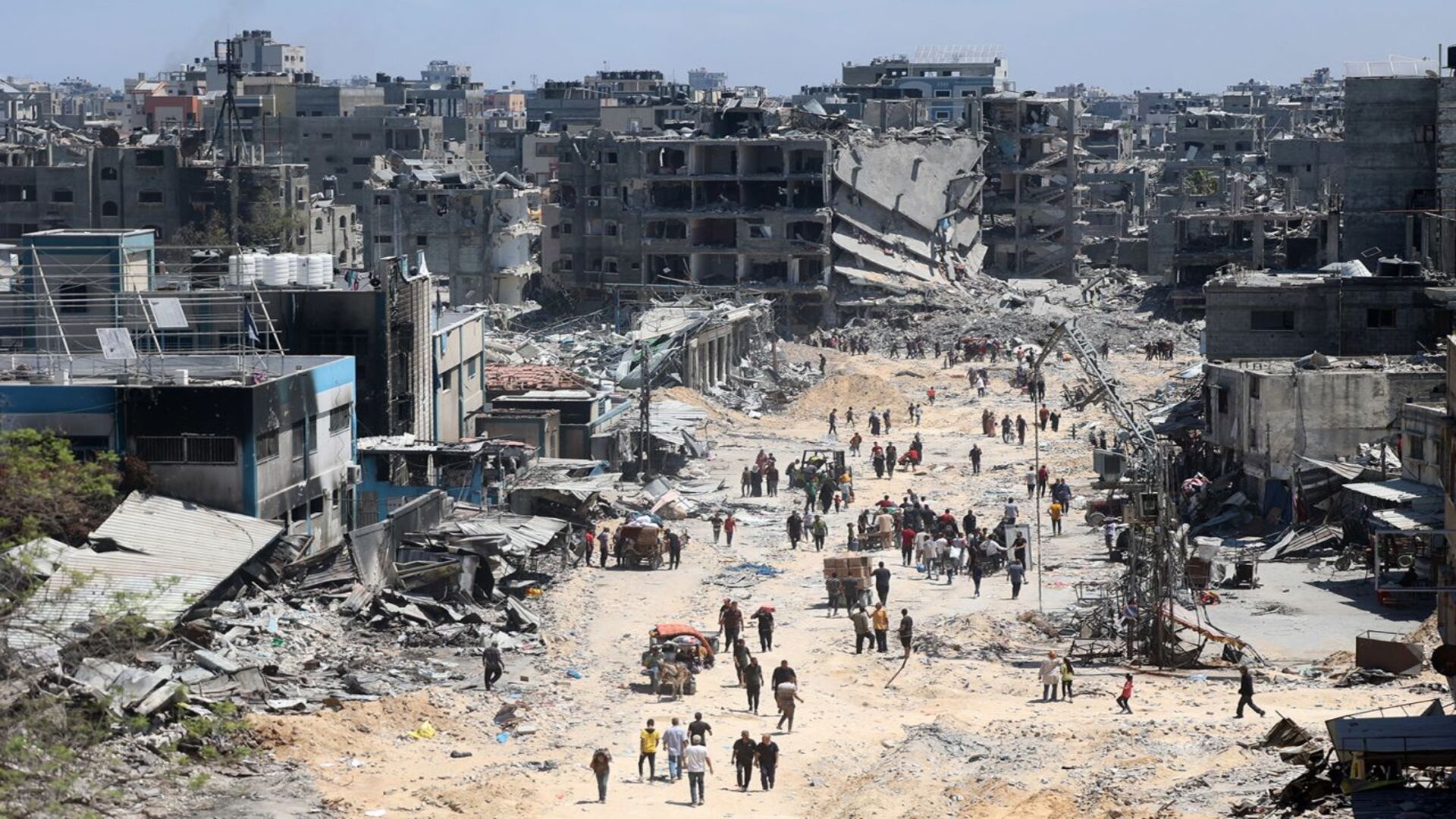

US President Donald Trump’s proposal to move Palestinians from Gaza to Egypt or Jordan faced renewed criticism on Tuesday, particularly as hundreds of thousands of Gazans displaced by the Israel-Hamas conflict returned to their shattered neighborhoods. A fragile ceasefire and a prisoner release deal had come into effect earlier this month, aimed at ending the 15-month conflict that began with Hamas’s raid on Israel on October 7, 2023. After the ceasefire took hold, Trump reiterated his plan to “clean out” the Gaza Strip, suggesting that Palestinians should move to “safer” locations like Egypt or Jordan.
However, Jordan quickly rejected the idea, emphasizing that its national security required Palestinians to remain on their land. Mohammad Momani, a government spokesman, stated that Palestinians should not be subjected to forced displacement under any circumstances. Qatar, which played a key role in mediating the ceasefire, also voiced its disagreement with the US proposal. Qatar’s foreign ministry spokesman, Majed al-Ansari, reiterated the country’s stance on the necessity of Palestinian rights and stressed that the two-state solution was the only viable path forward.
Following reports of a supposed phone call between Trump and Egyptian President Abdel Fattah al-Sisi over the weekend, Egypt denied the conversation. Egypt’s state information service issued a statement refuting the media claims about a phone call, with an official confirming that no such conversation had taken place. Trump had claimed that he wished Egyptian President Sisi would take in some Palestinians, but Egypt rejected the idea of forced displacement, reiterating its support for the steadfastness of the Palestinian people on their land.
As the ceasefire allowed the return of displaced Gazans, columns of people were seen heading back to northern Gaza for a second consecutive day. Despite the ceasefire, many returned to find nothing but rubble where their homes once stood. Saif Al-Din Qazaat, who returned to northern Gaza, described the bitter experience of sleeping in a tent next to the ruins of his house. He expressed his relief at being home but noted the harsh conditions, including the lack of enough blankets for his children despite the cold. Israel had permitted hundreds of thousands of Gazans to return to their homes in the north, and although the crowds had thinned by Tuesday, thousands of people were still seen heading north, fully aware of the devastation awaiting them.
In central Gaza’s Nuseirat refugee camp, children waved at Egyptian soldiers manning checkpoints as families traveled north with mattresses, bags, and other belongings. For many, this journey was not just about returning home but confronting the grim realities of over 15 months of conflict. Mona Abu Aathra, who managed to travel from central Gaza to Gaza City, reflected on the overwhelming challenges she faced. Her hometown of Beit Hanoun had been heavily impacted by a months-long Israeli military operation that persisted even after the ceasefire. She noted that when she returned to Gaza City, there was no drinking water, and most streets remained blocked by rubble from destroyed homes.