Women Face Growing Security Risks from Mob Violence and Online Harassment

- Update Time : 09:15:58 am, Thursday, 8 January 2026
- / 494 Time View
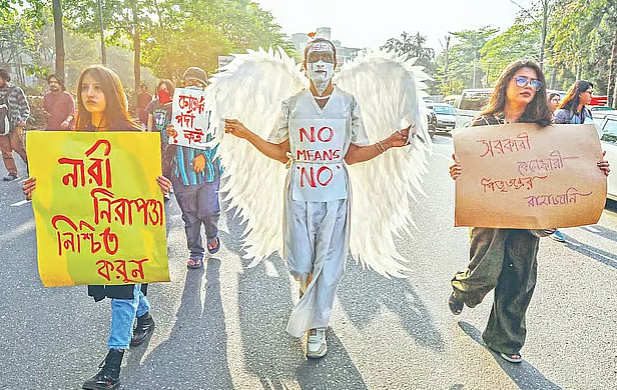

During last year’s Dhaka University Central Students’ Union (DUCSU) election, B M Fahmida Alam ran for the post of Secretary for Liberation War and Democratic Movements from the “Aparajeyo 71–Odommo 24” panel. Throughout the campaign, she became the target of intense online abuse, including rape threats and deeply misogynistic insults. She was labelled with slurs such as “Shahbagi,” accused of being unhygienic, and subjected to degrading personal attacks.
A report published on 17 October last year by Dismislab found that Fahmida Alam faced the highest level of online harassment among five prominent female candidates in the DUCSU election.
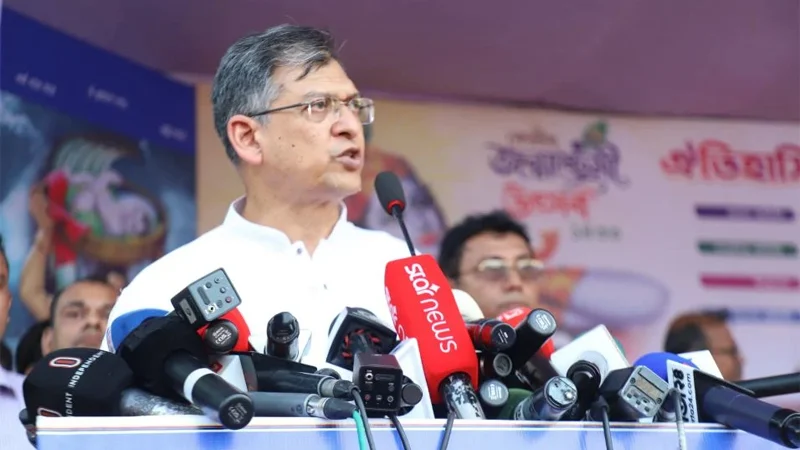
Speaking on 3 January, Fahmida said extremist and reactionary groups often use sexually violent language online to intimidate outspoken women. She recalled that the scale of abuse during the election was so severe that her family feared for her safety, and many urged her to quit politics altogether.
In 2025, online violence extended far beyond women in politics. Cultural activists, female athletes, entrepreneurs, and students also faced widespread harassment and threats.
On 4 February last year, 23-year-old national women’s footballer Matsushima Sumaiya reported receiving rape and death threats on her verified Facebook page.
According to Police Headquarters data, cases filed over violence against women and children increased by 18 percent in the first 11 months of 2025 compared to the entire previous year. When comparing 11-month periods over the past four years, 2025 recorded the highest number of such cases.
Violence was not limited to the digital space. Following the release of recommendations by the interim government’s Women’s Reform Commission, a section of society publicly attacked the commission’s chair and members over some of the proposals. Toward the end of the year, a university teacher at Rajshahi University made derogatory remarks about Begum Rokeya, a pioneer of women’s empowerment in Bengal.
Incidents of sexual violence inside homes, harassment on public transport, and public assaults also rose sharply.
Online hate targeting DUCSU candidates
Dismislab conducted a study on online attacks against five female DUCSU candidates: Umama Fatema, Sheikh Tasnim Afroz Imi, Fatima Tasnim Jhuma, B M Fahmida Alam, and Hema Chakma.
The study analyzed 500 social media posts and found that 22 percent contained hateful or harassing content. Among 13,674 comments under those posts, 24 percent were abusive. Fahmida Alam and Tasnim Afroz Imi faced the most hostility, with 39 percent and 38 percent of comments on their posts being hateful, respectively. Fatima Tasnim Jhuma faced the least, at 4 percent.
Growing fear of mob violence
On 1 March last year, two women were publicly assaulted in Mohammadpur, Dhaka, over smoking in public. One of them was a Jahangirnagar University student. Even after police intervened, crowds gathered outside the police station.
According to Ain o Salish Kendra (ASK), between January and December last year, media reports documented 560 incidents of domestic violence and 749 cases of rape. Half of the victims were under 18 years old, and more than 1,000 children suffered various forms of abuse during the year.
In another incident at Dhaka University, a female student was allegedly harassed over wearing an orna (scarf). Although the accused was arrested and suspended, supporters later publicly celebrated his release on bail, while the victim faced further harassment.
Similar incidents occurred elsewhere:
– In Munshiganj, two young women were beaten with belts in public;
– In Mymensingh, a female dancer was assaulted, had her hair cut, and her face blackened;
– In Jaypurhat and Rangpur, women’s football matches were cancelled following threats and protests.
ASK’s human rights report noted at least three cases where women were victims of mob beatings and warned of a worsening environment of insecurity. The report highlighted the rise of “moral policing,” where women are targeted over their clothing, behavior, or beliefs.
Violence across regions
Some of the most disturbing cases involved children and ethnic minority women. In Magura, an eight-year-old girl died after being raped and strangled, leading to amendments in laws governing sexual violence. In Khagrachhari, protests over a rape allegation resulted in gunfire that killed three people. In another case, an indigenous woman was raped and murdered, with extreme brutality.
Public transport also remained unsafe. In October, a young woman was assaulted by a bus conductor in Mohammadpur, an experience she says continues to traumatize her.
Police data shows that from January to November 2025, 20,691 cases related to violence against women and children were filed, up from 17,571 cases the previous year.
A climate of insecurity
A study titled Women’s Manifesto, published in November by Dhaka University’s Department of Women and Gender Studies, found that over 66 percent of women surveyed considered violence in public transport, digital spaces, and family environments to be severe problems.
Professor Syed Md Shaikh Imtiaz of the department said mob culture and attacks on women have intensified since the July mass uprising. He warned that fear among women undermines progress in education, the economy, and social development. The study found that women want stronger efforts to build gender sensitivity among men, which could help address the crisis more effectively.