Storage Shortage Sparks Crisis, Potato Farmers Face Heavy Losses

- Update Time : 06:51:08 am, Monday, 17 March 2025
- / 329 Time View
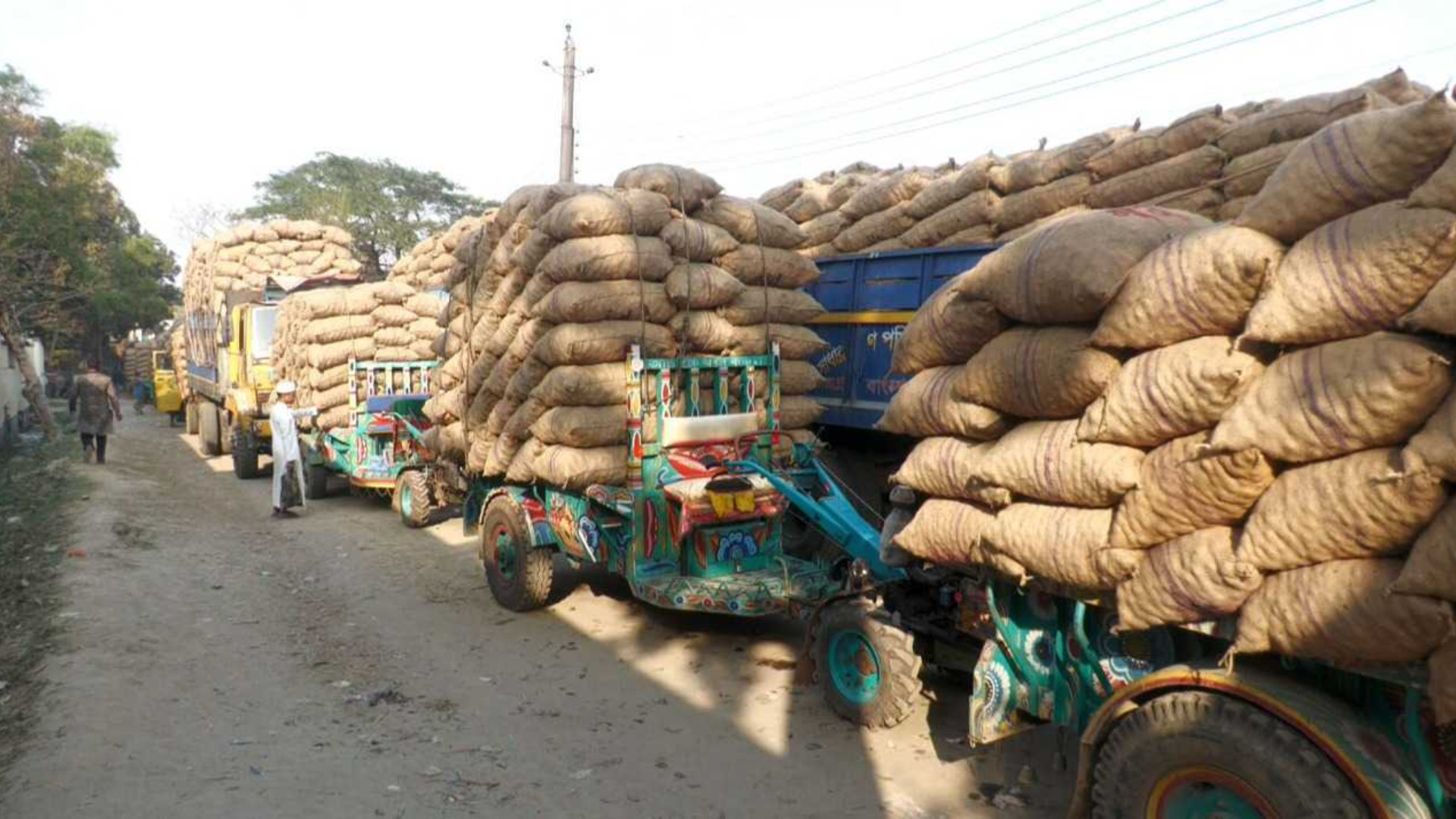

Farmers in Sherpur are facing massive losses as they struggle to store their surplus potatoes. With cold storage facilities already filled to capacity, hundreds of trucks and trolleys loaded with potatoes are left waiting in long queues. Farmers are unable to return with their produce, yet selling at the current market price would only deepen their losses.
In Noihata, Sherpur, a private cold storage facility in the BSCIC industrial zone has been overwhelmed with demand. Despite days of waiting, many farmers are unable to store their potatoes. The government-run cold storage facilities in Nakla (2,000 metric tons capacity) and Sadar (1,000 metric tons capacity) are already full, while the district’s only large-scale private cold storage with a 10,000 metric ton capacity is nearly at maximum capacity.
Farmers from Sherpur and neighboring districts continue to arrive with truckloads of potatoes, but announcements over loudspeakers inform them that no more space is available. Desperate to secure storage, farmers insist on at least reserving space for seed potatoes, which are crucial for the next planting season.
According to the Sherpur Agricultural Office, the potato cultivation target for the 2024–25 season was set at 5,212 hectares, but farmers ended up cultivating 105 hectares more. As a result, production exceeded expectations, reaching 95,706 metric tons instead of the projected 93,816 metric tons. However, due to low market prices, farmers are struggling to break even and are seeking storage options to prevent further losses.
The crisis has raised concerns about the future of potato cultivation. Farmers fear that without proper storage facilities, seed potatoes will be lost, leading to reduced production next season and potential price hikes. Many have invested in larger potato crops this year, expecting better returns, but the storage shortage has left them frustrated.
Cold storage supervisors state that their facilities are almost completely occupied, with only a few remaining slots. Meanwhile, agricultural officials suggest that farmers adopt traditional storage methods at home, which can preserve potatoes for up to three months. They attribute the low prices not to overproduction but to a breakdown in market syndicates.
Farmers are now urging the government to establish more cold storage facilities to support future potato production. Without immediate intervention, they warn that potato cultivation could decline, potentially leading to shortages and price spikes in the coming years.