How can a nation build a democratic welfare state?

- Update Time : 04:37:23 am, Thursday, 28 August 2025
- / 311 Time View

Towards a Democratic Welfare State: The Role of NGOs and Cooperatives
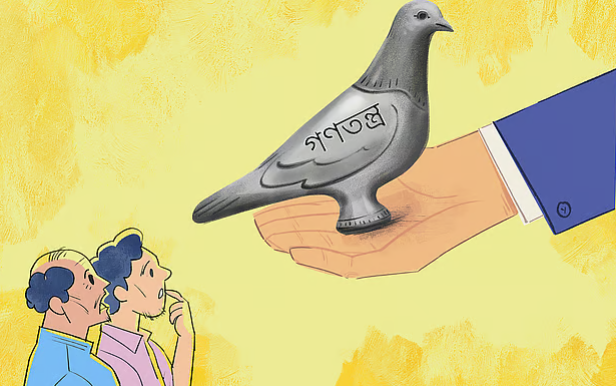
Since the mass uprising of 2024, the demand for a democratic welfare state has gained momentum in public debate. Such a system cannot rest on charity or goodwill alone—it must be built on the principle of rights. Citizens are entitled to basic guarantees from the state: food, housing, education, healthcare, and social protection. A truly democratic state is measured by its ability to uphold these rights for all.
Missing in the Debate: NGOs and Microfinance
Although institutional reforms are widely discussed, the contribution of NGOs rarely enters the conversation. Yet, these organisations, along with microfinance institutions, play a powerful role in the economy. Currently, 724 microfinance providers serve around 32 million clients and have disbursed nearly Tk 1.6 trillion in loans.
If Bangladesh wants to achieve welfare goals, these institutions must move beyond their limited role in credit, relief, and basic service delivery. With their resources, networks, and infrastructure, they can influence entire markets—helping stabilise food prices, protect farmers’ earnings, and provide affordable housing.
At the same time, civil society’s independent voice must be safeguarded. Advocacy, community mobilisation, and demands for accountability are essential for democracy and must be strengthened, not diminished.
Breaking Oligarchies in the Food Market
Rising food prices have been the single largest driver of long-term inflation. In June 2024, official data showed food inflation at 14%—a ten-year record. Food still consumes nearly half of household spending, yet farmers capture only a small slice of the consumer price. The majority goes to entrenched middlemen controlling storage, transport, and wholesale networks.
NGOs could challenge this structure by forming farmer-owned cooperatives and retail outlets. The Mondragon cooperative in Spain provides a powerful precedent—its supermarket chain Eroski cut out intermediaries, lowering prices for consumers while raising earnings for producers.
Collective Ownership for Affordable Goods
India’s Amul dairy revolution demonstrated how small rural producers, once marginalised, could transform into a nationwide economic force. By uniting under a cooperative model, establishing village collection systems, and controlling processing and distribution, they reshaped an entire sector.
In Bangladesh, microfinance institutions could replicate this model for staple goods—rice, vegetables, lentils—through three pillars:
-
Legally Recognised Producer Groups – enabling farmers to negotiate as collectives.
-
Storage and Logistics Investment – allowing producers to retain more value.
-
Digital Market Platforms – connecting buyers and farmers directly through escrow systems to ensure fair payments.
This could raise farmers’ income share by 15–30% while reducing consumer costs by 10–15%, easing inflation and breaking the grip of middlemen.
Housing for the Many, Not the Few
Dhaka has become one of the most expensive South Asian cities relative to income. Central Dhaka apartments average USD 717 per square metre—far beyond the reach of working-class families. Housing costs now account for over 10% of family budgets, up from 6% in 2000, driven by speculation, weak regulation, and unplanned growth.
NGOs can step in with innovative housing solutions:
-
Micro-mortgages (as in Mexico’s Infonavit), offering low-interest loans for informal workers.
-
Rent-to-own models (used in South Africa) that gradually turn tenants into homeowners.
-
Community Land Trusts (CLTs), where NGOs hold land collectively to prevent speculation, as seen in the Champlain Housing Trust (US).
-
Public-NGO Partnerships, where the state provides land and infrastructure loans while NGOs handle development and management.
Institutional and Policy Changes Needed
To make these initiatives sustainable, regulatory and governance reforms are necessary. For example:
-
A legal framework to support NGO-led markets that sell goods at socially determined prices.
-
Tax incentives for reinvested profits used for social purposes.
-
Integration of warehouse receipt systems with microfinance loans, allowing stored produce to serve as collateral.
-
Government procurement of school or hospital food supplies sourced through farmer-NGO networks.
In housing, policies should include affordability clauses in government-supported projects. Governance of these systems should involve elected boards representing both producers and consumers, with mandatory audits, transparent procurement, and price regulations.
A supervisory commission could be formed to oversee NGO-led markets and housing projects, including representatives from the finance ministry, microfinance regulators, civil society, and producer groups.
Building a Welfare-Oriented Partnership
These reforms would not only reduce inflation and housing costs but also democratise access to markets and strengthen economic rights. Achieving this requires more than technocratic fixes—it calls for a new social contract.
By transforming NGOs and microfinance institutions into engines of collective bargaining, fair pricing, and inclusive development, Bangladesh can take concrete steps toward a welfare state that is democratic in both form and function.
The creation of such a system will not be automatic—it requires bold, community-driven partnerships guided by a clear social vision.
— Rashed Al Mahmud Titumir, Professor of Development Studies, University of Dhaka