hantom Employees Found on State-Owned Tea Plantations

- Update Time : 05:48:21 am, Wednesday, 25 February 2026
- / 34 Time View

Tea Gardens Asked to Repay Fixed Deposit Funds
Workers line up to submit tea leaves at government-owned tea estates. There are currently 2,568 workers employed across these state-run gardens.
The Bangladesh Tea Board has formally instructed tea estates to repay money that had previously been withdrawn from fixed deposits and provided to them as temporary financial support. The letter, signed by Chief Accounts Officer Abul Basar Siddiqui, states that the funds were issued as loans and that the Tea Board could have earned at least a 10 percent annual return had the money been invested elsewhere.
Because the loans have not yet been repaid, the Board says it is facing financial losses. The letter also directs garden authorities to improve management practices and ensure operational costs are covered through their own revenue. It further warns that no additional financial assistance will be available from the Bangladesh Tea Board in the future.
Shahid Nawaz, manager of New Samnabag Tea Garden, said he only took charge this year and inherited long-standing issues. “These problems didn’t arise overnight,” he explained. “If the estate survives, we may eventually be able to repay the deposit money.”
He added that labor-related challenges complicate operations. Although the garden has a large workforce, not all workers are regularly available. Some remain absent due to illness, while others decline to work. Organized labor groups also resist disciplinary measures, sometimes responding with strikes.
Searching for Opportunities Amid Crisis
National Tea Company, a public-private partnership entity, oversees 12 tea estates. Mamunur Rashid joined as chairman in February 2025 and soon identified several production-related challenges.
After assuming office, he found that 1.4 million kilograms of tea had remained unsold. With special approval, steps were taken to sell the stock.
Rashid noted that market conditions have improved this year. Previously, the production cost per kilogram was around 230 taka, while the selling price was only 160 taka, resulting in losses. However, recent auction prices have ranged between 245 and 253 taka per kilogram.
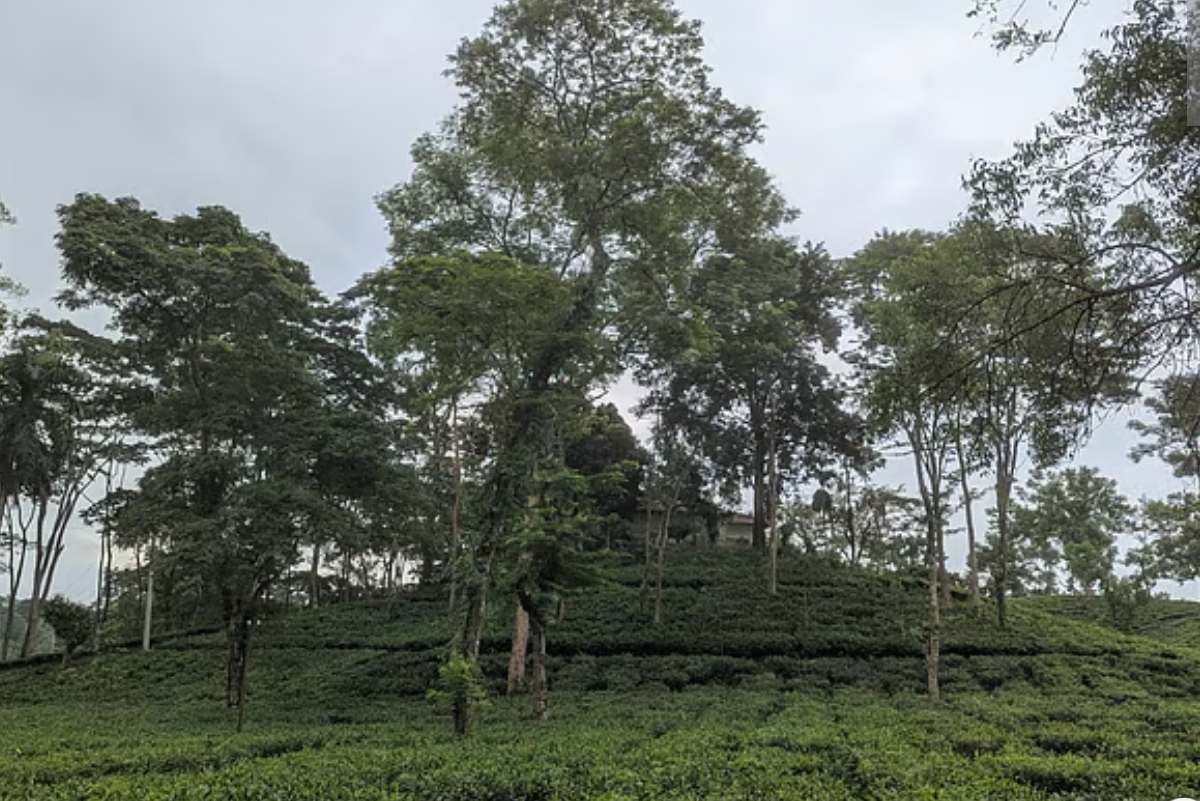
New Samnabag is the largest among the country’s government-owned tea gardens.
To enhance overall tea quality, the company plans to recruit 20 trainee assistant managers from agricultural universities. The estates are also expanding into specialty tea production, including green tea, white tea, yellow tea, and experimental varieties. According to Rashid, experimental teas are gaining higher value in international markets. Efforts are underway to expand exports to the United Kingdom, Saudi Arabia, and Pakistan.
Despite these initiatives, several longstanding issues persist. These include accumulated losses, limited worker skill development, political appointments within administrative positions, insufficient investment, and high-interest bank loans.