Dhaka 8:00 pm, Friday, 5 June 2026

Metro Rail Revenue Falls Short of Covering Loan Repayments

Niloy Mridha
  • Update Time : 07:33:16 am, Wednesday, 6 August 2025
  • / 962 Time View

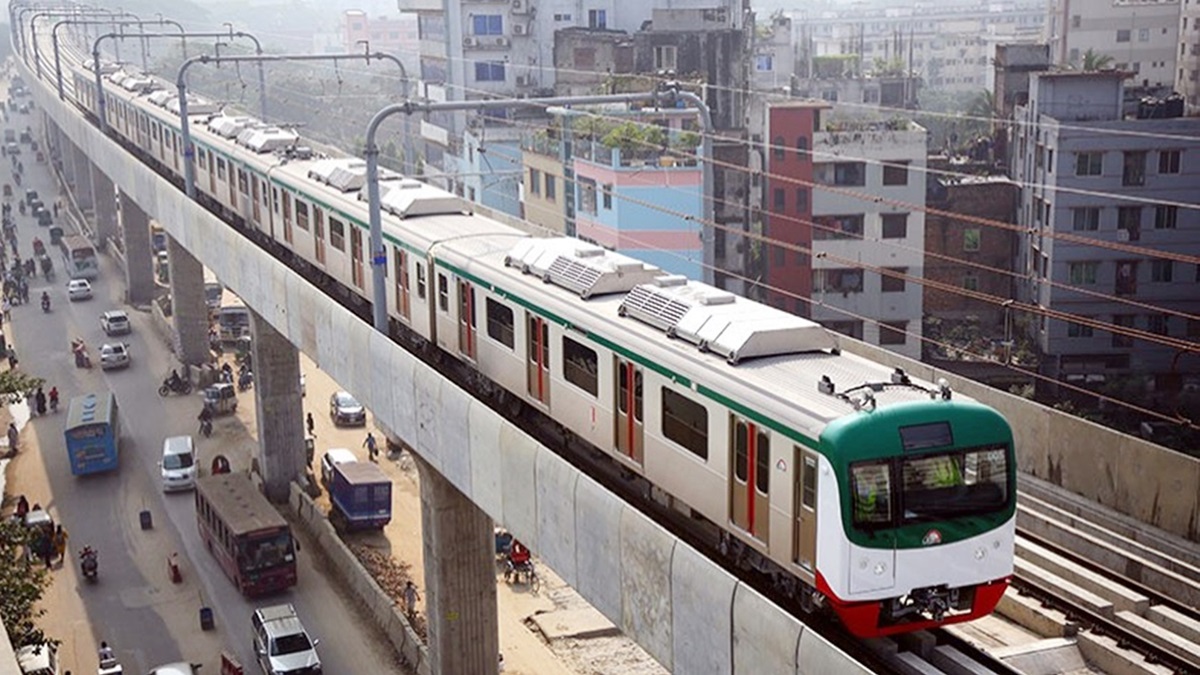
Dhaka’s metro rail system, though popular and operating near full capacity during rush hours, is not generating enough revenue to repay the loans used to build it, raising concerns about long-term financial sustainability.

Despite carrying around 400,000 passengers daily on the MRT Line-6 — running from Uttara to Motijheel — income from ticket sales remains far below the amount required to meet annual loan obligations. Officials and transport analysts say government subsidies will likely be necessary to meet repayment targets.

Financial Gap Despite Strong Ridership

According to provisional figures, metro ticket sales brought in about Tk 4 billion in the 2024–25 fiscal year. However, annual loan repayments between 2025 and 2031 range from Tk 4.65 billion to as much as Tk 7.4 billion. The loan burden is set to increase, with over Tk 37 billion due over a six-year period starting in 2026.

Though fares are exempt from VAT, they remain higher than metro services in many neighboring countries. Raising fares further is seen as unfeasible, leaving authorities to look toward alternative revenue sources—such as longer operating hours, improved station access, and commercial leasing of station spaces.

Limited Operations Affecting Revenue

Trains currently run every 8 to 12 minutes during peak periods, instead of the scheduled 3.5 minutes. Service ends by 10:00 pm daily, limiting potential earnings. Officials say boosting train frequency and expanding service hours are key to improving the financial outlook.

The full extension to Kamalapur is still under construction. Once operational, it is expected to draw in more passengers and slightly improve revenue, though operational and maintenance costs will also rise.

Cost vs. Recovery Timeline

The MRT Line-6 project, launched in 2012 and largely funded by Japan’s JICA (covering 59% of the cost), has seen its budget increase significantly—from the original plan to a current estimated total of Tk 334.72 billion. A total of Tk 197.18 billion was borrowed under five separate agreements with JICA, with repayment scheduled over 30 years in two installments annually.

While DMTCL (Dhaka Mass Transit Company Limited) is responsible for operations, loan repayments are funneled through the Ministry of Finance, which handles the payments to JICA. Exchange rate fluctuations could further increase the local currency cost of repayment.

Metro officials acknowledge that even with higher ticket sales—say, Tk 7 billion per year—it could take more than five decades to recover the construction cost alone. This timeline doesn’t factor in future maintenance, upgrades, or inflation.

Mounting Operating Costs

Last fiscal year, over Tk 1 billion was spent on staff salaries, electricity, and regular operational costs. With contractor agreements for maintenance ending soon, DMTCL will take over direct maintenance responsibilities starting January, further increasing expenditure.

Expert Suggestions

Professor Shamsul Haque of BUET’s Civil Engineering Department emphasized that the elevated nature of MRT Line-6 helped attract high passenger numbers, but future lines—especially those planned underground—may not enjoy the same ridership.

He advised authorities to prioritize financial efficiency and explore new revenue streams. “Fares are already high compared to regional standards. Raising them further isn’t realistic. The focus should be on increasing train frequency, extending service hours, and generating non-fare revenue through commercial use of metro spaces,” he said.

Shamsul also cautioned that upcoming metro projects are expected to cost significantly more than MRT Line-6. “If future lines cost multiple times more, then relying solely on fare revenue won’t be viable. Strategic planning and cost control are essential from the start,” he warned.

Tag :

Please Share This Post in Your Social Media

Metro Rail Revenue Falls Short of Covering Loan Repayments

Update Time : 07:33:16 am, Wednesday, 6 August 2025

Dhaka’s metro rail system, though popular and operating near full capacity during rush hours, is not generating enough revenue to repay the loans used to build it, raising concerns about long-term financial sustainability.

Despite carrying around 400,000 passengers daily on the MRT Line-6 — running from Uttara to Motijheel — income from ticket sales remains far below the amount required to meet annual loan obligations. Officials and transport analysts say government subsidies will likely be necessary to meet repayment targets.

Financial Gap Despite Strong Ridership

According to provisional figures, metro ticket sales brought in about Tk 4 billion in the 2024–25 fiscal year. However, annual loan repayments between 2025 and 2031 range from Tk 4.65 billion to as much as Tk 7.4 billion. The loan burden is set to increase, with over Tk 37 billion due over a six-year period starting in 2026.

Though fares are exempt from VAT, they remain higher than metro services in many neighboring countries. Raising fares further is seen as unfeasible, leaving authorities to look toward alternative revenue sources—such as longer operating hours, improved station access, and commercial leasing of station spaces.

Limited Operations Affecting Revenue

Trains currently run every 8 to 12 minutes during peak periods, instead of the scheduled 3.5 minutes. Service ends by 10:00 pm daily, limiting potential earnings. Officials say boosting train frequency and expanding service hours are key to improving the financial outlook.

The full extension to Kamalapur is still under construction. Once operational, it is expected to draw in more passengers and slightly improve revenue, though operational and maintenance costs will also rise.

Cost vs. Recovery Timeline

The MRT Line-6 project, launched in 2012 and largely funded by Japan’s JICA (covering 59% of the cost), has seen its budget increase significantly—from the original plan to a current estimated total of Tk 334.72 billion. A total of Tk 197.18 billion was borrowed under five separate agreements with JICA, with repayment scheduled over 30 years in two installments annually.

While DMTCL (Dhaka Mass Transit Company Limited) is responsible for operations, loan repayments are funneled through the Ministry of Finance, which handles the payments to JICA. Exchange rate fluctuations could further increase the local currency cost of repayment.

Metro officials acknowledge that even with higher ticket sales—say, Tk 7 billion per year—it could take more than five decades to recover the construction cost alone. This timeline doesn’t factor in future maintenance, upgrades, or inflation.

Mounting Operating Costs

Last fiscal year, over Tk 1 billion was spent on staff salaries, electricity, and regular operational costs. With contractor agreements for maintenance ending soon, DMTCL will take over direct maintenance responsibilities starting January, further increasing expenditure.

Expert Suggestions

Professor Shamsul Haque of BUET’s Civil Engineering Department emphasized that the elevated nature of MRT Line-6 helped attract high passenger numbers, but future lines—especially those planned underground—may not enjoy the same ridership.

He advised authorities to prioritize financial efficiency and explore new revenue streams. “Fares are already high compared to regional standards. Raising them further isn’t realistic. The focus should be on increasing train frequency, extending service hours, and generating non-fare revenue through commercial use of metro spaces,” he said.

Shamsul also cautioned that upcoming metro projects are expected to cost significantly more than MRT Line-6. “If future lines cost multiple times more, then relying solely on fare revenue won’t be viable. Strategic planning and cost control are essential from the start,” he warned.