Dhaka 4:00 pm, Thursday, 8 October 2026

Government to Enforce Stricter Regulations on Electric Rickshaws

Niloy Mridha
  • Update Time : 04:11:41 am, Saturday, 9 August 2025
  • / 1539 Time View

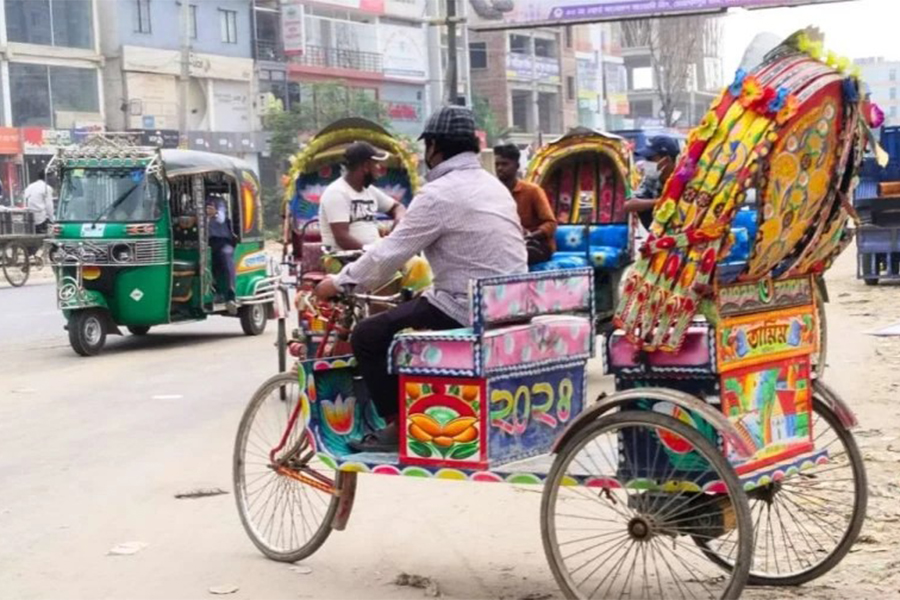
The government is preparing to implement a stricter policy to better regulate the growing number of unregistered battery-powered three-wheelers, commonly called electric auto-rickshaws or easy bikes, which are widely operating across the country, including the capital city.

These vehicles have caused significant traffic congestion and increased accident risks on city roads and highways due to their uncontrolled and often unsafe operation.

Attempts to clear these electric rickshaws from major roads in Dhaka have so far been unsuccessful, facing opposition from drivers and owners.

The Bangladesh Road Transport Authority (BRTA) estimates that over six million electric rickshaws run across the country, with about 1 to 1.2 million operating in Dhaka alone.

To address this, the Road Transport and Highways Division under the Ministry of Road Transport and Bridges has drafted the Electric Three-Wheeler Management Policy 2025.

Under the draft policy:

  • All battery-operated three-wheelers must be registered with BRTA.

  • Drivers must have valid licenses.

  • Vehicles will only be allowed on designated routes, excluding national highways.

  • Different speed limits will apply to medium-speed and low-speed electric rickshaws.

A passenger and goods transport committee, formed under the Road Transport Act, will decide how many vehicles can operate in each area.

Ehsanul Haque, Secretary of the Road Transport and Highways Division, stated that the rapid increase of unfit electric rickshaws has disrupted traffic nationwide. The draft policy is now being reviewed with stakeholders and is expected to be approved soon. Once enforced, it will curb the current disorder caused by unregulated electric rickshaws.

Additional provisions in the draft include:

  • Ownership restrictions: a person can own up to three medium-speed and five low-speed electric rickshaws.

  • A requirement for all vehicles to be upgraded to safe models within one year.

  • Speed limits set at a maximum of 50 km/h for medium-speed and 30 km/h for low-speed vehicles.

  • Vehicles must be built according to BRTA-approved designs, and all components must be certified by the Bangladesh Standards and Testing Institution (BSTI).

  • Manufacturers and assemblers must be registered with the Bangladesh Investment Development Authority (BIDA).

  • Only new vehicles and BSTI-approved parts can be imported or assembled locally, with BRTA approval.

  • Charging stations must follow the Power Division’s 2021 guidelines.

  • BRTA will regulate fares.

  • Manufacturers must be officially listed with BRTA.

  • Vehicle owners must display contact details visibly.

  • Driver training will be organized by BRTA in cooperation with local transport committees.

Electric rickshaws will be banned from national highways, except for service lanes, and will operate only in designated urban and rural areas, including city corporations and municipalities.

Local transport committees will determine vehicle numbers and routes.

Violations will be penalized under the Road Transport Act 2018, and offenders will face legal action.

All unsafe low-speed electric rickshaws must be converted to approved models within one year, or face legal consequences, as stated in the Electric Motor Vehicle Registration and Operation Policy 2023.

The policy also highlights the need to phase out unauthorized locally made vehicles powered by diesel or petrol engines, commonly used in agriculture and waterways. Local transport committees will oversee their replacement with approved alternatives.
Tag :

Please Share This Post in Your Social Media

Government to Enforce Stricter Regulations on Electric Rickshaws

Update Time : 04:11:41 am, Saturday, 9 August 2025

The government is preparing to implement a stricter policy to better regulate the growing number of unregistered battery-powered three-wheelers, commonly called electric auto-rickshaws or easy bikes, which are widely operating across the country, including the capital city.

These vehicles have caused significant traffic congestion and increased accident risks on city roads and highways due to their uncontrolled and often unsafe operation.

Attempts to clear these electric rickshaws from major roads in Dhaka have so far been unsuccessful, facing opposition from drivers and owners.

The Bangladesh Road Transport Authority (BRTA) estimates that over six million electric rickshaws run across the country, with about 1 to 1.2 million operating in Dhaka alone.

To address this, the Road Transport and Highways Division under the Ministry of Road Transport and Bridges has drafted the Electric Three-Wheeler Management Policy 2025.

Under the draft policy:

  • All battery-operated three-wheelers must be registered with BRTA.

  • Drivers must have valid licenses.

  • Vehicles will only be allowed on designated routes, excluding national highways.

  • Different speed limits will apply to medium-speed and low-speed electric rickshaws.

A passenger and goods transport committee, formed under the Road Transport Act, will decide how many vehicles can operate in each area.

Ehsanul Haque, Secretary of the Road Transport and Highways Division, stated that the rapid increase of unfit electric rickshaws has disrupted traffic nationwide. The draft policy is now being reviewed with stakeholders and is expected to be approved soon. Once enforced, it will curb the current disorder caused by unregulated electric rickshaws.

Additional provisions in the draft include:

  • Ownership restrictions: a person can own up to three medium-speed and five low-speed electric rickshaws.

  • A requirement for all vehicles to be upgraded to safe models within one year.

  • Speed limits set at a maximum of 50 km/h for medium-speed and 30 km/h for low-speed vehicles.

  • Vehicles must be built according to BRTA-approved designs, and all components must be certified by the Bangladesh Standards and Testing Institution (BSTI).

  • Manufacturers and assemblers must be registered with the Bangladesh Investment Development Authority (BIDA).

  • Only new vehicles and BSTI-approved parts can be imported or assembled locally, with BRTA approval.

  • Charging stations must follow the Power Division’s 2021 guidelines.

  • BRTA will regulate fares.

  • Manufacturers must be officially listed with BRTA.

  • Vehicle owners must display contact details visibly.

  • Driver training will be organized by BRTA in cooperation with local transport committees.

Electric rickshaws will be banned from national highways, except for service lanes, and will operate only in designated urban and rural areas, including city corporations and municipalities.

Local transport committees will determine vehicle numbers and routes.

Violations will be penalized under the Road Transport Act 2018, and offenders will face legal action.

All unsafe low-speed electric rickshaws must be converted to approved models within one year, or face legal consequences, as stated in the Electric Motor Vehicle Registration and Operation Policy 2023.

The policy also highlights the need to phase out unauthorized locally made vehicles powered by diesel or petrol engines, commonly used in agriculture and waterways. Local transport committees will oversee their replacement with approved alternatives.