Government introduces curbs on Prime Minister’s absolute powers

- Update Time : 08:33:32 am, Monday, 18 August 2025
- / 318 Time View
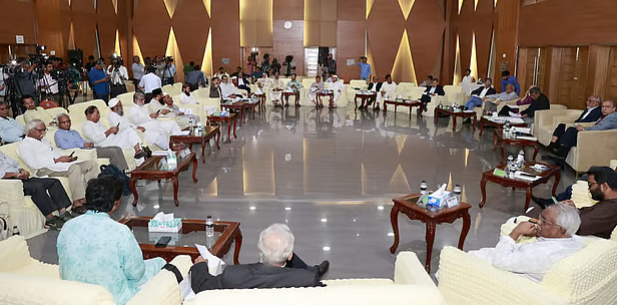

Consensus-Based Constitutional Reforms to Slightly Curtail Prime Minister’s Powers
Discussions on constitutional reforms in Bangladesh have focused on how much the Prime Minister’s absolute authority will be reduced and how effectively the proposed changes will be implemented. The National Consensus Commission has recorded both agreement and dissent from political parties on key reform proposals.
It remains uncertain whether the BNP, which has expressed dissent on several major proposals, would implement these reforms if it comes to power. Overall, the reforms are expected to modestly limit the Prime Minister’s powers.
Origins of the Reform Proposals
The Constitution Reform Commission, after reviewing the current constitution, highlighted the risks of excessive concentration of power in the Prime Minister’s office. According to the commission, this concentration threatens Bangladesh’s democratic system, and one key aim of the reforms is to prevent the emergence of an autocratic or fascist regime.
Proposals to redistribute power include limiting the Prime Minister’s authority, creating checks and balances among institutions, revising appointment procedures for constitutional bodies, introducing a bicameral legislature, and restricting the duration a person can serve as Prime Minister or hold multiple positions simultaneously.
Appointments to Constitutional Institutions
Under the current constitution, the Prime Minister holds almost all executive power. The President can only act independently in appointing the Prime Minister or Chief Justice, otherwise acting on the Prime Minister’s advice.
The Reform Commission initially proposed forming a National Constitutional Council (NCC) to make appointments to key constitutional bodies such as the Election Commission (EC), Public Service Commission (PSC), Attorney General, and military chiefs. This would have significantly reduced the Prime Minister’s influence. However, opposition from the BNP and other parties led the Consensus Commission to drop the NCC proposal in favor of forming appointment committees with government, opposition, and judiciary representatives.
While consensus was reached for EC appointments, dissent from BNP and allied parties on PSC, Ombudsman, Comptroller and Auditor General (CAG), and Anti-Corruption Commission appointments means there is no guarantee these reforms will be enforced if the BNP returns to power.
Limiting Prime Minister’s Multiple Roles
Traditionally, the Prime Minister has simultaneously held the positions of party chief and Leader of the House, concentrating control over the government, parliament, and party. The Reform Commission recommended separating these roles. The Consensus Commission agreed that the Prime Minister cannot also serve as party chief, though the BNP and some parties expressed dissent.
Other Measures to Reduce Power
Some consensus-based reforms include:
-
A selection committee comprising government, opposition, and judiciary representatives will appoint the Chief Election Commissioner and other EC members.
-
The President will have direct authority over appointments to the Human Rights Commission, Information Commission, Press Council, Law Commission, Bangladesh Bank Governor, and Energy Regulatory Commission, although opposition from six parties, including BNP, limited full implementation.
-
The Prime Minister will be restricted to serving no more than 10 years in office.
-
Declaration of a state of emergency will require cabinet approval, with the opposition leader present in relevant meetings.
Enhancing President’s Role
The reforms aim to create a balanced relationship between the Prime Minister and the President. While the President’s powers were proposed for 12 institutions, the final agreement allows direct appointments to the Human Rights Commission, Information Commission, Press Council, Law Commission, Bangladesh Bank Governor, and Energy Regulatory Commission — with partial dissent limiting some areas.
Parliamentary Accountability and Bicameral Legislature
Proposals included creating a bicameral parliament, with the upper house elected proportionally based on nationwide vote share, ensuring no single-party majority. The BNP dissented, preferring distribution based on seats in the lower house.
Consensus was reached on:
-
Amending Article 70 to allow MPs more freedom of vote, except on money bills and confidence votes.
-
Allowing opposition MPs to chair key parliamentary committees, including Public Accounts, Estimates, Privileges, and Public Undertakings Committees.
-
Standing committees related to important ministries will also have opposition representation proportional to their parliamentary seats.
These measures are intended to increase accountability and reduce the Prime Minister’s unchecked authority.
Expert Views
Professor Ali Riaz, Vice Chairman of the National Consensus Commission, told Prothom Alo that significant progress has been made: the Prime Minister’s powers have been partially curtailed, term limits set, key parliamentary committees assigned to opposition members, and unchecked influence over the EC reduced.
Observers note that while the reforms modestly reduce the Prime Minister’s authority, full implementation depends on political consensus and the willingness of future governments to abide by them.