Dhaka 1:57 am, Sunday, 11 October 2026

Ahmed Rafiq, veteran of the Language Movement, hospitalized at LabAid

Niloy Mridha
  • Update Time : 08:42:14 am, Monday, 18 August 2025
  • / 531 Time View

Language Movement Veteran Ahmed Rafiq in Critical Condition at LabAid Hospital

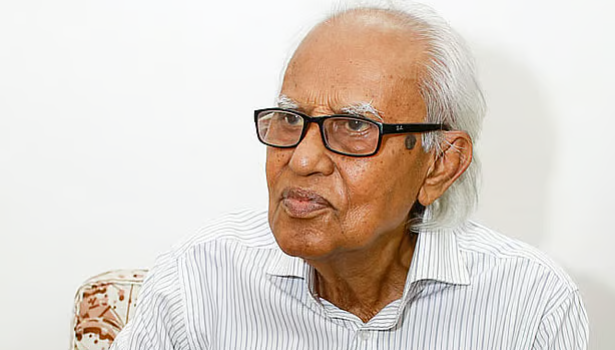
Ahmed Rafiq, renowned Language Movement activist, writer, and researcher, is critically ill and receiving treatment at LabAid Hospital in Dhaka. He was admitted around 12:30 am on Sunday, and the hospital has taken full responsibility for his care.

A M Shamim, chairman of Labaid Group, told Prothom Alo on Monday morning, “Ahmed Rafiq is an enlightened individual who has made immense contributions to the country. LabAid Hospital will ensure the best possible care for him and will cover all medical expenses. Once he recovers sufficiently, we will arrange regular weekly checkups at home.”

Shamim added that Rafiq’s condition is gradually improving, though he continues to face complications related to his kidneys and uncontrolled diabetes.

Despite his health issues, Ahmed Rafiq had been living alone in a rented apartment in Gaushnagar, New Eskaton. When visited recently, the nearly centenarian veteran of the Language Movement was found bedridden, appearing extremely frail. When asked about his condition, he whispered, “Bad, very bad.”

For some time, BRAC University faculty member Ismail Sadi has been in touch with him. Rafiq has been cared for by his long-time personal assistant, Abul Kalam, who has been with him for 36 years.

Rafiq’s eyesight has deteriorated significantly since 2019. Although he underwent eye surgery that year, his vision did not improve substantially, and by 2023 he had become nearly blind. In 2021, he suffered a leg fracture from a fall, which further affected his health. The loss of sight and inability to write has caused him considerable emotional distress.

Born on 12 September 1929 in Brahmanbaria, Ahmed Rafiq lost his wife in 2006 and had no children. Beyond his extensive personal library and writings, he owns little material wealth. Over his lifetime, he has authored and edited more than 100 books, spanning poetry, essays, research, and historical works on the Language Movement. His two most recent publications, released at the 2023 Amar Ekushey Book Fair, include Bharat-Pakistan-Bangladesh Kotha (Somoy Publications) and Shilpa-Sanskritir Boishishtyo (Ei Samay Publications).

Recognized as a leading Rabindra scholar, Rafiq holds the title Rabindratattwacharya from the Tagore Research Institute in Kolkata. In Bangladesh, he has received the Ekushey Padak, the Bangla Academy Award, and numerous other honors in recognition of his lifelong contributions.

Earlier this month, Rafiq’s health deteriorated sharply. He was admitted to Community Medical College Hospital in Mogbazar on 12 July and discharged on 19 July. Using a walking stick, he could move a little at home, but since 7 August he has lost the ability to walk entirely.

Recently, the Ministry of Cultural Affairs provided financial support of 500,000 taka through the cultural affairs adviser to assist with his medical care.
Tag :

Please Share This Post in Your Social Media

Ahmed Rafiq, veteran of the Language Movement, hospitalized at LabAid

Update Time : 08:42:14 am, Monday, 18 August 2025

Language Movement Veteran Ahmed Rafiq in Critical Condition at LabAid Hospital

Ahmed Rafiq, renowned Language Movement activist, writer, and researcher, is critically ill and receiving treatment at LabAid Hospital in Dhaka. He was admitted around 12:30 am on Sunday, and the hospital has taken full responsibility for his care.

A M Shamim, chairman of Labaid Group, told Prothom Alo on Monday morning, “Ahmed Rafiq is an enlightened individual who has made immense contributions to the country. LabAid Hospital will ensure the best possible care for him and will cover all medical expenses. Once he recovers sufficiently, we will arrange regular weekly checkups at home.”

Shamim added that Rafiq’s condition is gradually improving, though he continues to face complications related to his kidneys and uncontrolled diabetes.

Despite his health issues, Ahmed Rafiq had been living alone in a rented apartment in Gaushnagar, New Eskaton. When visited recently, the nearly centenarian veteran of the Language Movement was found bedridden, appearing extremely frail. When asked about his condition, he whispered, “Bad, very bad.”

For some time, BRAC University faculty member Ismail Sadi has been in touch with him. Rafiq has been cared for by his long-time personal assistant, Abul Kalam, who has been with him for 36 years.

Rafiq’s eyesight has deteriorated significantly since 2019. Although he underwent eye surgery that year, his vision did not improve substantially, and by 2023 he had become nearly blind. In 2021, he suffered a leg fracture from a fall, which further affected his health. The loss of sight and inability to write has caused him considerable emotional distress.

Born on 12 September 1929 in Brahmanbaria, Ahmed Rafiq lost his wife in 2006 and had no children. Beyond his extensive personal library and writings, he owns little material wealth. Over his lifetime, he has authored and edited more than 100 books, spanning poetry, essays, research, and historical works on the Language Movement. His two most recent publications, released at the 2023 Amar Ekushey Book Fair, include Bharat-Pakistan-Bangladesh Kotha (Somoy Publications) and Shilpa-Sanskritir Boishishtyo (Ei Samay Publications).

Recognized as a leading Rabindra scholar, Rafiq holds the title Rabindratattwacharya from the Tagore Research Institute in Kolkata. In Bangladesh, he has received the Ekushey Padak, the Bangla Academy Award, and numerous other honors in recognition of his lifelong contributions.

Earlier this month, Rafiq’s health deteriorated sharply. He was admitted to Community Medical College Hospital in Mogbazar on 12 July and discharged on 19 July. Using a walking stick, he could move a little at home, but since 7 August he has lost the ability to walk entirely.

Recently, the Ministry of Cultural Affairs provided financial support of 500,000 taka through the cultural affairs adviser to assist with his medical care.