Dhaka 12:46 am, Saturday, 6 June 2026

Around the boat race, joy and unity filled the village

Niloy Mridha
  • Update Time : 04:38:53 am, Saturday, 20 September 2025
  • / 239 Time View

Once upon a time, Birgaon, a village on the banks of the haor, used to be alive with festivities. The nights echoed with jari and sari songs performed by village folk singers like Masru Pagla and Tachkir Pagla. After the monsoon, boat races were organized by the local youth. But gradually, those traditions faded away.

A group of residents, led by Shahidnur Ahmed of Shantiganj upazila, longed to bring back the spirit of their childhood village. About seven years ago, they decided to build a racing boat once again. The elders encouraged them, and with the initiative of the Khalpar Youth Association, villagers collected donations. Skilled carpenters were hired, and with nearly seven lakh taka spent, a new boat was built. It was named “Bir Pabon”—after the village itself.

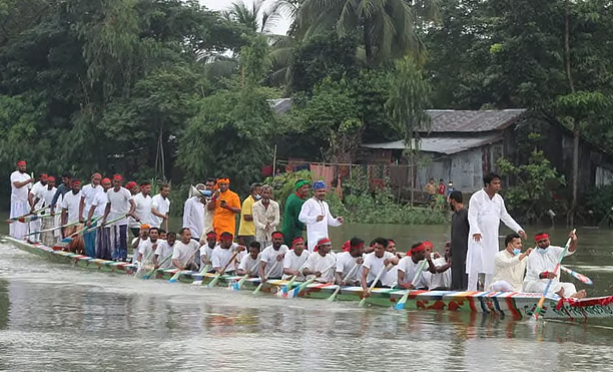
Since then, the young men of Birgaon have taken Bir Pabon to boat races across the haor region. Each race brings excitement: deciding who will row, who will sing the guiding sari songs, who will steer, and even what uniforms the rowers will wear. A week of practice and rehearsals follows, as drums and voices rise over the water.

When the day comes, Bir Pabon surges forward to the rhythm of traditional songs—sometimes echoing old folk lines, sometimes lifting the voices of Shah Abdul Karim. With every chant of “Shabash, hei-yo!”, the rowers push harder, cheered on by thousands of villagers along the banks. Sometimes they win prizes, sometimes they don’t—but the joy of racing is reward enough.

Inspired by Bir Pabon, others followed. Young men like Sadikur Rahman built Bir Bangla, while Ali Hasan created Rahim Shah Tori. Together, these boats not only join regional races but also stage their own competitions in the local haor, bringing the entire village together.

According to Shahidnur, “Many young people today waste their time in harmful activities. But here, our boys spend their free hours working with Bir Pabon instead.”

The Khalpar Youth Association has also grown beyond boat racing. Without any formal committee or official posts, members support cultural events, religious gatherings, and social causes. When disputes arise, the village elders step in to guide them. The boat is repaired every year through collective effort.

Over time, Bir Pabon has become more than just a racing boat. It now stands as a symbol of unity and shared dreams for the people of Birgaon.

Tag :

Please Share This Post in Your Social Media

Around the boat race, joy and unity filled the village

Update Time : 04:38:53 am, Saturday, 20 September 2025

Once upon a time, Birgaon, a village on the banks of the haor, used to be alive with festivities. The nights echoed with jari and sari songs performed by village folk singers like Masru Pagla and Tachkir Pagla. After the monsoon, boat races were organized by the local youth. But gradually, those traditions faded away.

A group of residents, led by Shahidnur Ahmed of Shantiganj upazila, longed to bring back the spirit of their childhood village. About seven years ago, they decided to build a racing boat once again. The elders encouraged them, and with the initiative of the Khalpar Youth Association, villagers collected donations. Skilled carpenters were hired, and with nearly seven lakh taka spent, a new boat was built. It was named “Bir Pabon”—after the village itself.

Since then, the young men of Birgaon have taken Bir Pabon to boat races across the haor region. Each race brings excitement: deciding who will row, who will sing the guiding sari songs, who will steer, and even what uniforms the rowers will wear. A week of practice and rehearsals follows, as drums and voices rise over the water.

When the day comes, Bir Pabon surges forward to the rhythm of traditional songs—sometimes echoing old folk lines, sometimes lifting the voices of Shah Abdul Karim. With every chant of “Shabash, hei-yo!”, the rowers push harder, cheered on by thousands of villagers along the banks. Sometimes they win prizes, sometimes they don’t—but the joy of racing is reward enough.

Inspired by Bir Pabon, others followed. Young men like Sadikur Rahman built Bir Bangla, while Ali Hasan created Rahim Shah Tori. Together, these boats not only join regional races but also stage their own competitions in the local haor, bringing the entire village together.

According to Shahidnur, “Many young people today waste their time in harmful activities. But here, our boys spend their free hours working with Bir Pabon instead.”

The Khalpar Youth Association has also grown beyond boat racing. Without any formal committee or official posts, members support cultural events, religious gatherings, and social causes. When disputes arise, the village elders step in to guide them. The boat is repaired every year through collective effort.

Over time, Bir Pabon has become more than just a racing boat. It now stands as a symbol of unity and shared dreams for the people of Birgaon.