Dhaka 3:32 am, Saturday, 25 April 2026

9% Annual Wage Hike in Garment Industry: Some Workers Benefit, Others Don’t

Staff Correspondent :
  • Update Time : 09:20:27 am, Saturday, 17 January 2026
  • / 1327 Time View

9% Wage Increase in Garment Sector: Some Workers Receive It, Others Don’t

In the wake of the mass uprising and subsequent labor movements, the government decided to provide garment workers with a 5% regular wage increase plus an additional 4% increment to help mitigate the impact of high inflation. Accordingly, last year, large garment factories implemented a 9% annual wage hike for their workers. However, small and medium-sized factories, as well as subcontracted units, did not apply the increase. This year, the situation remains largely the same, leaving many workers without the additional increment.

Labor leaders report that factories with better compliance and working conditions are providing the full 9% increment, while smaller and subcontracted factories often fail to do so, citing various excuses. The lack of strict oversight is seen as a primary reason for this disparity. Factory owners, meanwhile, express uncertainty about whether they are required to provide the additional increment this year, noting that the government has not provided clarification. Consequently, some factories are paying the increment while others are not.

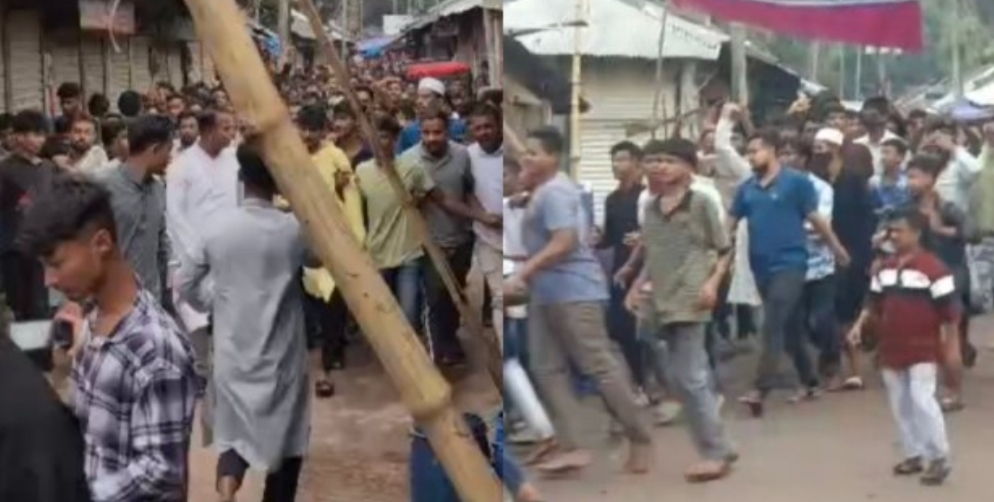
Following the political changes in August 2024, garment workers in Ashulia, Gazipur, and Savar staged protests demanding better wages and working conditions. After negotiations, factory owners and labor representatives reached an agreement covering 18 key points.

Under the agreement, the Ministry of Labor formed a committee to review minimum wages and determine feasible annual wage increments. After five meetings, the committee recommended an additional 4% increment on top of the existing 5%. The official notification stated that this additional increment would remain in effect until the next wage review.

Last month, the interim government amended the labor law, reducing the wage review cycle from five years to three. The latest wage structure for the garment sector, effective December 2023, set the minimum wage at BDT 12,500. Accordingly, a new minimum wage board is expected to be formed in the first half of this year, with the new structure to be implemented by December.

Labor leaders explain that the additional 4% increment not only raises base wages and housing allowances slightly but also increases overtime pay, festival bonuses, and maternity benefits.

Uncertainty remains over whether the increment must be applied this year, as no official guidance or meetings have taken place.

Fazle Shamim Ehsan, Executive President of BKMEA, and labor leader Babul Akhter told Prothom Alo that large factories provided the 4% additional increment last year and are doing so again this year, but small and medium factories are not. “This violates labor laws. We urge the government to take swift legal action against factories that fail to comply,” Babul said.

According to data from BRAC University’s Center for Entrepreneurship Development (CED) and the “Mapped in Bangladesh” project, there are 3,320 export-oriented garment factories in the country. No official statistics exist on how many have applied the additional increment, according to the Directorate of Inspection for Factories and Establishments (DIFE), BGMEA, and BKMEA.

Industrial police reported that last year, among 2,932 factories in Ashulia, Gazipur, Chattogram, Narayanganj, Mymensingh, Khulna, Comilla, and Sylhet, 73% implemented the 9% increment, while 784 factories did not. Specifically, in Ashulia, 91% of 717 factories applied it; in Gazipur, 61% of 1,127 factories; in Chattogram, 54% of 570 factories; and in Narayanganj, all 424 factories applied the increment. Data for this year is not yet available.

Inamul Haque Khan, Senior Vice President of BGMEA, told Prothom Alo that many factory owners face challenging business conditions, including gas and electricity shortages and rising port costs. “Whether a factory can provide the 9% increment depends on its capacity. Medium factories often cannot, while those who can are paying. We are not pressuring anyone,” he said.

Multiple industry sources note that large factories producing for major European and American brands have already applied the 9% increment due to pressure from brand audits. Some medium-sized factories have calculated the increment but have yet to implement it, planning to do so if required. No official statements have been issued by the government, BGMEA, or BKMEA regarding this matter.

Fazle Shamim Ehsan of BKMEA said that there is still confusion over whether the 4% additional increment must be applied this year. The government has provided no clarification, and no related meetings have taken place. Factories capable of paying are doing so, with around 70% of compliant factories having implemented the increment due to strict foreign audits.

Salauddin Swapon, former Secretary of the Industrial Bangladesh Council (IBC), added that small and medium factories have yet to pay the increment. By the end of this week, it will become clearer how many factories have implemented it. Until a new wage structure is introduced, an annual 9% increment must be applied. Swapon emphasized that there should be no misunderstanding about this requirement.
Tag :

Please Share This Post in Your Social Media

9% Annual Wage Hike in Garment Industry: Some Workers Benefit, Others Don’t

Update Time : 09:20:27 am, Saturday, 17 January 2026

9% Wage Increase in Garment Sector: Some Workers Receive It, Others Don’t

In the wake of the mass uprising and subsequent labor movements, the government decided to provide garment workers with a 5% regular wage increase plus an additional 4% increment to help mitigate the impact of high inflation. Accordingly, last year, large garment factories implemented a 9% annual wage hike for their workers. However, small and medium-sized factories, as well as subcontracted units, did not apply the increase. This year, the situation remains largely the same, leaving many workers without the additional increment.

Labor leaders report that factories with better compliance and working conditions are providing the full 9% increment, while smaller and subcontracted factories often fail to do so, citing various excuses. The lack of strict oversight is seen as a primary reason for this disparity. Factory owners, meanwhile, express uncertainty about whether they are required to provide the additional increment this year, noting that the government has not provided clarification. Consequently, some factories are paying the increment while others are not.

Following the political changes in August 2024, garment workers in Ashulia, Gazipur, and Savar staged protests demanding better wages and working conditions. After negotiations, factory owners and labor representatives reached an agreement covering 18 key points.

Under the agreement, the Ministry of Labor formed a committee to review minimum wages and determine feasible annual wage increments. After five meetings, the committee recommended an additional 4% increment on top of the existing 5%. The official notification stated that this additional increment would remain in effect until the next wage review.

Last month, the interim government amended the labor law, reducing the wage review cycle from five years to three. The latest wage structure for the garment sector, effective December 2023, set the minimum wage at BDT 12,500. Accordingly, a new minimum wage board is expected to be formed in the first half of this year, with the new structure to be implemented by December.

Labor leaders explain that the additional 4% increment not only raises base wages and housing allowances slightly but also increases overtime pay, festival bonuses, and maternity benefits.

Uncertainty remains over whether the increment must be applied this year, as no official guidance or meetings have taken place.

Fazle Shamim Ehsan, Executive President of BKMEA, and labor leader Babul Akhter told Prothom Alo that large factories provided the 4% additional increment last year and are doing so again this year, but small and medium factories are not. “This violates labor laws. We urge the government to take swift legal action against factories that fail to comply,” Babul said.

According to data from BRAC University’s Center for Entrepreneurship Development (CED) and the “Mapped in Bangladesh” project, there are 3,320 export-oriented garment factories in the country. No official statistics exist on how many have applied the additional increment, according to the Directorate of Inspection for Factories and Establishments (DIFE), BGMEA, and BKMEA.

Industrial police reported that last year, among 2,932 factories in Ashulia, Gazipur, Chattogram, Narayanganj, Mymensingh, Khulna, Comilla, and Sylhet, 73% implemented the 9% increment, while 784 factories did not. Specifically, in Ashulia, 91% of 717 factories applied it; in Gazipur, 61% of 1,127 factories; in Chattogram, 54% of 570 factories; and in Narayanganj, all 424 factories applied the increment. Data for this year is not yet available.

Inamul Haque Khan, Senior Vice President of BGMEA, told Prothom Alo that many factory owners face challenging business conditions, including gas and electricity shortages and rising port costs. “Whether a factory can provide the 9% increment depends on its capacity. Medium factories often cannot, while those who can are paying. We are not pressuring anyone,” he said.

Multiple industry sources note that large factories producing for major European and American brands have already applied the 9% increment due to pressure from brand audits. Some medium-sized factories have calculated the increment but have yet to implement it, planning to do so if required. No official statements have been issued by the government, BGMEA, or BKMEA regarding this matter.

Fazle Shamim Ehsan of BKMEA said that there is still confusion over whether the 4% additional increment must be applied this year. The government has provided no clarification, and no related meetings have taken place. Factories capable of paying are doing so, with around 70% of compliant factories having implemented the increment due to strict foreign audits.

Salauddin Swapon, former Secretary of the Industrial Bangladesh Council (IBC), added that small and medium factories have yet to pay the increment. By the end of this week, it will become clearer how many factories have implemented it. Until a new wage structure is introduced, an annual 9% increment must be applied. Swapon emphasized that there should be no misunderstanding about this requirement.