Dhaka 1:51 am, Saturday, 25 April 2026

More Than 1,500 Candidates in the Race for the 13th National Election

Staff Correspondent :
  • Update Time : 04:21:52 am, Wednesday, 21 January 2026
  • / 452 Time View

More Than 1,500 Candidates to Contest 13th National Parliamentary Election

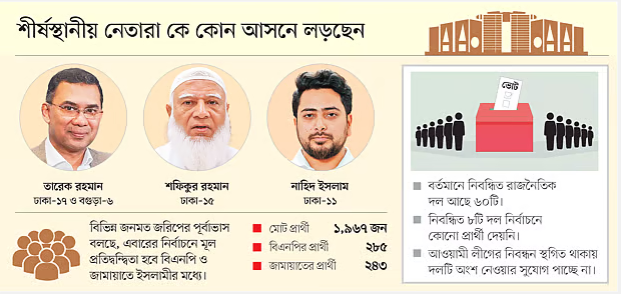
More than 1,500 candidates are set to compete in the 13th National Parliamentary Election across 298 constituencies. Among them, the Bangladesh Nationalist Party (BNP) has fielded candidates in 283 seats, while Jamaat-e-Islami is contesting in 215 constituencies.

Tuesday at 5:00 pm marked the deadline for withdrawing candidacies. However, as of 10:00 pm that night, the Election Commission had not released consolidated data on withdrawals, final candidate numbers, or party-wise participation. Information on BNP and Jamaat candidates was confirmed through party sources.

Voting in all 300 parliamentary constituencies is scheduled for February 12, alongside a national referendum. Under a revised schedule, candidates in Pabna-1 and Pabna-2 have until January 26 to withdraw their nominations.

Various opinion polls suggest that the primary contest in this election will be between BNP and Jamaat-e-Islami. BNP has reached seat-sharing arrangements with its allies from the simultaneous movement. In constituencies without BNP nominees, allied party candidates have been placed under the agreement. In several seats, BNP leaders who failed to secure party nominations are contesting as independent candidates.

On the other hand, Jamaat-e-Islami has formed an electoral alliance with nine other parties. In constituencies where Jamaat does not have official nominees, alliance partners are fielding candidates.

A total of 2,569 nomination papers were submitted for this election, including 478 independents. During scrutiny by returning officers, 723 nominations were rejected. Of those, 417 candidates later regained eligibility through appeals to the Election Commission. As a result, more than 1,500 candidates remain in the race, though the final figure could not be confirmed at the time of reporting. Based on field reports, 1,667 candidates were finalized in 273 constituencies.

According to the election schedule, returning officers will allocate electoral symbols to candidates on Wednesday. Official campaign activities will begin the following day.

The last three parliamentary elections held under the Awami League government were widely disputed. Following a mass uprising, the Sheikh Hasina-led government collapsed on August 5, 2024. An interim government headed by Professor Muhammad Yunus assumed office on August 8. The upcoming election will take place roughly a year and a half into the interim administration’s tenure.

To contest parliamentary elections using party symbols, political parties must be registered with the Election Commission. Currently, 60 parties are registered. However, the registration of the Awami League—whose political activities are banned—has been suspended, barring the party from participating in this election.

Additionally, eight registered parties have chosen not to field any candidates. These include the Samyabadi Party of Bangladesh, Krishak Sramik Janata League, Bangladesh National Awami Party, Workers Party of Bangladesh, Bikalpa Dhara Bangladesh, Tarikat Federation, Trinamool BNP, and Bangladesh Nationalist Movement (BNM).

BNP has allocated seats to its allies under the electoral understanding. Party sources said Gano Odhikar Parishad received two seats, the two factions of Jamiat Ulema-e-Islam received five seats combined, and eight other parties received one seat each. Some candidates from allied groups have joined BNP and are contesting under the party’s symbol.

Jamaat-e-Islami initially submitted 276 nomination papers. After withdrawals and alliance adjustments, candidates using the scale symbol are contesting in 215 constituencies. Within the alliance, the National Citizen Party (NCP) submitted 44 nominations, of which 30 candidates are now in the race. Other parties contesting independently include Bangladesh Khelafat Majlis (29 seats), another faction of Khelafat Majlis (19), Liberal Democratic Party (7), AB Party (5), Bangladesh Nezam-e-Islam Party (3), and Bangladesh Development Party (2).

Candidate Numbers in Previous Elections

The most recent 12th parliamentary election in 2024, boycotted by major opposition parties, was widely criticized and involved 1,969 candidates from 28 parties. Among them, 1,533 were party nominees and 436 were independents.

In the 2018 11th parliamentary election, all 39 registered parties participated, but the vote was heavily contested amid allegations of ballot stuffing the night before polling day. That election saw 1,861 candidates in 299 constituencies.

The 2014 election was largely uncontested, with ruling party candidates winning unopposed in 153 seats. Only 390 candidates competed in the remaining 147 constituencies.

Earlier, the 2008 election under a military-backed caretaker government featured 1,567 candidates from 38 registered parties. Prior to the introduction of party registration, the 1991 election saw 2,787 candidates from 75 parties, the 1996 election had 2,574 candidates from 81 parties, and the 2001 election featured 1,939 candidates from 54 parties.
Tag :

Please Share This Post in Your Social Media

More Than 1,500 Candidates in the Race for the 13th National Election

Update Time : 04:21:52 am, Wednesday, 21 January 2026

More Than 1,500 Candidates to Contest 13th National Parliamentary Election

More than 1,500 candidates are set to compete in the 13th National Parliamentary Election across 298 constituencies. Among them, the Bangladesh Nationalist Party (BNP) has fielded candidates in 283 seats, while Jamaat-e-Islami is contesting in 215 constituencies.

Tuesday at 5:00 pm marked the deadline for withdrawing candidacies. However, as of 10:00 pm that night, the Election Commission had not released consolidated data on withdrawals, final candidate numbers, or party-wise participation. Information on BNP and Jamaat candidates was confirmed through party sources.

Voting in all 300 parliamentary constituencies is scheduled for February 12, alongside a national referendum. Under a revised schedule, candidates in Pabna-1 and Pabna-2 have until January 26 to withdraw their nominations.

Various opinion polls suggest that the primary contest in this election will be between BNP and Jamaat-e-Islami. BNP has reached seat-sharing arrangements with its allies from the simultaneous movement. In constituencies without BNP nominees, allied party candidates have been placed under the agreement. In several seats, BNP leaders who failed to secure party nominations are contesting as independent candidates.

On the other hand, Jamaat-e-Islami has formed an electoral alliance with nine other parties. In constituencies where Jamaat does not have official nominees, alliance partners are fielding candidates.

A total of 2,569 nomination papers were submitted for this election, including 478 independents. During scrutiny by returning officers, 723 nominations were rejected. Of those, 417 candidates later regained eligibility through appeals to the Election Commission. As a result, more than 1,500 candidates remain in the race, though the final figure could not be confirmed at the time of reporting. Based on field reports, 1,667 candidates were finalized in 273 constituencies.

According to the election schedule, returning officers will allocate electoral symbols to candidates on Wednesday. Official campaign activities will begin the following day.

The last three parliamentary elections held under the Awami League government were widely disputed. Following a mass uprising, the Sheikh Hasina-led government collapsed on August 5, 2024. An interim government headed by Professor Muhammad Yunus assumed office on August 8. The upcoming election will take place roughly a year and a half into the interim administration’s tenure.

To contest parliamentary elections using party symbols, political parties must be registered with the Election Commission. Currently, 60 parties are registered. However, the registration of the Awami League—whose political activities are banned—has been suspended, barring the party from participating in this election.

Additionally, eight registered parties have chosen not to field any candidates. These include the Samyabadi Party of Bangladesh, Krishak Sramik Janata League, Bangladesh National Awami Party, Workers Party of Bangladesh, Bikalpa Dhara Bangladesh, Tarikat Federation, Trinamool BNP, and Bangladesh Nationalist Movement (BNM).

BNP has allocated seats to its allies under the electoral understanding. Party sources said Gano Odhikar Parishad received two seats, the two factions of Jamiat Ulema-e-Islam received five seats combined, and eight other parties received one seat each. Some candidates from allied groups have joined BNP and are contesting under the party’s symbol.

Jamaat-e-Islami initially submitted 276 nomination papers. After withdrawals and alliance adjustments, candidates using the scale symbol are contesting in 215 constituencies. Within the alliance, the National Citizen Party (NCP) submitted 44 nominations, of which 30 candidates are now in the race. Other parties contesting independently include Bangladesh Khelafat Majlis (29 seats), another faction of Khelafat Majlis (19), Liberal Democratic Party (7), AB Party (5), Bangladesh Nezam-e-Islam Party (3), and Bangladesh Development Party (2).

Candidate Numbers in Previous Elections

The most recent 12th parliamentary election in 2024, boycotted by major opposition parties, was widely criticized and involved 1,969 candidates from 28 parties. Among them, 1,533 were party nominees and 436 were independents.

In the 2018 11th parliamentary election, all 39 registered parties participated, but the vote was heavily contested amid allegations of ballot stuffing the night before polling day. That election saw 1,861 candidates in 299 constituencies.

The 2014 election was largely uncontested, with ruling party candidates winning unopposed in 153 seats. Only 390 candidates competed in the remaining 147 constituencies.

Earlier, the 2008 election under a military-backed caretaker government featured 1,567 candidates from 38 registered parties. Prior to the introduction of party registration, the 1991 election saw 2,787 candidates from 75 parties, the 1996 election had 2,574 candidates from 81 parties, and the 2001 election featured 1,939 candidates from 54 parties.