Balochistan Ablaze with Anger

- Update Time : 07:15:46 am, Tuesday, 3 February 2026
- / 158 Time View

Balochistan: A Province on Fire
Balochistan, Pakistan’s largest province by area, has the country’s lowest population density. Decades of administrative neglect, brutal insurgencies, shadow wars, and intense geopolitical pressure have recently triggered a surge in violence.
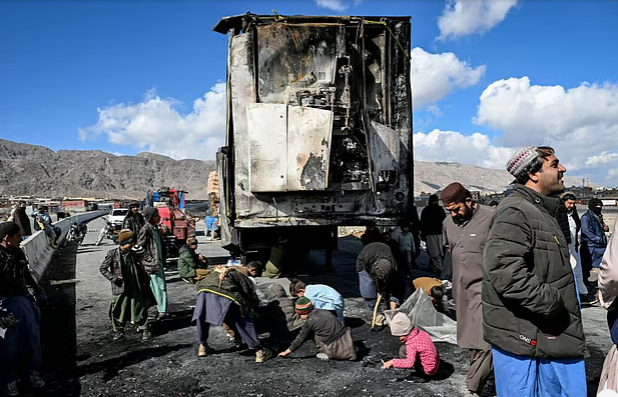
Over a 40-hour period in remote mountainous regions, the banned Balochistan Liberation Army (BLA) launched successive attacks. The group has waged an armed struggle for decades, demanding an independent state. According to the Pakistani military, nearly 200 people were killed in the latest attacks: 31 civilians, 17 security personnel, and 145 insurgents. One day alone saw over 100 fatalities. The BLA claims it killed 84 security forces in these assaults, marking one of the boldest insurgent actions in recent years.
In Quetta, the provincial capital, scars from years of conflict remain visible across police academies, courts, and marketplaces. Government officials insist the situation is under control, but reality on the ground is harsher: security personnel have been killed, and civilians caught in crossfire. Both sides often exaggerate their strength to project power.
Islamabad’s official response frequently invokes the “foreign hand” theory, blaming India for unrest under the label Fitna al-Hindustan, though New Delhi has issued no statement. This narrative shifts focus away from the Baloch people’s genuine grievances—persistent poverty despite rich natural resources and skepticism over benefits from China-Pakistan Economic Corridor projects like Gwadar Port. Many locals feel little tangible benefit reaches them.
Attacks on mines and migrant workers are common. In many parts of Balochistan, lawlessness prevails, and no single authority fully controls the territory. Geographically, the province—larger than Germany—holds strategic importance, intersecting Chinese economic ambitions, Iranian politics, U.S. strategy, India’s maneuvers, and Afghanistan’s influence.
Past failures in governance and security have deepened mistrust. Corruption, inadequate healthcare, and limited educational access persist. Military operations show Islamabad’s capacity for force, but insurgency and recruitment continue, even after disarmament drives.
The immediate challenge for Pakistan lies in managing external pressures while addressing internal fractures. Political dialogue, economic inclusion, and effective regional diplomacy may be the only path to lasting stability. Until then, Balochistan remains a flashpoint in South Asia.
Osama Bin Javaid, Doha-based journalist and security analyst on Pakistan and Afghanistan (adapted from Al Jazeera).