Dhaka 11:58 am, Saturday, 7 March 2026

AI and the Workplace: Study Finds Whether It Eases or Adds to Workload

Staff Correspondent :
  • Update Time : 05:35:01 am, Thursday, 5 March 2026
  • / 36 Time View

Does AI Really Reduce Workload? New Study Suggests Otherwise

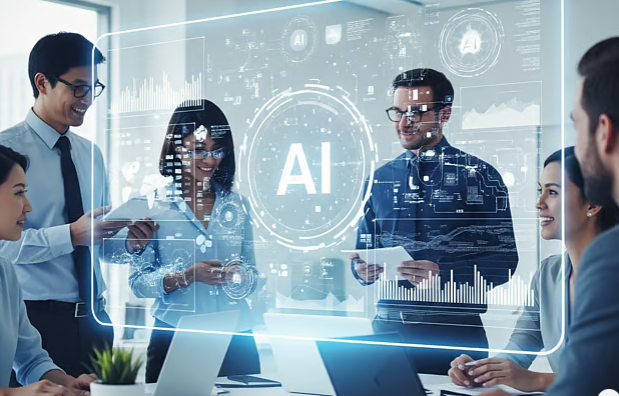
Imagine a task that used to take three hours now gets done in just one hour with the help of AI. On paper, you might think you’ve gained two extra hours. But a recent study from the University of California reveals a surprising reality: instead of easing workload, AI has actually increased work intensity and pressure. The research, titled “AI Does Not Reduce Work — It Intensifies It,” found that employees are working faster and often skipping breaks.

Key Findings

Researchers observed 200 employees over eight months, tracking how they interacted with various AI tools. While no one was forced to use AI initially, employees were provided with premium subscriptions to several tools. Over time, many naturally accelerated their work pace. The speed and efficiency AI enabled created a mindset shift: tasks that previously seemed impossible now felt achievable. Rather than delegating or postponing work, employees began taking on more themselves. Productivity rose, but so did fatigue.

“More Can Be Done” Mentality Adds Pressure

The study highlighted that tasks previously shared with colleagues or deferred are now often handled individually because of AI. What was once collaborative work has become solitary effort. The faster pace has led employees to take on new tasks rather than rest, fueled by the belief that AI makes “more work possible.” Ironically, the saved time often ends up being consumed by additional office work rather than personal use.

Shifting Work Culture and Expectations

Initially, AI was expected to improve work-life balance. In practice, the easier technology became, the higher the employer expectations. Many workers, especially in tech, are now struggling to keep up with AI-assisted workloads. Dependence on colleagues has decreased, but individual pressure has risen. Experts stress that AI is just a tool — whether it reduces workload depends largely on organizational policies and work culture. The faster pace often leads employees to skip necessary breaks unconsciously.

Implications for Bangladesh

The study has particular relevance for Bangladesh’s IT and freelancing sectors, where thousands of young professionals compete in the global market. International clients now expect faster deliveries, and AI has amplified these demands. While earnings may increase, long-term effects on mental and physical health are concerning. Many workers face social isolation and burnout as they try to keep pace with technology. AI can help productivity, but it should not dictate our work-life balance.

Looking Ahead

Technological advancement alone is not enough. If AI starts encroaching on personal time, its benefits become questionable. Companies must create policies that prevent employee exploitation and allow workers to disconnect fully after set hours. AI should make work easier, not life harder. Ultimately, the degree of AI’s impact depends on how humans manage it, ensuring both work and life are balanced.


Tag :

Please Share This Post in Your Social Media

AI and the Workplace: Study Finds Whether It Eases or Adds to Workload

Update Time : 05:35:01 am, Thursday, 5 March 2026

Does AI Really Reduce Workload? New Study Suggests Otherwise

Imagine a task that used to take three hours now gets done in just one hour with the help of AI. On paper, you might think you’ve gained two extra hours. But a recent study from the University of California reveals a surprising reality: instead of easing workload, AI has actually increased work intensity and pressure. The research, titled “AI Does Not Reduce Work — It Intensifies It,” found that employees are working faster and often skipping breaks.

Key Findings

Researchers observed 200 employees over eight months, tracking how they interacted with various AI tools. While no one was forced to use AI initially, employees were provided with premium subscriptions to several tools. Over time, many naturally accelerated their work pace. The speed and efficiency AI enabled created a mindset shift: tasks that previously seemed impossible now felt achievable. Rather than delegating or postponing work, employees began taking on more themselves. Productivity rose, but so did fatigue.

“More Can Be Done” Mentality Adds Pressure

The study highlighted that tasks previously shared with colleagues or deferred are now often handled individually because of AI. What was once collaborative work has become solitary effort. The faster pace has led employees to take on new tasks rather than rest, fueled by the belief that AI makes “more work possible.” Ironically, the saved time often ends up being consumed by additional office work rather than personal use.

Shifting Work Culture and Expectations

Initially, AI was expected to improve work-life balance. In practice, the easier technology became, the higher the employer expectations. Many workers, especially in tech, are now struggling to keep up with AI-assisted workloads. Dependence on colleagues has decreased, but individual pressure has risen. Experts stress that AI is just a tool — whether it reduces workload depends largely on organizational policies and work culture. The faster pace often leads employees to skip necessary breaks unconsciously.

Implications for Bangladesh

The study has particular relevance for Bangladesh’s IT and freelancing sectors, where thousands of young professionals compete in the global market. International clients now expect faster deliveries, and AI has amplified these demands. While earnings may increase, long-term effects on mental and physical health are concerning. Many workers face social isolation and burnout as they try to keep pace with technology. AI can help productivity, but it should not dictate our work-life balance.

Looking Ahead

Technological advancement alone is not enough. If AI starts encroaching on personal time, its benefits become questionable. Companies must create policies that prevent employee exploitation and allow workers to disconnect fully after set hours. AI should make work easier, not life harder. Ultimately, the degree of AI’s impact depends on how humans manage it, ensuring both work and life are balanced.