"Uncovering the Dark Reign of the Osman Family: Political Rivalries, Brutality, and a Legacy of Murder in Narayanganj"
The Osman Family’s Bloody Legacy: Political Power, Brutality, and the Infamous Seven Murders of Narayanganj

- Update Time : 11:33:30 am, Monday, 27 April 2026
- / 550 Time View


The Bloody Shitalakshya and Ottoman Savagery:
The Seven Murders Era and the Reign of Terror by the Osman Family
★ Shamim Osman pulled the strings behind the scenes.
★ He commissioned this savage mission for 60 million Taka.
★ The Seven Murders and the killing of Taqi were part of the Osman family’s display of dominance.
★ Azmeri Osman controlled at least forty torture cells in Narayanganj.
From the sand quarries of the Shitalakshya River to the supply chain of cement factories—Osman family members had their grip everywhere. Anyone who attempted to challenge this monopoly either disappeared or was left crippled. Repeated attacks and threats on Advocate Sakhawat Hossain, the lawyer for the plaintiff in the Seven Murders case, prove just how reckless this mafia network was.
“We want the swift resolution of this case in the Appellate Division. If this judgment is established as a precedent, it will serve as a lifelong lesson for those who engage in politics of murder and disappearance like the Osman’s,” says Advocate Sakhawat Hossain Khan (lawyer for the plaintiff).
The Fateful 27th of April 2014. On a hot afternoon, two cars and seven people vanished in the blink of an eye from the crowded Dhaka-Narayanganj Link Road. Four days later, the silence was broken when seven putrid, gruesome bodies surfaced at the Dhaleshwari confluence of the Shitalakshya River. Each body was stuffed with sand-filled bags, and their faces bore the signs of medieval barbarity. From that moment, the Seven Murders in Narayanganj became not just a crime, but a symbol of the terrifying symbiosis between the state apparatus and local mafia. Even after one year, the memories of that terror still linger in the public consciousness. Despite the passage of time, the families of the victims continue to live in torment, their wounds deepening due to the judicial inaction and delays.
At the heart of this massacre were issues of political dominance and control over Narayanganj’s economic veins. The longstanding rivalry between Nur Hossain, the then General Secretary of the Siddhirganj Thana Awami League, and Panel Mayor Nazrul Islam was the principal reason behind the bloodshed. Investigations revealed that Nur Hossain, with the direct and indirect blessing of Shamim Osman, engaged high-ranking and rogue members of the Rapid Action Battalion (RAB) in this savage mission for 60 million Taka. This was the first incident in Bangladesh’s criminal history where state forces’ uniforms, vehicles, and weapons were used by hired assassins. The description of the abductions, where the victims were drugged and then suffocated in RAB’s torture cells, is chilling. In an effort to prevent the bodies from ever resurfacing, 28 holes were drilled into the abdomen of each victim, and sand-filled bags were tied to their bodies before being dumped in the river. This meticulously planned and savage plot was the result of a collaboration between professional killers and a godfather blinded by power.
The Dark Empire of the Osman Family:
Digging deeper into the savagery of Narayanganj, one inevitably uncovers a picture of an empire ruled by the powerful Osman family. Narayanganj had, for years, been under the unspoken rule of four Osman family figures—Nasim Osman, Shamim Osman, Selim Osman, and Azmeri Osman. After the Seven Murders, an audio clip surfaced in which Shamim Osman could be heard guiding Nur Hossain to safely cross the border. This audio proved that the masterminds behind the murders had protection from the highest echelons of power. Shamim Osman was not merely a political leader; he was the “supreme power” of Narayanganj, with his command determining the fate of everyone. On the other hand, his niece Azmeri Osman was accused of running several ‘torture cells’ within the city. These cells became notorious for abductions, torture, and murder, transforming Narayanganj into a region of disappearances. The Osman family’s terror reign made ordinary people’s lives secondary to satisfying the family’s whims.
Beyond the Seven Murders:
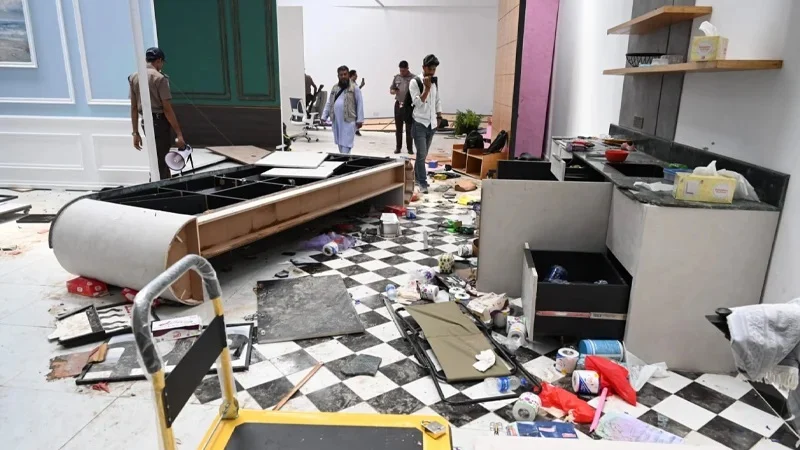
The Osman family’s reign of terror did not end with the Seven Murders. On March 6, 2013, talented student Tanveer Muhammad Taqi was abducted and brutally murdered. Investigations and RAB’s preliminary charge sheet revealed that Taqi was tortured and suffocated to death at Azmeri Osman’s ‘Winner Fashion’ torture cell. The way Azmeri’s gang tortured the young Taqi surpassed medieval barbarity. Allegations have surfaced that Taqi’s body was dumped in the Shitalakshya River on the orders of a senior member of the Osman family. Taqi was not the only victim; many others, including Ashik, Mithu, and countless others, lost their lives due to the Osman family’s wrath. From Nasim Osman to Selim Osman, each family member built an invincible empire based on extortion and loot, controlling everything from the transport sector to footpaths, scrap business, and the infamous ‘White House’ torture cells.
A Culture of Violence:
The primary sources of Narayanganj’s economy were under the control of this family. From the sand quarries of the Shitalakshya River to the supply chain of cement factories, Osman family members had their claws everywhere. Anyone who dared to challenge this monopoly was either disappeared or crippled. The repeated attacks and threats on Advocate Sakhawat Hossain during the Seven Murders case demonstrate just how reckless and untouchable this mafia network was. The Osman family managed to delay the resolution of the case in the Appellate Division for over a decade. The culture of using state forces as personal bodyguards and killing squads under Shamim Osman dealt a severe blow to Bangladesh’s democratic framework. Even after twelve years, when figures like Azmeri Osman remain beyond reach, questions arise regarding the rule of law.
Experts and Observers Speak:
Advocate Sakhawat Hossain Khan (plaintiff’s lawyer) expresses his deep frustration: “We want the swift resolution of this case in the Appellate Division. If this judgment is established as a precedent, it will serve as a lifelong lesson for those who engage in politics of murder and disappearance like the Osman’s. The victim families are still living in despair. It is the state’s moral responsibility to provide them proper compensation, as the state handed over its forces to the murderers.
Advocate Abdullah Al Amin (Member of Parliament, Narayanganj-4) comments on the current political scenario: “In the past, there was some protection provided to godfathers like the Osman family by the administration and government. However, under the current democratic environment, that is no longer possible. Criminals, regardless of their family background or political status, must face strict action. The people of Narayanganj seek freedom and long for the establishment of the rule of law in the country.
Dr. Shahriar Ahmed (Human Rights Researcher) believes, “There may be significant debate over whether the long-standing syndicate in Narayanganj has been completely dismantled. However, accelerating the judicial process in the Seven Murders and Taqi cases could help uproot this political mafia culture. The culture of using state forces for personal gains, which Shamim Osman introduced, can be curbed through this judgment. This should not just be a case closure; it should be part of a broader cleansing operation by the state.
On this special day, the air in Narayanganj feels heavy with the mourning of the seven lost lives. The relentless fight of Taqi’s father, Rafur Rabbir, continues to awaken the conscience of Narayanganj. While death row convicts like Nur Hossain, Tariq Saeed Mohammad, Arif Hossain, and MM Rana are imprisoned, the public cannot rest until their final punishment is executed. Though the Shitalakshya River seems calm today, its depths still echo the cries of those 28 punctured bodies. On this 27th of April 2026, the people of Narayanganj have renewed their vow: they will not allow the rule of any godfather or the reign of terror from Azmeri Osman’s torture cells to take hold again. The only way to put an end to this dark chapter is to bring back the absconding convicts, expose the masterminds behind the scenes, and execute the death sentences. The completion of the Seven Murders and Taqi case would mark the end of not just a trial, but the final liberation of the people of Narayanganj from the Osman family’s murderous legacy. This fight is no longer just for the victim families, but for the entire nation’s battle against a culture of judicial impunity.