Ganges Treaty Talks Stalled as Dhaka, Delhi Differ on Approach

- Update Time : 01:25:25 pm, Saturday, 28 November 2026
- / 34 Time View
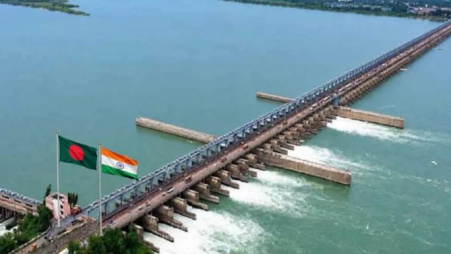

Bangladesh and India have yet to agree on a clear roadmap for negotiations over the renewal or replacement of the 1996 Ganges Water Sharing Treaty, as the agreement approaches the end of its 30-year term.
Bangladesh has formed a high-level technical committee to initiate discussions and has twice urged India to establish a corresponding committee. New Delhi, however, has maintained that the existing Joint Rivers Commission (JRC) is the appropriate platform for addressing water-related issues, leaving the two sides with differing approaches to the negotiations.
A senior Bangladeshi official told UNB that both countries had recognised the importance of water resource management in bilateral relations. At a meeting on 22 June 2024, they agreed to prioritise data exchange and develop a framework for interim water sharing based on JRC recommendations.
Another official said the two countries had also welcomed the formation of a joint technical committee to initiate discussions on renewing the treaty, but Bangladesh had yet to receive a response from India.
Water Resources Minister Shahiduddin Chowdhury Anee said Dhaka had sent two letters to New Delhi on the matter, including one personally sent by him, but had received no reply.
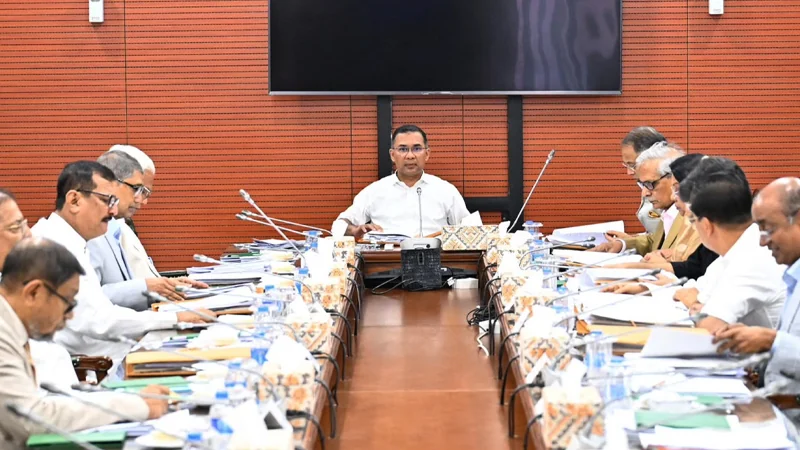
Bangladesh formed its high-level technical committee in June 2026 and informed India of the decision, requesting New Delhi to notify Dhaka about the formation of its own committee. According to Prime Minister’s Finance and Planning Adviser Prof Rashed Al Mahmud Titumir, who heads the Bangladeshi committee, Dhaka renewed the request in August.
Titumir said Bangladesh had completed the necessary preparations and hoped India would take steps to begin formal negotiations before the existing treaty expires.
India, however, has pointed to the JRC as the established mechanism for discussing cross-border river issues, including the Ganges.
“The government of India remains committed to a constructive and forward-looking relationship with Bangladesh while safeguarding India’s interest,” Indian Ministry of External Affairs spokesperson Randhir Jaiswal said recently.
The 1996 treaty is due to expire on 12 December 2026, after completing its 30-year term. Its water-sharing provisions apply during the dry season, from 1 January to 31 May. The last scheduled release under the current dry-season arrangement took place on 31 May 2026, from the Farakka Barrage in West Bengal to Bangladesh.
As the expiry approaches, a central question is whether the two countries will renew the existing framework or negotiate a substantially revised agreement.
Bangladesh has made clear that it wants a new agreement rather than a straightforward renewal. A key demand is the inclusion of a minimum water guarantee to protect its share during periods of low flow.
“We certainly want a new agreement. We want to conclude it while protecting the interests of our country,” Minister Anee said.
Under the 1977 agreement, Bangladesh was guaranteed at least 80% of its scheduled allocation during specified lean-season periods, even when actual water availability fell short. Dr Nilanjan Ghosh, vice-president of Development Studies at the Observer Research Foundation in Kolkata, has argued that restoring such a guarantee could place an unequal hydrological burden on India as the upstream country, particularly amid climate-related shortages.
Ghosh also noted that the existing treaty focuses primarily on the volume of water shared and does not provide an integrated framework for managing the river basin. Issues such as sediment flows, biodiversity, ecosystem services and changing economic needs remain insufficiently addressed, he said.
Prof Shahab Enam Khan, executive director of the Bangladesh Centre for Indo-Pacific Affairs, said the treaty needed revision because it was negotiated nearly three decades ago.
Foreign Minister Khalilur Rahman has also called for a new or revised agreement that ensures the essential water needs of the people of both countries.
Speaking on the sidelines of the ninth Indian Ocean Conference in Mauritius, he said a durable solution based on shared interests and mutual climate resilience was essential to building public trust and shaping bilateral relations over the coming decades.
The Ganges water-sharing negotiations are therefore emerging as an important test of efforts by Dhaka and New Delhi to strengthen bilateral ties and develop a long-term framework for managing shared rivers.