Dhaka 4:51 am, Sunday, 3 May 2026

Deadly stampede at Kumbh Mela: 30 dead, 60 wounded

Reporter Name
  • Update Time : 03:15:02 pm, Wednesday, 29 January 2025
  • / 384 Time View

At least 30 people lost their lives, and 60 others sustained injuries in a tragic pre-dawn stampede at the Maha Kumbh Mela in Prayagraj, Uttar Pradesh. The incident occurred at the confluence of the Ganges, Yamuna, and the mythical Saraswati rivers as vast crowds of devotees gathered to take a sacred dip on the occasion of Mauni Amavasya, a highly significant day in Hindu tradition. Deputy Inspector General of Uttar Pradesh Police, Vaibhav Krishna, confirmed the casualties, while rescue teams worked through the chaos to assist victims.
Crowd-related tragedies are not uncommon at large religious gatherings in India, with the Kumbh Mela, the world’s largest spiritual congregation held every 12 years, historically witnessing such incidents. This time, as thousands surged forward for the holy ritual, many pilgrims—some of whom were sleeping or sitting nearby—were caught in the crush. Survivors described the terrifying moments of being trampled underfoot, with 48-year-old pilgrim Renu Devi recalling how she was overwhelmed near a barricade as the mass of people pressed forward.


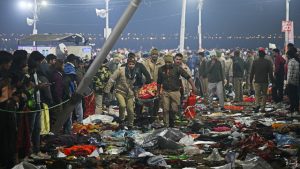
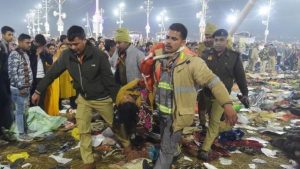
Emergency teams rushed to carry the wounded from the scene, maneuvering through piles of discarded belongings, including clothes and shoes. Medical personnel attending the injured at a nearby hospital reported fatalities, though official confirmation on the total death toll was still awaited. The stampede took place around 1:00 AM local time, prompting an immediate response from authorities.
Prime Minister Narendra Modi expressed deep sorrow over the tragedy, extending condolences to the bereaved families and wishing a swift recovery for the injured. Meanwhile, at a makeshift hospital near the festival site, anxious relatives awaited news of their loved ones. Festival organizers and security personnel urged pilgrims to avoid the affected area and seek alternative bathing spots, as authorities worked to manage the crowd.


The Kumbh Mela, a six-week-long event, is the most significant festival on the Hindu religious calendar, drawing millions of devotees. On this particular day, saffron-clad ascetics traditionally lead the faithful in ritual purification at the sacred river confluence. However, the stampede disrupted the celebrations, with authorities struggling to restore order. Chief Minister Yogi Adityanath assured that medical aid was being provided to those in critical condition and that the situation was now under control.


Criticism over poor crowd management surfaced, with opposition leader Rahul Gandhi blaming the mishap on administrative failures and a focus on VIP arrangements over public safety. As the disaster unfolded, railway services were also disrupted due to overcrowding, prompting some pilgrims to leave the city early.


Rooted in Hindu mythology, the Kumbh Mela commemorates an ancient battle between gods and demons for possession of a nectar-filled pitcher promising immortality. This year’s event was expected to attract an estimated 400 million devotees before concluding on February 26. To prevent overcrowding, authorities had installed hundreds of surveillance cameras and drone monitors to track crowd density. Despite these precautions, history repeated itself—echoing past tragedies, including the deadly 1954 Kumbh Mela stampede that claimed over 400 lives and another in 2013, which resulted in 36 fatalities.


 

Tag :

Please Share This Post in Your Social Media

Deadly stampede at Kumbh Mela: 30 dead, 60 wounded

Update Time : 03:15:02 pm, Wednesday, 29 January 2025

At least 30 people lost their lives, and 60 others sustained injuries in a tragic pre-dawn stampede at the Maha Kumbh Mela in Prayagraj, Uttar Pradesh. The incident occurred at the confluence of the Ganges, Yamuna, and the mythical Saraswati rivers as vast crowds of devotees gathered to take a sacred dip on the occasion of Mauni Amavasya, a highly significant day in Hindu tradition. Deputy Inspector General of Uttar Pradesh Police, Vaibhav Krishna, confirmed the casualties, while rescue teams worked through the chaos to assist victims.

Crowd-related tragedies are not uncommon at large religious gatherings in India, with the Kumbh Mela, the world’s largest spiritual congregation held every 12 years, historically witnessing such incidents. This time, as thousands surged forward for the holy ritual, many pilgrims—some of whom were sleeping or sitting nearby—were caught in the crush. Survivors described the terrifying moments of being trampled underfoot, with 48-year-old pilgrim Renu Devi recalling how she was overwhelmed near a barricade as the mass of people pressed forward.


Emergency teams rushed to carry the wounded from the scene, maneuvering through piles of discarded belongings, including clothes and shoes. Medical personnel attending the injured at a nearby hospital reported fatalities, though official confirmation on the total death toll was still awaited. The stampede took place around 1:00 AM local time, prompting an immediate response from authorities.

Prime Minister Narendra Modi expressed deep sorrow over the tragedy, extending condolences to the bereaved families and wishing a swift recovery for the injured. Meanwhile, at a makeshift hospital near the festival site, anxious relatives awaited news of their loved ones. Festival organizers and security personnel urged pilgrims to avoid the affected area and seek alternative bathing spots, as authorities worked to manage the crowd.


The Kumbh Mela, a six-week-long event, is the most significant festival on the Hindu religious calendar, drawing millions of devotees. On this particular day, saffron-clad ascetics traditionally lead the faithful in ritual purification at the sacred river confluence. However, the stampede disrupted the celebrations, with authorities struggling to restore order. Chief Minister Yogi Adityanath assured that medical aid was being provided to those in critical condition and that the situation was now under control.


Criticism over poor crowd management surfaced, with opposition leader Rahul Gandhi blaming the mishap on administrative failures and a focus on VIP arrangements over public safety. As the disaster unfolded, railway services were also disrupted due to overcrowding, prompting some pilgrims to leave the city early.


Rooted in Hindu mythology, the Kumbh Mela commemorates an ancient battle between gods and demons for possession of a nectar-filled pitcher promising immortality. This year’s event was expected to attract an estimated 400 million devotees before concluding on February 26. To prevent overcrowding, authorities had installed hundreds of surveillance cameras and drone monitors to track crowd density. Despite these precautions, history repeated itself—echoing past tragedies, including the deadly 1954 Kumbh Mela stampede that claimed over 400 lives and another in 2013, which resulted in 36 fatalities.