Cargo Congestion at Chattogram Port—Will It Impact Ramadan Prices?

- Update Time : 02:54:56 am, Saturday, 22 February 2025
- / 532 Time View


Ahead of Ramadan, imports of essential commodities through Chattogram port have surged to record levels. In January alone, 53 cargo ships carrying consumables like rice, lentils, edible oil, and sugar docked at the port, unloading 1.4 million tons of goods. This marks a sharp increase from the previous year when only 40 ships arrived with less than one million tons. In the first 20 days of February, 22 ships brought in approximately 825,000 tons of goods, up from 500,000 tons brought by 17 ships during the same period last year. Another 10 vessels carrying essential goods are currently waiting to dock.
To stabilize market prices, the government has reduced import duties on key items such as dates, edible oil, and sugar. Global prices of some commodities, including edible oil and sugar, are also declining. As a result, the prices of chickpeas, dates, and pulses have started to fall, and consumers expect edible oil prices to stabilize with proper market monitoring.
Shafiul Atahar Taslim, a director at one of the country’s largest importers, TK Group, noted that they have significantly increased their imports and supply compared to last year. For instance, the company boosted its supply of bottled soybean oil by 24%, reaching 11,810 tons in January, compared to 9,500 tons the previous year. Other importers have also expanded their shipments, leading to a rise in the number of cargo ships at the port.
Compared to last year, both the number of ships and the volume of imported goods have increased. In January alone, eight ships brought in 115,726 tons of rice, while 13 vessels delivered 615,555 tons of wheat. Additionally, 14 ships carried 191,926 tons of edible oil, and three vessels delivered 89,149 tons of refined and raw sugar. Another 15 ships unloaded 432,062 tons of chickpeas, peas, and pulses.
From February 1-10, 10 ships arrived with 288,820 tons of essential commodities, including 5,060 tons of rice, 84,922 tons of wheat, 142,538 tons of edible oil, and 56,300 tons of raw sugar. The trend continued over the next 10 days, with 12 more vessels unloading 553,000 tons of goods, including rice, edible oil, pulses, sugar, and corn.
According to the Ministry of Commerce, Bangladesh’s annual edible oil demand is around 2 million tons, with 300,000 tons needed during Ramadan. Similarly, the country requires about 2 million tons of sugar annually, with 300,000 tons consumed during Ramadan. Other staple demands include 600,000 tons of lentils (100,000 tons during Ramadan), 2.73 million tons of onions (400,000 tons during Ramadan), and 150,000 tons of chickpeas (100,000 tons during Ramadan). Business leaders believe the current imports are sufficient to meet demand.
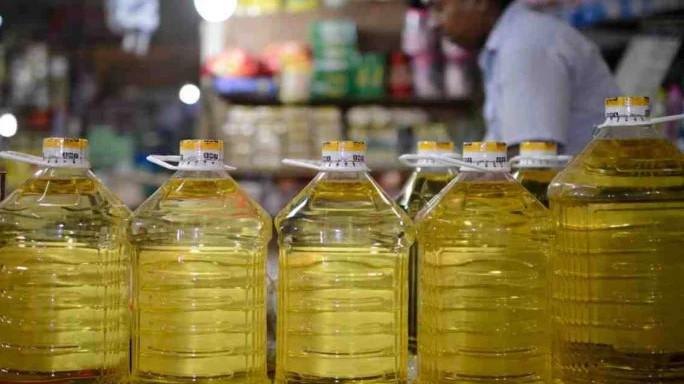
Despite price drops in chickpeas, lentils, and peas in wholesale markets like Khatunganj, edible oil prices remain volatile. Over the past two months, loose edible oil prices have surged, and bottled soybean oil has also seen an increase, rising by 8-10 BDT per liter in a week. The Trading Corporation of Bangladesh (TCB) reports that loose soybean oil now sells for 180-182 BDT per liter.
Consumer rights organizations argue that market monitoring is inadequate. Despite the government reducing import duties and easing Letter of Credit (LC) regulations, the benefits are not reaching consumers. If authorities fail to curb market manipulation, unscrupulous traders may exploit Ramadan to hike prices further.