Dhaka 7:47 pm, Friday, 1 May 2026

Allegations of massive vote theft spark opposition protests in India

Niloy Mridha
  • Update Time : 11:08:15 am, Saturday, 16 August 2025
  • / 426 Time View

Rahul Gandhi Alleges Electoral Irregularities in India’s 2024 Polls

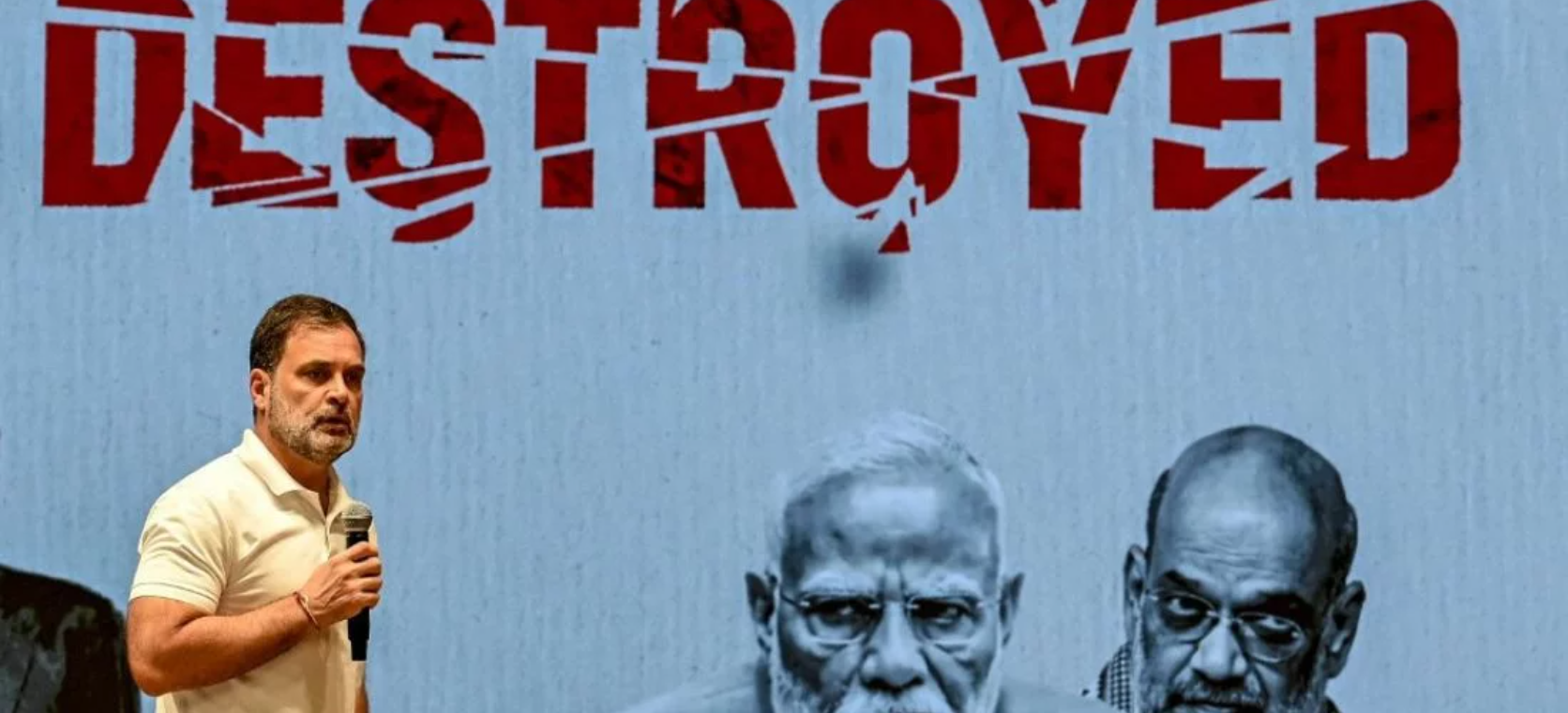
Last week, Indian opposition leader Rahul Gandhi accused the Election Commission of India (ECI) of facilitating “vote manipulation” to benefit Prime Minister Narendra Modi’s Bharatiya Janata Party (BJP) in the 2024 general elections.

Speaking at a press conference, Gandhi, a senior leader of the Indian National Congress (INC), claimed that voter rolls in key constituencies had been altered to favor the BJP in last year’s elections. He added that an analysis conducted by his party revealed significant discrepancies in the electoral data released by the ECI.

The ECI swiftly dismissed Gandhi’s allegations, while the BJP accused him of attempting to destabilize the democratic process and undermine public confidence in elections.

Protests over the claims were staged in the capital, with opposition leaders calling on Parliament to debate the issue. Gandhi was detained in New Delhi along with other leaders while marching toward the ECI office. “This is not a political fight; it is a fight to protect the Constitution,” he stated after being taken into custody.

Details of the Allegations

The INC’s investigation focused on the Mahadevapura assembly constituency in Bangalore, Karnataka. Official results showed the INC losing to the BJP by over 114,000 votes. Gandhi claimed that more than 100,000 entries in Mahadevapura’s voter lists for the 2024 Lok Sabha elections indicated irregularities.

Among the alleged issues were duplicate voters, fake addresses, multiple voters registered at a single location, invalid photographs, and incorrect use of voter registration forms. In one example, he cited a single-bedroom residence listed as the address for 46 unrelated voters, none of whom actually lived there.

Gandhi also criticized the ECI for not providing digital voter lists and restricting access to polling booth CCTV footage, which he argued facilitated electoral fraud. He claimed similar irregularities occurred in state elections in Haryana and Maharashtra in late 2024.

India’s general elections, considered the world’s largest democratic exercise, saw nearly a billion people cast votes to elect 543 members of the lower house. The ECI oversees this process with the support of 15 million election officials across 28 states and eight union territories. Voting is conducted in stages over six weeks.

Responses from the ECI and BJP

The ECI responded on social media, saying Gandhi was bypassing proper procedures and misleading voters. Karnataka’s Chief Electoral Officer emphasized that election results can only be challenged through an official petition in the High Court, and called on Gandhi to submit evidence under oath.

Former Chief Election Commissioner Om Prakash Rawat told DW that the ECI should have acted more directly to address Gandhi’s claims, noting that asking for an oath instead of immediately investigating could create public confusion.

The BJP also criticized Gandhi, with spokesperson Gaurav Bhatia asserting that he should resign from Parliament if he lacks faith in the ECI. The party accused him of spreading false information, avoiding evidence, and undermining democratic institutions.

Background Context

Some addresses flagged by Gandhi were found to be paid accommodations or hostels, commonly used by India’s large migrant population for temporary residence and voter registration. Incorrectly used voter forms may also create multiple entries, although ECI software is designed to detect such duplications.

During Modi’s tenure, the ECI has faced scrutiny over changes to the appointment process for election officials and responses to inflammatory campaign rhetoric. Gandhi’s allegations come amid ongoing controversy over voter list revisions in Bihar and widespread public skepticism about election integrity.

Observers note that doubts over election fairness are not new in India. However, in a climate of extreme political polarization, Gandhi’s claims have heightened public concern about the credibility of the electoral process.
Tag :

Please Share This Post in Your Social Media

Allegations of massive vote theft spark opposition protests in India

Update Time : 11:08:15 am, Saturday, 16 August 2025

Rahul Gandhi Alleges Electoral Irregularities in India’s 2024 Polls

Last week, Indian opposition leader Rahul Gandhi accused the Election Commission of India (ECI) of facilitating “vote manipulation” to benefit Prime Minister Narendra Modi’s Bharatiya Janata Party (BJP) in the 2024 general elections.

Speaking at a press conference, Gandhi, a senior leader of the Indian National Congress (INC), claimed that voter rolls in key constituencies had been altered to favor the BJP in last year’s elections. He added that an analysis conducted by his party revealed significant discrepancies in the electoral data released by the ECI.

The ECI swiftly dismissed Gandhi’s allegations, while the BJP accused him of attempting to destabilize the democratic process and undermine public confidence in elections.

Protests over the claims were staged in the capital, with opposition leaders calling on Parliament to debate the issue. Gandhi was detained in New Delhi along with other leaders while marching toward the ECI office. “This is not a political fight; it is a fight to protect the Constitution,” he stated after being taken into custody.

Details of the Allegations

The INC’s investigation focused on the Mahadevapura assembly constituency in Bangalore, Karnataka. Official results showed the INC losing to the BJP by over 114,000 votes. Gandhi claimed that more than 100,000 entries in Mahadevapura’s voter lists for the 2024 Lok Sabha elections indicated irregularities.

Among the alleged issues were duplicate voters, fake addresses, multiple voters registered at a single location, invalid photographs, and incorrect use of voter registration forms. In one example, he cited a single-bedroom residence listed as the address for 46 unrelated voters, none of whom actually lived there.

Gandhi also criticized the ECI for not providing digital voter lists and restricting access to polling booth CCTV footage, which he argued facilitated electoral fraud. He claimed similar irregularities occurred in state elections in Haryana and Maharashtra in late 2024.

India’s general elections, considered the world’s largest democratic exercise, saw nearly a billion people cast votes to elect 543 members of the lower house. The ECI oversees this process with the support of 15 million election officials across 28 states and eight union territories. Voting is conducted in stages over six weeks.

Responses from the ECI and BJP

The ECI responded on social media, saying Gandhi was bypassing proper procedures and misleading voters. Karnataka’s Chief Electoral Officer emphasized that election results can only be challenged through an official petition in the High Court, and called on Gandhi to submit evidence under oath.

Former Chief Election Commissioner Om Prakash Rawat told DW that the ECI should have acted more directly to address Gandhi’s claims, noting that asking for an oath instead of immediately investigating could create public confusion.

The BJP also criticized Gandhi, with spokesperson Gaurav Bhatia asserting that he should resign from Parliament if he lacks faith in the ECI. The party accused him of spreading false information, avoiding evidence, and undermining democratic institutions.

Background Context

Some addresses flagged by Gandhi were found to be paid accommodations or hostels, commonly used by India’s large migrant population for temporary residence and voter registration. Incorrectly used voter forms may also create multiple entries, although ECI software is designed to detect such duplications.

During Modi’s tenure, the ECI has faced scrutiny over changes to the appointment process for election officials and responses to inflammatory campaign rhetoric. Gandhi’s allegations come amid ongoing controversy over voter list revisions in Bihar and widespread public skepticism about election integrity.

Observers note that doubts over election fairness are not new in India. However, in a climate of extreme political polarization, Gandhi’s claims have heightened public concern about the credibility of the electoral process.