Dhaka 3:11 am, Sunday, 26 July 2026

Bangabandhu’s Bridge No More on Jamuna

Reporter Name
  • Update Time : 11:20:32 am, Sunday, 22 December 2024
  • / 877 Time View

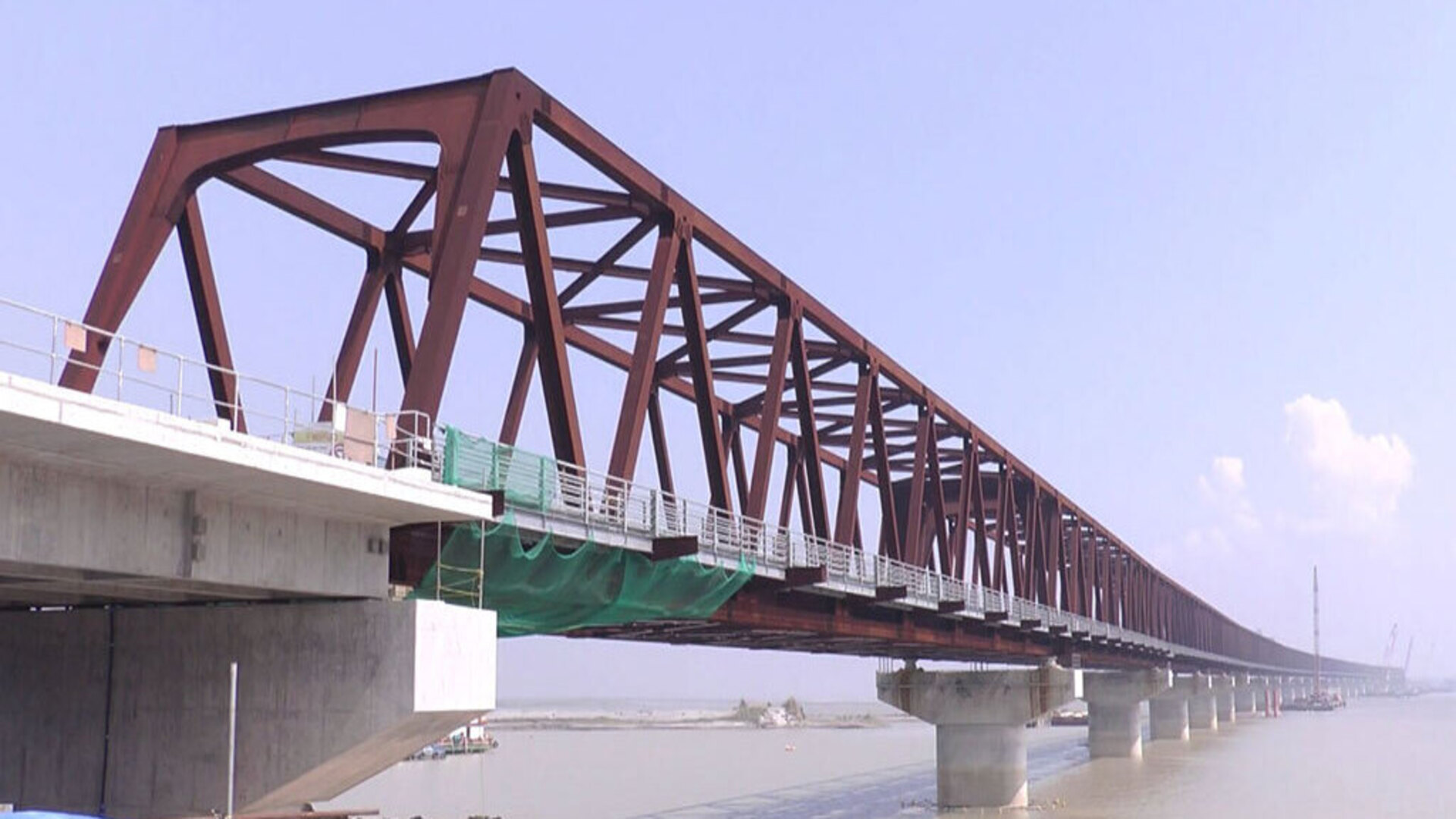
The name of the railway bridge built over the Jamuna River has been officially changed. Previously named “Father of the Nation Bangabandhu Sheikh Mujibur Rahman Railway Bridge,” it has now been renamed “Jamuna Railway Bridge.” The change was confirmed by Bangladesh Railway Director General Md. Afzal Hossain on Sunday, December 22. The bridge is expected to be inaugurated in January 2025.


Md. Afzal Hossain explained that the existing railway connection on the Bangabandhu Multipurpose Bridge over the Jamuna River only permits a maximum load of 43.70 kN/m, limits train speed to 20 km/h, and has a single track, causing significant delays. A single train currently takes around 25 minutes to cross the 4.8-kilometer stretch and more than an hour to cover the 5-kilometer journey due to long waits at signal stations on either side.


To address these issues, in March 2020, the government approved the construction of a 4.8-kilometer dual-gauge double-track railway bridge parallel to the existing one. The project, costing 16,780 crore BDT, is funded by 4,631 crore BDT from the government and 12,149 crore BDT by Japan’s JICA. The construction is being carried out by five Japanese firms under two packages, WD-1 and WD-2, while the signaling systems at both ends are being handled under WD-3 by Yashima, another Japanese contractor.


Project Director Al Fattah Md. Masudur Rahman stated that the new bridge is designed to allow broad-gauge trains to operate at 120 km/h and meter-gauge trains at 100 km/h. However, with the CBIS system only 40% complete, the system may take two to three months to become fully operational after the bridge’s inauguration. This could temporarily reduce train speeds at connecting stations. Once operational, the new bridge will have the capacity to accommodate 88 trains per day, compared to the current 38. However, engine shortages in the railway system remain a challenge, which might delay the introduction of new train services despite public demand.

 

Please Share This Post in Your Social Media

Bangabandhu’s Bridge No More on Jamuna

Update Time : 11:20:32 am, Sunday, 22 December 2024

The name of the railway bridge built over the Jamuna River has been officially changed. Previously named “Father of the Nation Bangabandhu Sheikh Mujibur Rahman Railway Bridge,” it has now been renamed “Jamuna Railway Bridge.” The change was confirmed by Bangladesh Railway Director General Md. Afzal Hossain on Sunday, December 22. The bridge is expected to be inaugurated in January 2025.


Md. Afzal Hossain explained that the existing railway connection on the Bangabandhu Multipurpose Bridge over the Jamuna River only permits a maximum load of 43.70 kN/m, limits train speed to 20 km/h, and has a single track, causing significant delays. A single train currently takes around 25 minutes to cross the 4.8-kilometer stretch and more than an hour to cover the 5-kilometer journey due to long waits at signal stations on either side.


To address these issues, in March 2020, the government approved the construction of a 4.8-kilometer dual-gauge double-track railway bridge parallel to the existing one. The project, costing 16,780 crore BDT, is funded by 4,631 crore BDT from the government and 12,149 crore BDT by Japan’s JICA. The construction is being carried out by five Japanese firms under two packages, WD-1 and WD-2, while the signaling systems at both ends are being handled under WD-3 by Yashima, another Japanese contractor.


Project Director Al Fattah Md. Masudur Rahman stated that the new bridge is designed to allow broad-gauge trains to operate at 120 km/h and meter-gauge trains at 100 km/h. However, with the CBIS system only 40% complete, the system may take two to three months to become fully operational after the bridge’s inauguration. This could temporarily reduce train speeds at connecting stations. Once operational, the new bridge will have the capacity to accommodate 88 trains per day, compared to the current 38. However, engine shortages in the railway system remain a challenge, which might delay the introduction of new train services despite public demand.