Dhaka 4:17 am, Wednesday, 25 February 2026

Global Date Imports: How Many Countries Supply Them & the U.S. Share

Staff Correspondent :
  • Update Time : 06:09:54 am, Tuesday, 24 February 2026
  • / 32 Time View

Even a decade or two ago, Bangladesh’s date imports were almost entirely dependent on the Middle East. Today, however, it is no longer accurate to assume that all dates in the local market come from that region. Changing food habits, year-round consumption, and growing demand for product variety have significantly expanded the list of sourcing countries.

Looking back about 20 years, data from the National Board of Revenue (NBR) show that in fiscal year 2005–06 Bangladesh imported dates from only five countries. Around 73% came from Iran and nearly 22% from the United Arab Emirates. The remaining three countries accounted for just 5% combined.

At that time, dates were largely consumed during Ramadan, and annual imports stood at roughly 20,000–22,000 tons. The situation has changed dramatically. With rising health awareness and year-round demand, annual imports have climbed to nearly 100,000 tons. Dates from Asia, Africa, Europe, and the United States are now appearing regularly on Bangladeshi iftar tables.

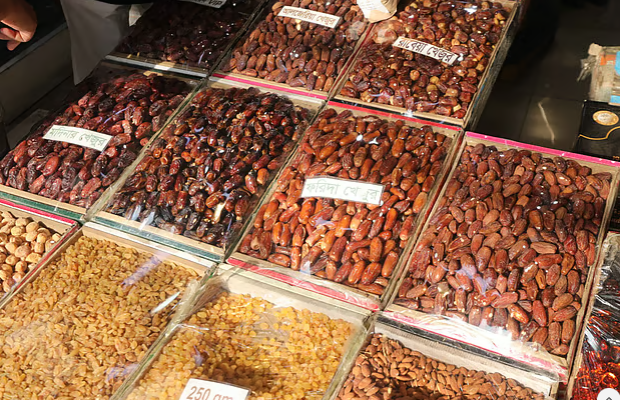
According to the latest NBR figures, Bangladesh imported 92,000 tons of dates last year from 23 countries. About 88.59% came from six Middle Eastern nations, including Iraq, Iran, United Arab Emirates, and Saudi Arabia. Another 9.58% came from four African countries such as Tunisia, Egypt, and Algeria. The remaining roughly 2% was sourced from 13 countries, including the United States, the United Kingdom, India, Pakistan, Afghanistan, China, and Japan. While the market remains heavily Middle East–oriented, diversification is clearly underway. Currently, 15 to 20 different varieties of dates are available in the market.

How much comes from the United States?

The United States is one of the relatively newer sources of date imports for Bangladesh. Although volumes remain modest, the country ranks among the world’s top 20 date producers. According to the Food and Agriculture Organization (FAO), around 10 million tons of dates were produced globally in 2024 across 37 countries. The United States ranked 18th, producing approximately 56,000 tons.

Bangladesh first imported dates from the United States on October 18, 2015, when a 314-kg shipment arrived through Hazrat Shahjalal International Airport. In fiscal year 2015–16, a total of 844 kg was imported in five consignments.

Imports gradually increased over time. In January, ahead of the current Ramadan season, nearly 47,000 kg of dates were brought in from the United States in three consignments. The shipment cost about $79,000, and after freight and duties, the assessed value reached nearly Tk 20 million. Importers paid roughly Tk 190 per kg in taxes and duties.

Most U.S. dates shipped to Bangladesh are the large-sized Medjool variety grown in California. Over the past decade, total imports from the United States have reached approximately 313,000 kg. Due to their size and premium positioning, these dates cater to a niche market and typically command higher prices.

Previously, Bangladesh was not a notable destination for U.S. date exports. However, as imports have expanded, its importance has grown. According to the United States International Trade Commission, Bangladesh ranked 28th among destinations for U.S. date exports in 2024 and climbed to 19th place in 2025.

Globally, the date trade is substantial. FAO estimates that date-exporting countries earned about $2.3 billion in 2024. The United States ranked tenth among exporters, generating $123.8 million from date exports last year. Of that total, $166,000 came from shipments to Bangladesh.

Although Middle Eastern countries still dominate the date market, Bangladesh is gradually broadening its sourcing base. The United States has emerged as one of these newer suppliers. Reflecting the growing trade potential, U.S. Ambassador to Bangladesh Brent Christensen and Embassy Agricultural Attaché Erin Covert recently visited retail outlets in Dhaka to promote American dates. Bangladesh’s date import market is valued at over $140 million annually and is expanding at an estimated rate of 15% per year.
Tag :

Please Share This Post in Your Social Media

Global Date Imports: How Many Countries Supply Them & the U.S. Share

Update Time : 06:09:54 am, Tuesday, 24 February 2026

Even a decade or two ago, Bangladesh’s date imports were almost entirely dependent on the Middle East. Today, however, it is no longer accurate to assume that all dates in the local market come from that region. Changing food habits, year-round consumption, and growing demand for product variety have significantly expanded the list of sourcing countries.

Looking back about 20 years, data from the National Board of Revenue (NBR) show that in fiscal year 2005–06 Bangladesh imported dates from only five countries. Around 73% came from Iran and nearly 22% from the United Arab Emirates. The remaining three countries accounted for just 5% combined.

At that time, dates were largely consumed during Ramadan, and annual imports stood at roughly 20,000–22,000 tons. The situation has changed dramatically. With rising health awareness and year-round demand, annual imports have climbed to nearly 100,000 tons. Dates from Asia, Africa, Europe, and the United States are now appearing regularly on Bangladeshi iftar tables.

According to the latest NBR figures, Bangladesh imported 92,000 tons of dates last year from 23 countries. About 88.59% came from six Middle Eastern nations, including Iraq, Iran, United Arab Emirates, and Saudi Arabia. Another 9.58% came from four African countries such as Tunisia, Egypt, and Algeria. The remaining roughly 2% was sourced from 13 countries, including the United States, the United Kingdom, India, Pakistan, Afghanistan, China, and Japan. While the market remains heavily Middle East–oriented, diversification is clearly underway. Currently, 15 to 20 different varieties of dates are available in the market.

How much comes from the United States?

The United States is one of the relatively newer sources of date imports for Bangladesh. Although volumes remain modest, the country ranks among the world’s top 20 date producers. According to the Food and Agriculture Organization (FAO), around 10 million tons of dates were produced globally in 2024 across 37 countries. The United States ranked 18th, producing approximately 56,000 tons.

Bangladesh first imported dates from the United States on October 18, 2015, when a 314-kg shipment arrived through Hazrat Shahjalal International Airport. In fiscal year 2015–16, a total of 844 kg was imported in five consignments.

Imports gradually increased over time. In January, ahead of the current Ramadan season, nearly 47,000 kg of dates were brought in from the United States in three consignments. The shipment cost about $79,000, and after freight and duties, the assessed value reached nearly Tk 20 million. Importers paid roughly Tk 190 per kg in taxes and duties.

Most U.S. dates shipped to Bangladesh are the large-sized Medjool variety grown in California. Over the past decade, total imports from the United States have reached approximately 313,000 kg. Due to their size and premium positioning, these dates cater to a niche market and typically command higher prices.

Previously, Bangladesh was not a notable destination for U.S. date exports. However, as imports have expanded, its importance has grown. According to the United States International Trade Commission, Bangladesh ranked 28th among destinations for U.S. date exports in 2024 and climbed to 19th place in 2025.

Globally, the date trade is substantial. FAO estimates that date-exporting countries earned about $2.3 billion in 2024. The United States ranked tenth among exporters, generating $123.8 million from date exports last year. Of that total, $166,000 came from shipments to Bangladesh.

Although Middle Eastern countries still dominate the date market, Bangladesh is gradually broadening its sourcing base. The United States has emerged as one of these newer suppliers. Reflecting the growing trade potential, U.S. Ambassador to Bangladesh Brent Christensen and Embassy Agricultural Attaché Erin Covert recently visited retail outlets in Dhaka to promote American dates. Bangladesh’s date import market is valued at over $140 million annually and is expanding at an estimated rate of 15% per year.