Dhaka 2:03 am, Saturday, 25 April 2026

Why Turkey is uneasy about the protest movement in Iran ?

Staff Correspondent
  • Update Time : 04:42:13 am, Monday, 19 January 2026
  • / 253 Time View

If Iran’s theocratic and authoritarian system were to collapse under the weight of the current protests, few people around the world would mourn its fall. What makes many observers uneasy, however, is the possibility that such an outcome could be imposed through foreign military intervention. There is also widespread doubt that, if the current system were to crumble, a clear, popular, and widely accepted alternative would immediately emerge to replace it.

Despite a near-total internet shutdown, numerous videos of protests inside Iran have found their way beyond the country’s borders. Iranians have taken to the streets many times before, but this latest wave—erupting in January 2026—has been driven primarily by severe economic distress rather than by a single ideology or ethnic movement.

Notably, Tehran’s bazaar merchants played a visible role in the protests. Traditionally viewed as aligned with the authorities and absent from earlier uprisings, their participation signaled how deeply public anger has spread. Yet even with frustration cutting across social classes, the protests have so far fallen short of dismantling the political system itself.

A familiar pattern of repression

As in previous uprisings, the state responded with extreme force. Multiple security agencies were deployed to crush the demonstrations. Thousands are believed to have been killed, more than ten thousand detained, and countless others injured. The Islamic Revolutionary Guard Corps and its affiliated paramilitary force, the Basij, played a central role in the crackdown.

With communication channels blocked, reliable information has become scarce. The true death toll may never be fully known.

Iranian authorities have blamed the unrest on foreign interference and pointed to international sanctions as the main cause of the country’s economic collapse. What they do not acknowledge is that these sanctions stem largely from Tehran’s own policy choices—particularly its pursuit of nuclear weapons capabilities and its support for armed groups across the Middle East.

Economic collapse and social despair

Iran’s population is estimated at around 92 million, making the prospect of instability especially alarming for neighboring states. The memory of Syria’s civil war and the refugee crisis it triggered remains fresh, and many fear a similar—though far larger—scenario if Iran were to unravel.

The economic data underscores the scale of the crisis. Inflation stood at 31 percent in January 2025, climbed steadily throughout the year, peaked at 48 percent in October, and eased slightly to 42 percent by December. Trade restrictions and soaring prices for basic goods have left ordinary Iranians exhausted and angry. Over the past six months alone, the rial has lost 64 percent of its value.

Pension payments are delayed, poverty is expanding, and opportunities are shrinking. Cities are also suffering from worsening air pollution, while drought has damaged agriculture. At the same time, individuals connected to the ruling elite continue to accumulate wealth. Corruption is widespread, yet state resources are steadily drained, with much of the remaining budget directed toward military and nuclear programs.

Regional fears and global calculations

These developments must be viewed within the broader context of change and instability across the Middle East. Iran’s regional policies over recent decades have left it with few close allies, yet the risk of widespread chaos has made many countries wary of any sudden collapse.

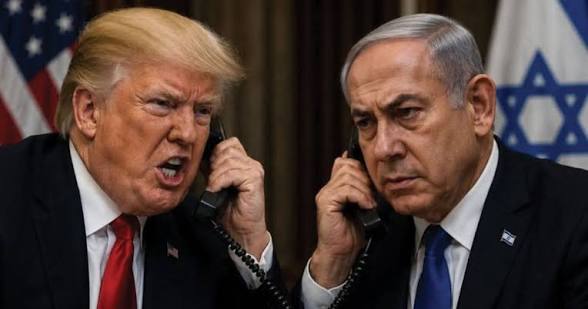
Reports indicate that Turkey, Saudi Arabia, Oman, and Qatar have all urged the White House to avoid military action against Iran. Their concern is rooted not in sympathy for Tehran, but in fear of the consequences.

Speculation persists that the United States and Israel are offering indirect support to Iranian protesters. Both countries have long sought political change in Tehran. Iran’s strategic location along key East–West trade routes and its vast oil and gas reserves further heighten global interest.

Yet Iran is far more fortified than countries like Venezuela, where energy resources once played a role in U.S. intervention debates. Any attack on Iran would likely ignite a prolonged regional conflict—something former President Donald Trump repeatedly promised American voters he would avoid.

Neighboring states know such a war would not remain contained. In an interview with Reuters, a senior Iranian official warned that any U.S. strike would prompt Iran to target American interests throughout the region. These fears reportedly contributed to Washington’s decision to relocate some personnel from the Al Udeid air base in Qatar.

Why Turkey is especially anxious

Behind the scenes lies a complex geopolitical struggle, and Turkey stands out as particularly concerned. Although Ankara and Tehran maintain economic and social ties, they are strategic rivals in the Middle East, the Caucasus, and Central Asia. Their interests in Syria, in particular, are sharply opposed.

Iran backed former Syrian president Bashar al-Assad, while Turkey supported the forces of Ahmed al-Sharaa, who came to power after Assad was ousted in December 2024. This rivalry shapes Ankara’s calculations today.

Like other regional powers, Turkey believes that military intervention in Iran would have disastrous consequences—disrupting energy supplies and potentially unleashing a massive new wave of refugees. Given Iran’s population, such a crisis would dwarf the Syrian refugee influx that began in 2011, when Syria’s population was roughly 21 million.

Turkey is also wary that a new Iranian government could emerge closely aligned with Israel. Turkish Foreign Minister Hakan Fidan has been in regular contact with his Iranian counterpart Abbas Araghchi, as well as with U.S. regional envoy Tom Barrack. Ankara continues to urge restraint and warns of the catastrophic impact of state collapse in Iran.

A protest movement without unity

Despite the courage and determination of Iranian protesters, the movement remains fragmented. There is no unified leadership, no single political force capable of bringing the opposition together. This lack of cohesion has made it difficult for regime opponents to rally around a shared alternative.

Some voices have called for restoring the monarchy under Reza Pahlavi, the exiled son of Iran’s last shah. But most Iranians appear unwilling to hand power back to the heir of a dynasty overthrown by a popular revolution and widely associated with repression.

Iran’s future is unlikely to be decided anytime soon. One reason is the regime’s continued ability to suppress dissent through brute force. Yet each act of violence carried out by the state deepens public resentment. The system is slowly eroding from within, and its chances of renewal appear slim.

Still, a sudden collapse cannot be predicted with certainty. What is clear is that the ongoing unrest has set Iran on a path of prolonged instability—one that deeply unsettles its neighbors, especially Turkey.
Tag :

Please Share This Post in Your Social Media

Why Turkey is uneasy about the protest movement in Iran ?

Update Time : 04:42:13 am, Monday, 19 January 2026

If Iran’s theocratic and authoritarian system were to collapse under the weight of the current protests, few people around the world would mourn its fall. What makes many observers uneasy, however, is the possibility that such an outcome could be imposed through foreign military intervention. There is also widespread doubt that, if the current system were to crumble, a clear, popular, and widely accepted alternative would immediately emerge to replace it.

Despite a near-total internet shutdown, numerous videos of protests inside Iran have found their way beyond the country’s borders. Iranians have taken to the streets many times before, but this latest wave—erupting in January 2026—has been driven primarily by severe economic distress rather than by a single ideology or ethnic movement.

Notably, Tehran’s bazaar merchants played a visible role in the protests. Traditionally viewed as aligned with the authorities and absent from earlier uprisings, their participation signaled how deeply public anger has spread. Yet even with frustration cutting across social classes, the protests have so far fallen short of dismantling the political system itself.

A familiar pattern of repression

As in previous uprisings, the state responded with extreme force. Multiple security agencies were deployed to crush the demonstrations. Thousands are believed to have been killed, more than ten thousand detained, and countless others injured. The Islamic Revolutionary Guard Corps and its affiliated paramilitary force, the Basij, played a central role in the crackdown.

With communication channels blocked, reliable information has become scarce. The true death toll may never be fully known.

Iranian authorities have blamed the unrest on foreign interference and pointed to international sanctions as the main cause of the country’s economic collapse. What they do not acknowledge is that these sanctions stem largely from Tehran’s own policy choices—particularly its pursuit of nuclear weapons capabilities and its support for armed groups across the Middle East.

Economic collapse and social despair

Iran’s population is estimated at around 92 million, making the prospect of instability especially alarming for neighboring states. The memory of Syria’s civil war and the refugee crisis it triggered remains fresh, and many fear a similar—though far larger—scenario if Iran were to unravel.

The economic data underscores the scale of the crisis. Inflation stood at 31 percent in January 2025, climbed steadily throughout the year, peaked at 48 percent in October, and eased slightly to 42 percent by December. Trade restrictions and soaring prices for basic goods have left ordinary Iranians exhausted and angry. Over the past six months alone, the rial has lost 64 percent of its value.

Pension payments are delayed, poverty is expanding, and opportunities are shrinking. Cities are also suffering from worsening air pollution, while drought has damaged agriculture. At the same time, individuals connected to the ruling elite continue to accumulate wealth. Corruption is widespread, yet state resources are steadily drained, with much of the remaining budget directed toward military and nuclear programs.

Regional fears and global calculations

These developments must be viewed within the broader context of change and instability across the Middle East. Iran’s regional policies over recent decades have left it with few close allies, yet the risk of widespread chaos has made many countries wary of any sudden collapse.

Reports indicate that Turkey, Saudi Arabia, Oman, and Qatar have all urged the White House to avoid military action against Iran. Their concern is rooted not in sympathy for Tehran, but in fear of the consequences.

Speculation persists that the United States and Israel are offering indirect support to Iranian protesters. Both countries have long sought political change in Tehran. Iran’s strategic location along key East–West trade routes and its vast oil and gas reserves further heighten global interest.

Yet Iran is far more fortified than countries like Venezuela, where energy resources once played a role in U.S. intervention debates. Any attack on Iran would likely ignite a prolonged regional conflict—something former President Donald Trump repeatedly promised American voters he would avoid.

Neighboring states know such a war would not remain contained. In an interview with Reuters, a senior Iranian official warned that any U.S. strike would prompt Iran to target American interests throughout the region. These fears reportedly contributed to Washington’s decision to relocate some personnel from the Al Udeid air base in Qatar.

Why Turkey is especially anxious

Behind the scenes lies a complex geopolitical struggle, and Turkey stands out as particularly concerned. Although Ankara and Tehran maintain economic and social ties, they are strategic rivals in the Middle East, the Caucasus, and Central Asia. Their interests in Syria, in particular, are sharply opposed.

Iran backed former Syrian president Bashar al-Assad, while Turkey supported the forces of Ahmed al-Sharaa, who came to power after Assad was ousted in December 2024. This rivalry shapes Ankara’s calculations today.

Like other regional powers, Turkey believes that military intervention in Iran would have disastrous consequences—disrupting energy supplies and potentially unleashing a massive new wave of refugees. Given Iran’s population, such a crisis would dwarf the Syrian refugee influx that began in 2011, when Syria’s population was roughly 21 million.

Turkey is also wary that a new Iranian government could emerge closely aligned with Israel. Turkish Foreign Minister Hakan Fidan has been in regular contact with his Iranian counterpart Abbas Araghchi, as well as with U.S. regional envoy Tom Barrack. Ankara continues to urge restraint and warns of the catastrophic impact of state collapse in Iran.

A protest movement without unity

Despite the courage and determination of Iranian protesters, the movement remains fragmented. There is no unified leadership, no single political force capable of bringing the opposition together. This lack of cohesion has made it difficult for regime opponents to rally around a shared alternative.

Some voices have called for restoring the monarchy under Reza Pahlavi, the exiled son of Iran’s last shah. But most Iranians appear unwilling to hand power back to the heir of a dynasty overthrown by a popular revolution and widely associated with repression.

Iran’s future is unlikely to be decided anytime soon. One reason is the regime’s continued ability to suppress dissent through brute force. Yet each act of violence carried out by the state deepens public resentment. The system is slowly eroding from within, and its chances of renewal appear slim.

Still, a sudden collapse cannot be predicted with certainty. What is clear is that the ongoing unrest has set Iran on a path of prolonged instability—one that deeply unsettles its neighbors, especially Turkey.