Iran Protests Defy Simple Narratives

- Update Time : 02:17:16 pm, Saturday, 24 January 2026
- / 273 Time View

Why Iran’s Protests This Time Are Not a Black-and-White Story
During three weeks in Iran, I returned home on the night of Wednesday, January 14. What I am writing now about my time in Tehran was never shared on social media. That space has become deeply toxic, and everything posted there is closely monitored by authoritarian systems—including our own.
I do not see myself as a spokesperson for Iran in the English-speaking world. The situation is extremely complex, and many people speak from a place of personal pain and trauma. Still, during the protests, opening Facebook left me unsettled. The discussion there reduced everything to simple binaries—dividing reality into neat opposing sides. Most people do this without ill intent, but the damage remains.
I write here as someone who loves Iran deeply and has spent decades studying its culture and history. I ask readers to consider all these realities together, not to place them against one another—as I have seen so often in online narratives.
Iranians are genuinely furious about government corruption. Many believe it lies at the heart of the country’s economic collapse, which has made daily life increasingly unbearable. This corruption is inseparable from decades of suffocating sanctions, which in my view amount to collective punishment and a violation of human rights. Add to that a global trend in which wealth concentrates in the hands of a few corrupt elites. The Islamic Republic cannot escape responsibility for this reality.
Large numbers of angry citizens poured into the streets. Among them, however, were other groups—some with military training—who operated differently from ordinary protesters. I heard this repeatedly from people in Tehran, Rasht, Kish, Yazd, Shushtar, Bushehr, and elsewhere.
After January 8–9, many people told me these protests felt different. Trained individuals with specific agendas appeared to be trying to seize control of the demonstrations and steer them. A friend of mine was threatened for refusing to chant “Javid Shah” (“Long live the Shah,” a reference to Reza Pahlavi).
I personally witnessed a man climb a nearly 20-foot wall at night with the precision of a trained soldier. Whether he used a grappling hook or something else, I cannot say—but he was clearly not an ordinary civilian. I could cite many such examples.
There are credible explanations for who may have been embedded within the protests: Israeli intelligence operatives, Israel-backed monarchist groups, the US-supported MEK (widely regarded inside Iran as a terrorist organization), and armed separatist factions supported by foreign powers. These groups appeared to be driving much of the extreme violence seen during the unrest.
Some ordinary Iranians, meanwhile, were closely following Iran International—a satellite TV channel funded by the Israeli government and known for distortion and misinformation. Many viewers genuinely believed US or Israeli intervention would “save” them. They told me, “This is not living.”
This belief rests on a dangerous illusion: that the United States and Israel intervene to protect human life. History shows otherwise. Their interventions have produced death, destruction, chaos, and mass displacement. Yet desperation has pushed many people beyond the point where they can hear this warning.
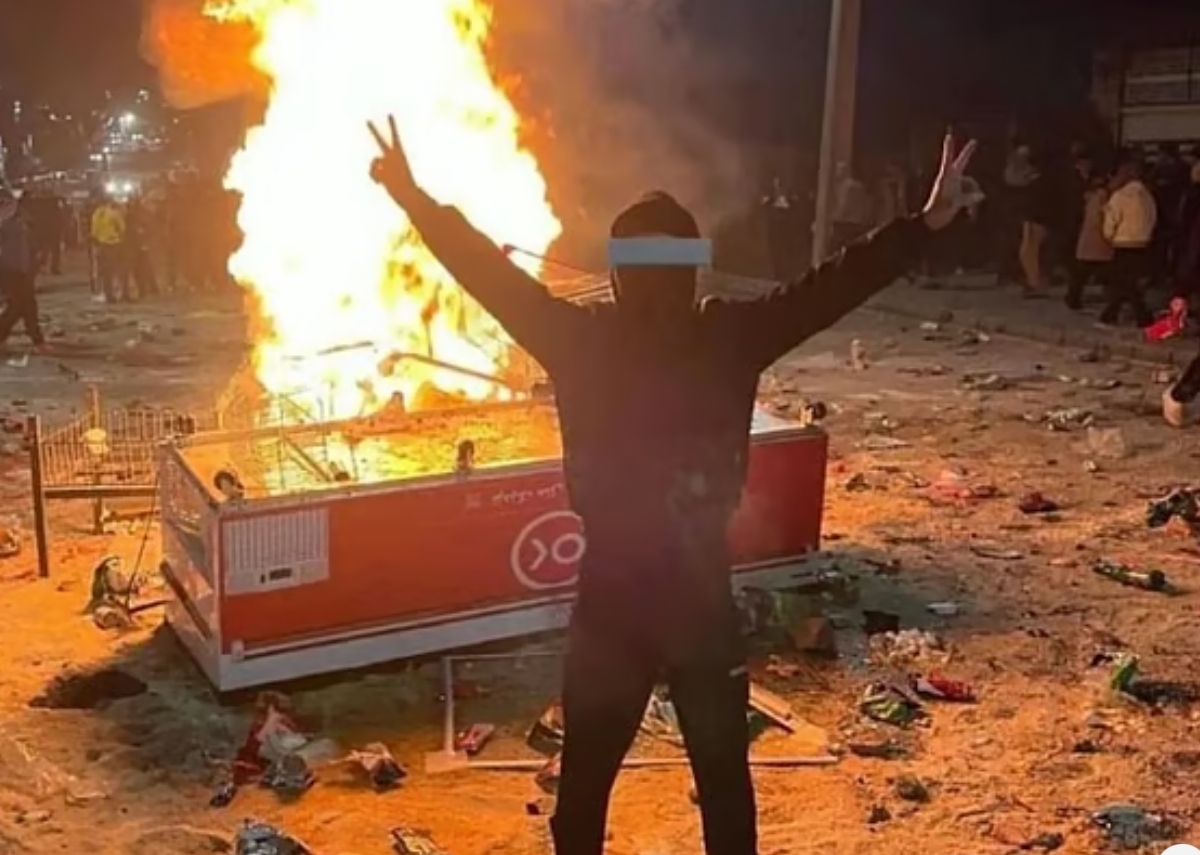
These protests were unprecedented in their violence. Even veteran activists who have protested regularly since 2009 told me they had never seen anything like it. Government offices and banks were burned, shops looted, buses torched, and metro stations vandalized. People—protesters, security forces, and even suspected security personnel who were actually civilians—were brutally attacked. Some were beaten, stabbed, burned alive, or killed.
This violence shocked even those who strongly oppose the government. In some cities, conditions resembled a war zone, with gunfire echoing through neighborhoods.
Hospital workers in Tehran told me many of the injured reported strange accents among both protesters and security forces, reinforcing suspicions of foreign involvement. When everything feels chaotic, such explanations take root—and not without reason. Iran at that time was in a state of profound disorder.
The protests had multiple layers. What began in Tehran’s bazaar clearly stemmed from economic grievances. But soon, something very different unfolded in border regions and obscure towns few outsiders had ever heard of. These areas turned violent rapidly, with armed participants. While some groups traditionally possess weapons, there is no doubt that arms have become far more widespread.
Western media, as usual, stripped events of context and framed everything as an imminent revolution. They focused on corruption while ignoring the crushing impact of decades of sanctions that have turned basic necessities into black-market commodities. This does not absolve the state of responsibility—but it is the real backdrop.
In the days before I left, the city fell into an uneasy stillness. People tried to maintain daily routines, though life without internet was extremely difficult. In some ways, the disconnection brought an unexpected calm—forcing people to be present with one another. Essential internal networks slowly resumed.
Some people began believing that Donald Trump or Reza Pahlavi would arrive and rescue them without bloodshed. Others—even in affluent northern Tehran—openly cursed the former crown prince, accusing him of recklessly calling for protests without any plan, while remaining unwilling to return to Iran himself.
These inflated hopes reveal just how desperate people have become. Some cling to any imagined alternative; others fear the country is heading toward civil war or total collapse.
No one I spoke with supported the current regime. Yet they also understood there is no strong internal opposition and that foreign powers are actively pursuing their own interests. Under these conditions, a peaceful transition to a better government appears highly unlikely. That fear is mine as well.
Anger has blinded many to immediate risks and hard limitations. Neither the opposition nor the state seems to have a realistic, coherent plan. The situation may still grow far worse.
— M. Nateghnouri
Iranian rights activist and university professor in the United States