

Dhaka 4:17 am, Wednesday, 25 February 2026

Snowstorm Hits U.S. East Coast, Over 5,500 Flights Canceled

Staff Correspondent :
  • Update Time : 06:47:00 am, Tuesday, 24 February 2026
  • / 29 Time View

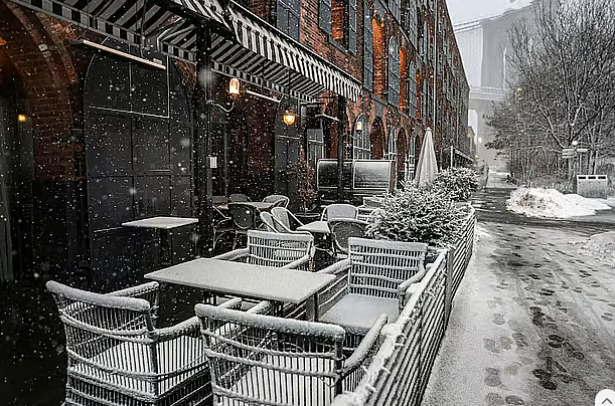
A severe winter storm struck the U.S. East Coast on Monday, disrupting the lives of hundreds of thousands and grounding thousands of flights.

Parts of Rhode Island and Massachusetts were buried under up to 37 inches (94 cm) of snow. Central Park in New York City recorded more than 19 inches of snowfall, prompting Mayor Joharan Mamdani to declare a weather-related state of emergency. Officials warned that travel in New York had become “virtually impossible.”

The storm caused power outages affecting over 600,000 homes and businesses across the East Coast, with New Jersey and Massachusetts among the hardest hit. Winter storm warnings were issued for a wide stretch from North Carolina to northern Maine and later extended to eastern Canada.

The National Weather Service warned that snow would continue into Monday, with some areas of the Northeast expecting an additional 1–2 feet (around 61 cm) by Tuesday morning. Rhode Island experienced record snowfall, with Providence receiving 36 inches, the highest in the state’s history, surpassing the 28.6 inches recorded in February 1978.

Authorities in Rhode Island and neighboring Connecticut imposed travel bans except for essential trips. Massachusetts Governor Maura Healey restricted nonessential travel in southeastern Massachusetts and reduced highway speed limits to 40 mph (about 65 km/h).

Air travel was severely disrupted. According to FlightAware, more than 5,706 flights were canceled at major airports. LaGuardia Airport saw 98% of flights canceled, JFK Airport 91%, and Boston Logan International Airport 92%. Newark Liberty International had 92% of flights canceled, while Philadelphia International saw around 80% cancellations. Nearly 335,000 passengers use these airports daily.

The storm’s heavy snow and widespread travel restrictions left much of the U.S. Northeast paralyzed, creating one of the region’s most significant winter disruptions in years.
Tag :

Please Share This Post in Your Social Media

Snowstorm Hits U.S. East Coast, Over 5,500 Flights Canceled

Update Time : 06:47:00 am, Tuesday, 24 February 2026

A severe winter storm struck the U.S. East Coast on Monday, disrupting the lives of hundreds of thousands and grounding thousands of flights.

Parts of Rhode Island and Massachusetts were buried under up to 37 inches (94 cm) of snow. Central Park in New York City recorded more than 19 inches of snowfall, prompting Mayor Joharan Mamdani to declare a weather-related state of emergency. Officials warned that travel in New York had become “virtually impossible.”

The storm caused power outages affecting over 600,000 homes and businesses across the East Coast, with New Jersey and Massachusetts among the hardest hit. Winter storm warnings were issued for a wide stretch from North Carolina to northern Maine and later extended to eastern Canada.

The National Weather Service warned that snow would continue into Monday, with some areas of the Northeast expecting an additional 1–2 feet (around 61 cm) by Tuesday morning. Rhode Island experienced record snowfall, with Providence receiving 36 inches, the highest in the state’s history, surpassing the 28.6 inches recorded in February 1978.

Authorities in Rhode Island and neighboring Connecticut imposed travel bans except for essential trips. Massachusetts Governor Maura Healey restricted nonessential travel in southeastern Massachusetts and reduced highway speed limits to 40 mph (about 65 km/h).

Air travel was severely disrupted. According to FlightAware, more than 5,706 flights were canceled at major airports. LaGuardia Airport saw 98% of flights canceled, JFK Airport 91%, and Boston Logan International Airport 92%. Newark Liberty International had 92% of flights canceled, while Philadelphia International saw around 80% cancellations. Nearly 335,000 passengers use these airports daily.

The storm’s heavy snow and widespread travel restrictions left much of the U.S. Northeast paralyzed, creating one of the region’s most significant winter disruptions in years.