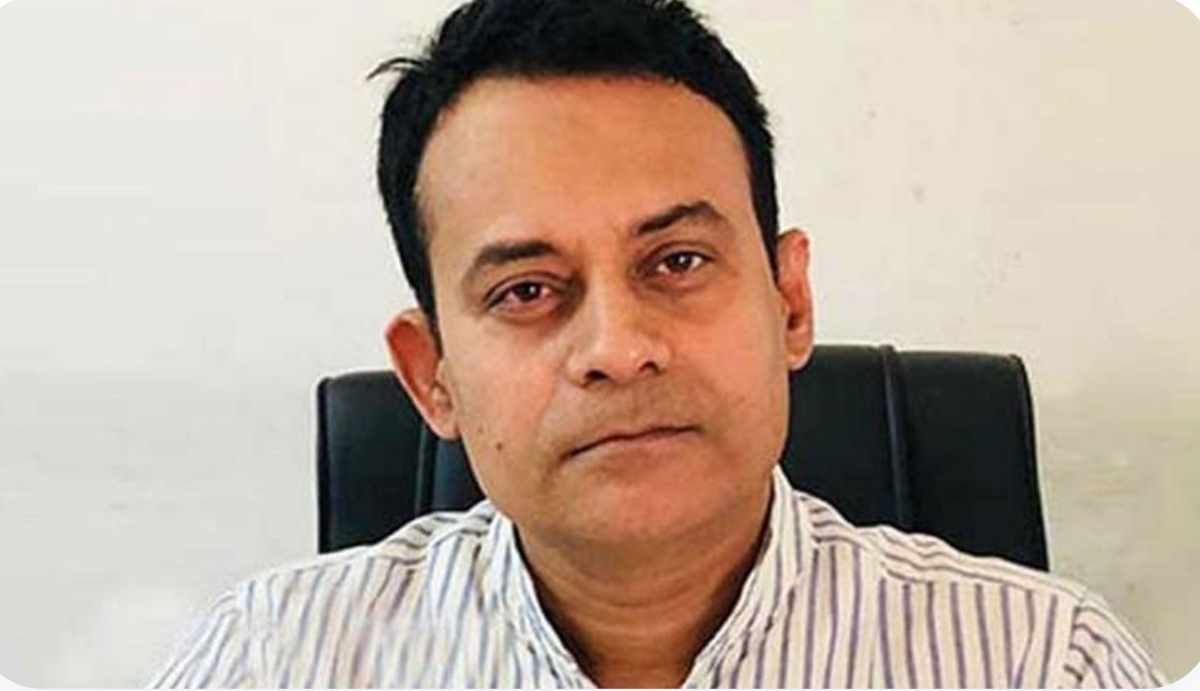
Top officials of Bangladesh Bank and the BSEC will also be eligible to serve as bank managing directors

- Update Time : 04:30:10 am, Thursday, 27 November 2025
- / 360 Time View


Senior officials working at Bangladesh Bank and other regulatory bodies in the financial sector will now be allowed to serve as managing directors (MD) or chief executive officers (CEO) of any bank.
According to the revised rules, candidates from regulatory agencies must have at least 25 years of professional experience, hold a first-class or equivalent position, and be in the second grade of the national pay scale. For the first time, the central bank has opened the door for top regulators to move into leadership positions within commercial banks.
Bangladesh Bank issued the updated directive on Wednesday, adding this new provision to its policy governing the appointment of bank MDs and CEOs. As a result, senior officials from Bangladesh Bank, the Bangladesh Securities and Exchange Commission (BSEC), and the Insurance Development and Regulatory Authority (IDRA) will be eligible to take on MD or CEO roles.
Officials involved with the central bank said that not only current top-tier regulators but also former officials may qualify. The retirement age for senior regulatory posts is 59, while the upper age limit for a bank MD or CEO is 65. This means former regulators may be considered eligible for up to five years after retirement, subject to the usual recruitment process.
Under the new rule, only those in positions equivalent to executive director (ED) or above at Bangladesh Bank or BSEC—positions that fall under the second-grade pay scale—are eligible. Officers below the ED level will not qualify.
Sector insiders note that the responsibilities and challenges of regulatory roles and bank leadership differ significantly, so even experienced regulators will face new demands.
Syed Mahbubur Rahman, the MD of Mutual Trust Bank, echoed this view, saying that the challenges of running a commercial bank are not the same as those of a regulatory office.
Bangladesh Bank spokesperson and executive director Arif Hossain Khan said the rule change aims to address the shortage of qualified leadership in the banking industry. He added that many long-serving regulatory officials have the expertise needed to oversee banks effectively. However, these individuals must still go through the required procedures and meet all conditions.
Despite the positive intent, several banking professionals warn that the new policy may create conflicts of interest. They worry that candidates with regulatory backgrounds could receive preferential treatment—either from bank boards or during the central bank approval process. For example, if both a regulator and several private-sector candidates are shortlisted for an MD position, regulators may be given informal advantage due to professional familiarity or influence.
Some bankers also point out that former officials from Bangladesh Bank could be viewed favorably by bank boards hoping to maintain smoother relations with the central bank.
Syed Mahbubur Rahman acknowledged that the policy broadens the pool of experienced candidates but said potential conflicts of interest must be carefully evaluated. The challenges of leading a commercial bank, he added, are distinct from the responsibilities of a regulator.
There have been past instances of senior Bangladesh Bank officials becoming MDs of commercial banks, but previously the regulations did not explicitly allow it. That gap has now been addressed.
Earlier, on 27 February 2024, Bangladesh Bank had issued guidelines specifying eligibility for MD/CEO positions. Those rules required at least 20 years of active experience in banking and at least two years in the position directly below CEO. The new circular replaces that clause with updated requirements.
In addition to opening opportunities for top regulators, the revised rules state that MD and CEO candidates must still have 20 years of active banking experience, along with a minimum of three years as deputy managing director (DMD) or additional managing director (AMD), whether separately or combined.