Power Plant Rental Costs Rise to Tk 420 Billion

- Update Time : 04:05:50 am, Tuesday, 27 January 2026
- / 418 Time View

Despite efforts by the interim government’s Ministry of Power, Energy and Mineral Resources to curb spending and improve efficiency, electricity generation costs have increased over the past year. While some savings were achieved, the cost of producing each unit of electricity rose by nearly 8 percent, and payments for power plant capacity charges alone climbed by Tk 100 billion within a single year.
Officials at the Bangladesh Power Development Board (BPDB) attribute the rise in production costs to three main factors. First, the supply of natural gas—considered the cheapest fuel—has declined, reducing gas-based power generation. Second, although global fuel oil prices have fallen, the Bangladesh Petroleum Corporation (BPC) has continued charging BPDB higher rates. Finally, the depreciation of the taka against the US dollar has added further financial pressure.
Under existing agreements, BPDB is required to purchase electricity from all public and private power plants, regardless of whether they actually generate power. These contracts include mandatory “capacity charges,” commonly described as power plant rent, which must be paid even when plants remain idle.
According to BPDB data, installed generation capacity stood at 24,911 megawatts in the 2022–23 fiscal year, for which capacity payments totaled Tk 250 billion. In 2023–24, capacity rose to 28,098 megawatts and capacity charges increased to Tk 320 billion. Although capacity fell slightly to 27,414 megawatts in 2024–25 after several contracts were not renewed, capacity payments surged to Tk 420 billion—an increase of Tk 100 billion in just one year.
Bangladesh imports around 2,500 megawatts of electricity daily from India, with payments made in US dollars. In addition, repayments on foreign loans for several power plants are also dollar-denominated. Over the past year, the exchange rate rose by Tk 10–12 per dollar, significantly increasing BPDB’s costs.
At present, Bangladesh has 135 power plants, 68 of which are privately owned. Although payments are made in local currency, most private power plant bills are calculated in dollars. More than 90 percent of private plants are fully dollar-indexed, while all solar power projects are priced entirely in dollars.
Bangladesh Bank data show that the dollar traded at Tk 109 at the start of the 2023–24 fiscal year, rising to Tk 118 by the final two months. In the following fiscal year, the rate climbed further from Tk 118 to Tk 122.
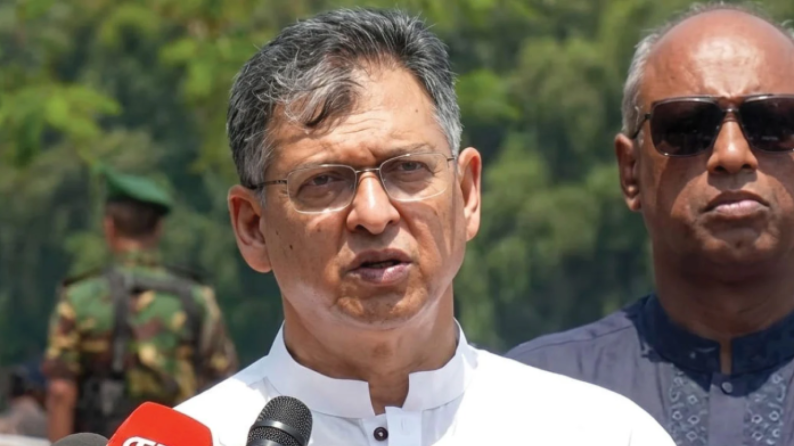
Power and energy adviser Muhammad Fouzul Kabir Khan said that electricity supply was increased last summer to avoid load-shedding, but gas shortages forced greater reliance on coal- and oil-fired plants. “Since gas supply could not meet demand, generation shifted to more expensive fuels, driving up costs,” he said.
During the previous government’s tenure, many power plants were approved without competitive tenders, often with high capacity charges allegedly benefiting specific groups. Following the political transition, the interim government formed a committee on September 5, 2024, to review these contracts.
The committee’s report, published on January 25, found that Bangladesh currently has between 7,700 and 9,500 megawatts of excess or idle generation capacity. Maintaining this unused capacity costs between $900 million and $1.5 billion annually (Tk 110–180 billion) in capacity charges.
The review committee identified excessive capacity payments as one of the main drivers of the power sector’s financial crisis. Over the past 15 years, total payments to power producers increased 11-fold, while capacity charges surged nearly 20-fold. Although project loans are typically repaid within 12 years, contracts often require capacity payments for 13 to 22 years at very high rates.
The report also noted that in many cases capacity charges continued to rise even when electricity production stagnated or declined. The committee recommended renegotiating contracts with private companies and canceling agreements outright where evidence of corruption exists.
Experts argue that power generation capacity should not exceed demand by wide margins. While a reserve margin of 15–20 percent is standard—and up to 25 percent may be acceptable for countries like Bangladesh—the current reserve margin exceeds 50 percent. As this surplus grows, so do costs, since idle plants must still be paid.
Based on the committee’s recommendations, another panel was formed on January 21 last year to review electricity tariffs. Discussions on reducing capacity payments are ongoing, according to the power adviser.
Fuel mix trends have also contributed to higher costs. Gas-based generation fell from 48 percent to 44 percent, while coal-fired generation rose from 20 percent to nearly 27 percent. Coal-based electricity costs roughly twice as much per unit as gas, further inflating overall production costs.
Despite IMF pressure to reduce subsidies, the interim government refrained from raising electricity prices, instead focusing on cost reductions. However, BPDB data show that average production costs rose from Tk 11.44 per unit in 2023–24 to Tk 12.34 in 2024–25. With retail electricity prices unchanged, BPDB’s losses and reliance on government subsidies increased.
In the last fiscal year alone, the power sector received Tk 590 billion in subsidies. BPDB’s total expenditure on power generation and purchases rose by nearly 14 percent to Tk 1.21 trillion, largely due to higher payments to independent power producers (IPPs).
Consumer rights group CAB has criticized the continued reliance on what it calls “exploitative spending structures.” Energy adviser M. Shamsul Alam said that although legal immunity provisions were repealed, power contracts remained unchanged. “The sector is still being run along the same lines as before,” he said.