Will the Next Elected Government Implement the July Charter?

- Update Time : 11:03:56 am, Wednesday, 10 December 2025
- / 243 Time View

More than half of the people in Bangladesh are unsure whether the government formed after the upcoming national election will implement the July National Charter. Only one in four respondents believe the next government is likely to carry it out.
These findings come from the National Public Opinion Survey 2025 on Key Socio-Political Issues, commissioned by Prothom Alo and conducted by the independent research organization Kimekers Consulting Ltd.
When respondents were asked how much of the July Charter the next elected government might implement, 57.3% said they were uncertain. Another 4.3% felt the charter would not be implemented at all, while 12.6% thought only a minimal portion would be executed.
About 19.2% believed the new government would implement the charter partially, and 6.6% expected full implementation. Altogether, 25.8% of respondents felt that the next government might implement the charter to some degree.
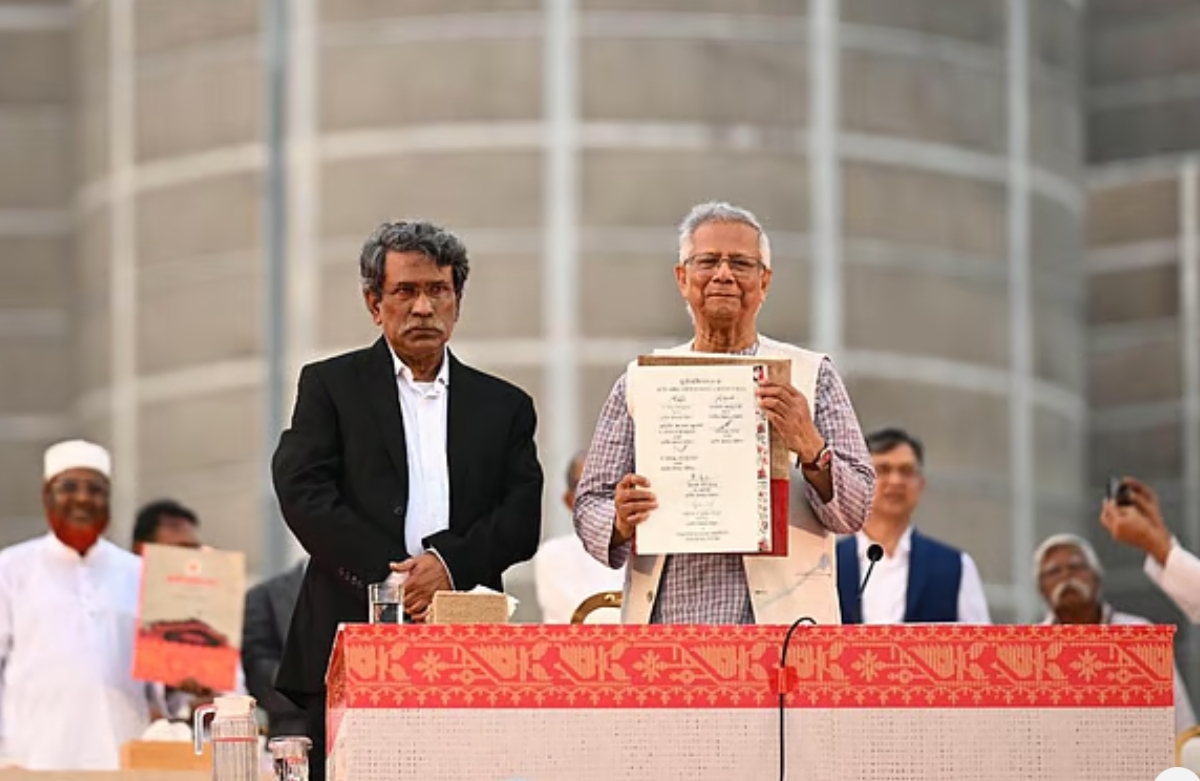
The July National Charter is a reform-oriented document shaped through continuous dialogue among political groups active during the July mass uprising. After prolonged discussions under the National Consensus Commission, several parties signed the charter on 17 October at an event held at the South Plaza of the National Parliament Building.
However, parties like the BNP, Jamaat-e-Islami, and the National Citizen Party (NCP) differ on several points, including the legal foundation of the charter, whether a referendum should take place before or after the election, and whether the upper house of Parliament should be formed through proportional representation (PR). The BNP supported holding the referendum on election day and forming the upper house based on lower-house seat share, while Jamaat and the NCP opposed these positions.
Amid these debates, on 13 November, President Md. Shahabuddin issued the July National Charter (Constitutional Reform) Implementation Order 2025. The order states that a referendum will be held alongside the parliamentary elections and that the upper house will be formed under the PR system.
The charter contains 84 proposed reforms, including 48 related to the constitution, such as imposing term limits on the prime minister and expanding presidential powers.
The survey gathered opinions from 1,342 adults (aged 18–55) across five urban and five rural/semi-urban areas. Participants included 674 men and 668 women from varied income groups, professions, and social backgrounds. Data was collected between 21 and 28 October.
Researchers emphasize that this was a public opinion poll—representative of national sentiment—but not targeted at any specific electoral constituency. The sample focused on individuals who read online or print news and are likely to vote in the upcoming election. The survey carries a 99% confidence level.