Inqilab Mancha Enforces Fresh Shahbagh Blockade

- Update Time : 11:06:00 am, Monday, 29 December 2025
- / 380 Time View


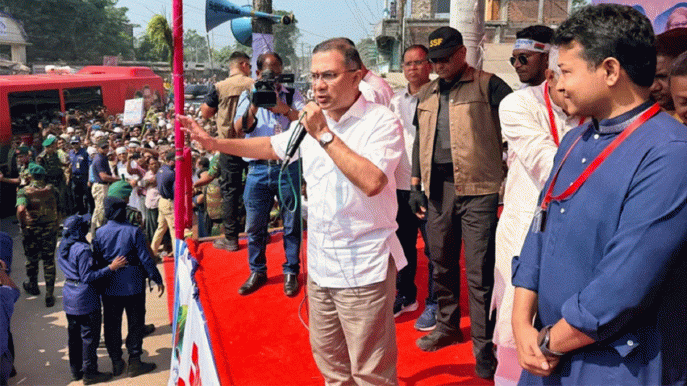
Leaders and activists of Inqilab Mancha have launched a sit-in by blocking Shahbagh in the capital, demanding the arrest and trial of those responsible for the killing of Shaheed Sharif Osman bin Hadi. This marks the fourth consecutive day of their protest at Shahbagh.
The sit-in began at around 2:15pm on Monday. As protesters occupied the Shahbagh intersection, traffic came to a standstill on all surrounding roads.
Although the blockade was scheduled to start at 2:00pm, demonstrators began gathering at the Shahbagh crossing shortly after noon. They initially stood on adjacent roads, chanting slogans, before fully shutting down the intersection later in the afternoon.
Inqilab Mancha activists have been maintaining a continuous protest at Shahbagh since Friday afternoon over the same demand. People from different professions and walks of life have joined the movement in solidarity.
On Sunday, the platform observed a complete blockade in divisional cities across the country. Later that night, around 10:00pm, the organisation’s member secretary Abdullah Al Jaber announced a four-point demand, including the arrest of the killers and the cancellation of work permits for Indian nationals residing in Bangladesh.
On the ground, protesters were seen blocking all approaches to the Shahbagh intersection while repeatedly raising slogans calling for justice for Hadi. Many carried or wore the national flag. Poetry recitations and songs dedicated to Hadi were also part of the demonstration.
The protesters chanted various slogans demanding justice and resistance, emphasising that Hadi’s death would not silence the movement.
The four demands of Inqilab Mancha include: completing the trial of the entire network involved in the killing—including perpetrators, planners, accomplices, and those who provided shelter—within 24 days; cancelling work permits of all Indian nationals currently in Bangladesh; filing a case at an international court against India if it refuses to extradite the accused taking refuge there; and identifying, arresting, and prosecuting alleged fascist collaborators hidden within civil and military intelligence agencies.