Dhaka 3:46 pm, Thursday, 29 October 2026

Bangladesh’s MRT Line-5 Project Faces Funding Uncertainty as South Korea Delays Loan Agreement

Reporter Name
  • Update Time : 06:45:28 am, Thursday, 29 October 2026
  • / 26 Time View

Bangladesh’s plan to develop a major metro rail corridor connecting Gabtoli in the west of Dhaka with Dasherkandi in the east has encountered a funding setback, as South Korea has yet to respond to repeated requests to finalise a loan agreement for the MRT Line-5 (Southern Route) project.


According to sources at Bangladesh’s Economic Relations Division (ERD), the South Korean government’s Economic Development Cooperation Fund (EDCF), which was expected to co-finance the project, has not responded despite several communications from the Bangladeshi authorities.


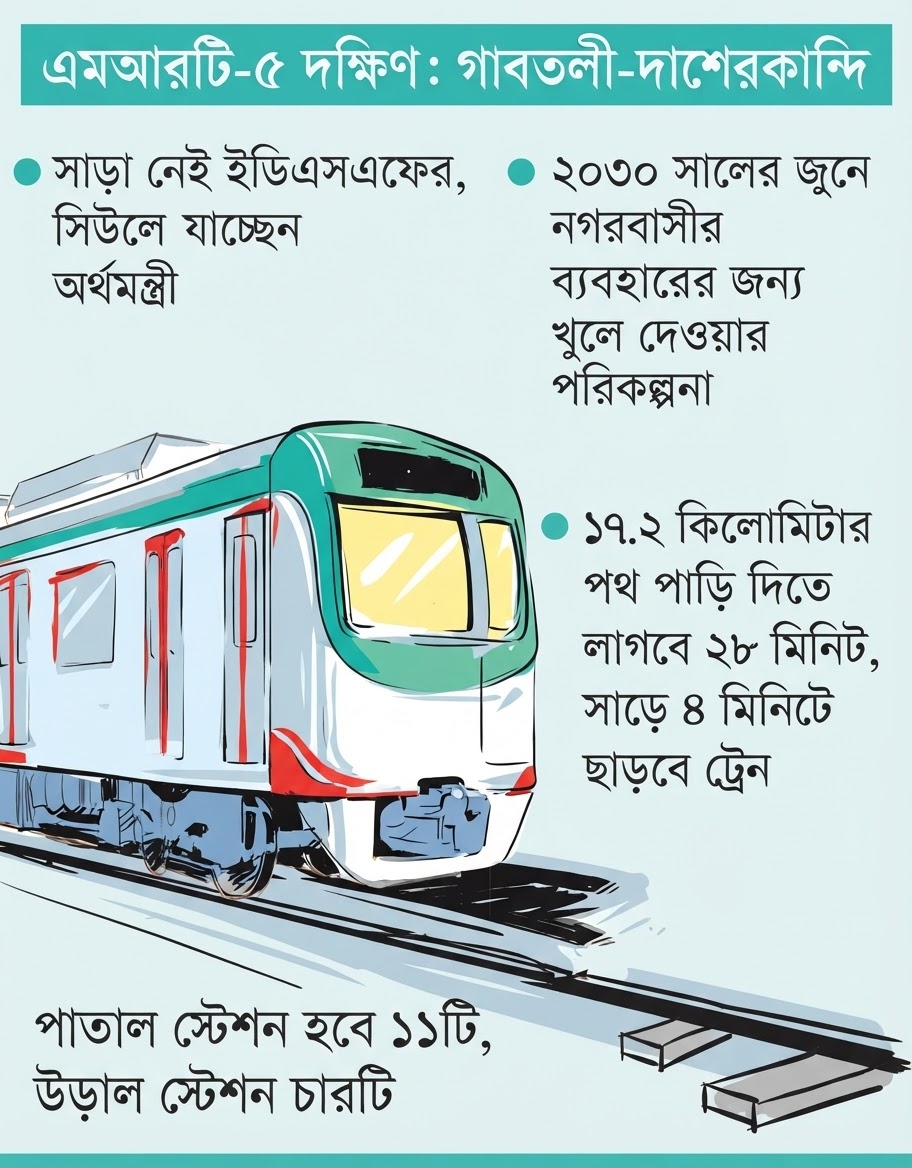
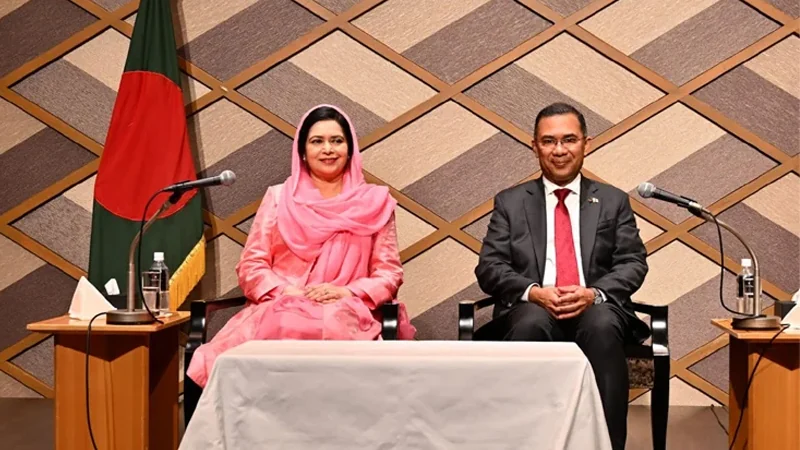
Finance Minister Amir Khasru Mahmud Chowdhury is scheduled to visit South Korea on Saturday to address the funding uncertainty. He is currently accompanying Prime Minister Tarique Rahman on an official visit to Japan before travelling to Seoul.


The EDCF had been expected to provide a loan of $1.1 billion, equivalent to approximately Tk 135.5 billion. The project’s estimated total cost is Tk 476.45 billion, with the Asian Development Bank (ADB) expected to contribute $3 billion, according to the report. The remaining Tk 153.14 billion in construction costs is to be financed by the Bangladesh government.


The ADB is reportedly ready to sign its loan agreement, but uncertainty over the South Korean financing has complicated the project’s funding arrangements.


Feasibility studies, preliminary engineering designs, tender documentation, land acquisition plans and resettlement plans for affected people have already been completed. The project received approval at a meeting of the Executive Committee of the National Economic Council (ECNEC) on September 16, chaired by Prime Minister Tarique Rahman.


Construction had initially been scheduled to begin in 2023, while the feasibility study was completed in 2022. A total of Tk 2 billion was spent on the feasibility study and detailed design work.


The project’s approval had stalled following the fall of the Awami League government. Although officials later revised the proposal to reduce costs and prepare it for ECNEC approval, it could not be placed before the committee because of a lack of response from the highest levels of the interim government.


At that stage, the estimated project cost stood at Tk 550 billion. Before approval, the estimate was reduced by Tk 73.65 billion to Tk 476.45 billion.


ERD sources said South Korea had previously expressed interest in co-financing MRT Line-5 (Southern Route) alongside the ADB. During discussions with the ERD, Seoul indicated an in-principle decision to provide a $1.1 billion loan, and a framework agreement was subsequently signed in accordance with the applicable procedures.


The proposed financing offers highly concessional terms, with an interest rate of just 0.05 per cent. Repayment is expected to take place over 40 years, including a 15-year grace period.


A senior official from the ERD’s Asia Wing told Samakal on Monday that the division had sent at least four letters to the EDCF over the past several months seeking progress on the loan agreement, but had received no response.


Bangladeshi officials also contacted the EDCF’s resident mission in Dhaka. The mission reportedly said it could not provide an update until it received a response from the fund’s headquarters.


Against this backdrop, the finance minister’s visit to South Korea is expected to focus on securing progress on the metro rail financing. Following the conclusion of the government’s Japan visit on October 29, he is scheduled to travel to South Korea the following day, with his official programme beginning on October 31.


During the visit, Amir Khasru is expected to meet South Korea’s president and finance minister. Discussions will cover the metro rail loan as well as possible budgetary support from the South Korean government. He is also scheduled to meet representatives of major South Korean companies, including Samsung and LG.


Under the proposed MRT Line-5 southern route, passengers would be able to travel from Gabtoli to Dasherkandi in just 28 minutes, reducing travel time and transport costs. The line is projected to serve 924,000 passengers daily, with each train capable of carrying 2,312 passengers.


The proposed 17.20-kilometre corridor will have 15 stations. Of the total route, 13.10 kilometres will run underground and 4.10 kilometres above ground. Eleven stations will be underground, while four will be elevated.


Starting at Gabtoli, the route will pass through Technical, Kallyanpur, Shyamoli, College Gate, Asad Gate, Shukrabad, Karwan Bazar, Hatirjheel, Tejgaon, Aftabnagar, Aftabnagar Centre, Aftabnagar East and Nasirabad before terminating at Dasherkandi.


Once operational, the project is expected to reduce road traffic by 1,049 vehicles and cut carbon emissions by 208,000 tonnes through lower fossil fuel consumption.


The metro line is scheduled to open to the public in June 2030, although the overall project period extends through 2032.


The southern route is also designed to connect with MRT Line-5’s northern route and MRT Line-2. Once the wider network is developed, it is expected to bring much of the capital under an integrated metro rail system.

Tag :

Please Share This Post in Your Social Media

Bangladesh’s MRT Line-5 Project Faces Funding Uncertainty as South Korea Delays Loan Agreement

Update Time : 06:45:28 am, Thursday, 29 October 2026

Bangladesh’s plan to develop a major metro rail corridor connecting Gabtoli in the west of Dhaka with Dasherkandi in the east has encountered a funding setback, as South Korea has yet to respond to repeated requests to finalise a loan agreement for the MRT Line-5 (Southern Route) project.


According to sources at Bangladesh’s Economic Relations Division (ERD), the South Korean government’s Economic Development Cooperation Fund (EDCF), which was expected to co-finance the project, has not responded despite several communications from the Bangladeshi authorities.


Finance Minister Amir Khasru Mahmud Chowdhury is scheduled to visit South Korea on Saturday to address the funding uncertainty. He is currently accompanying Prime Minister Tarique Rahman on an official visit to Japan before travelling to Seoul.


The EDCF had been expected to provide a loan of $1.1 billion, equivalent to approximately Tk 135.5 billion. The project’s estimated total cost is Tk 476.45 billion, with the Asian Development Bank (ADB) expected to contribute $3 billion, according to the report. The remaining Tk 153.14 billion in construction costs is to be financed by the Bangladesh government.


The ADB is reportedly ready to sign its loan agreement, but uncertainty over the South Korean financing has complicated the project’s funding arrangements.


Feasibility studies, preliminary engineering designs, tender documentation, land acquisition plans and resettlement plans for affected people have already been completed. The project received approval at a meeting of the Executive Committee of the National Economic Council (ECNEC) on September 16, chaired by Prime Minister Tarique Rahman.


Construction had initially been scheduled to begin in 2023, while the feasibility study was completed in 2022. A total of Tk 2 billion was spent on the feasibility study and detailed design work.


The project’s approval had stalled following the fall of the Awami League government. Although officials later revised the proposal to reduce costs and prepare it for ECNEC approval, it could not be placed before the committee because of a lack of response from the highest levels of the interim government.


At that stage, the estimated project cost stood at Tk 550 billion. Before approval, the estimate was reduced by Tk 73.65 billion to Tk 476.45 billion.


ERD sources said South Korea had previously expressed interest in co-financing MRT Line-5 (Southern Route) alongside the ADB. During discussions with the ERD, Seoul indicated an in-principle decision to provide a $1.1 billion loan, and a framework agreement was subsequently signed in accordance with the applicable procedures.


The proposed financing offers highly concessional terms, with an interest rate of just 0.05 per cent. Repayment is expected to take place over 40 years, including a 15-year grace period.


A senior official from the ERD’s Asia Wing told Samakal on Monday that the division had sent at least four letters to the EDCF over the past several months seeking progress on the loan agreement, but had received no response.


Bangladeshi officials also contacted the EDCF’s resident mission in Dhaka. The mission reportedly said it could not provide an update until it received a response from the fund’s headquarters.


Against this backdrop, the finance minister’s visit to South Korea is expected to focus on securing progress on the metro rail financing. Following the conclusion of the government’s Japan visit on October 29, he is scheduled to travel to South Korea the following day, with his official programme beginning on October 31.


During the visit, Amir Khasru is expected to meet South Korea’s president and finance minister. Discussions will cover the metro rail loan as well as possible budgetary support from the South Korean government. He is also scheduled to meet representatives of major South Korean companies, including Samsung and LG.


Under the proposed MRT Line-5 southern route, passengers would be able to travel from Gabtoli to Dasherkandi in just 28 minutes, reducing travel time and transport costs. The line is projected to serve 924,000 passengers daily, with each train capable of carrying 2,312 passengers.


The proposed 17.20-kilometre corridor will have 15 stations. Of the total route, 13.10 kilometres will run underground and 4.10 kilometres above ground. Eleven stations will be underground, while four will be elevated.


Starting at Gabtoli, the route will pass through Technical, Kallyanpur, Shyamoli, College Gate, Asad Gate, Shukrabad, Karwan Bazar, Hatirjheel, Tejgaon, Aftabnagar, Aftabnagar Centre, Aftabnagar East and Nasirabad before terminating at Dasherkandi.


Once operational, the project is expected to reduce road traffic by 1,049 vehicles and cut carbon emissions by 208,000 tonnes through lower fossil fuel consumption.


The metro line is scheduled to open to the public in June 2030, although the overall project period extends through 2032.


The southern route is also designed to connect with MRT Line-5’s northern route and MRT Line-2. Once the wider network is developed, it is expected to bring much of the capital under an integrated metro rail system.