How Manjurul Ahsan Munshi Can Return to the Race Against Hasnat Abdullah

- Update Time : 01:20:54 pm, Sunday, 18 January 2026
- / 556 Time View
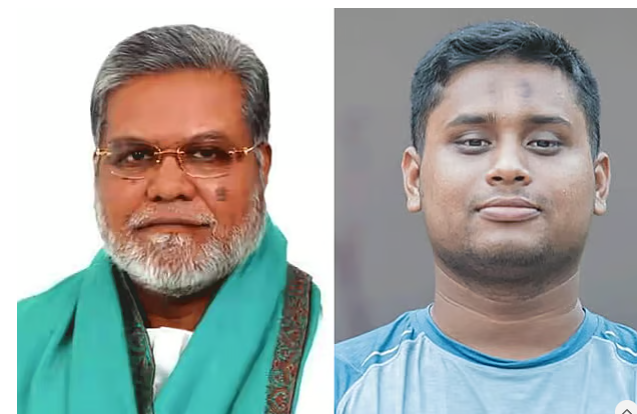

The nomination of Manjurul Ahsan Munshi, a candidate in the Cumilla-4 constituency, has been canceled, leaving the seat temporarily without a BNP nominee. This development is widely seen as strengthening the position of National Citizen Party (NCP) candidate Hasnat Abdullah, as the BNP’s electoral symbol will not appear on the ballot—at least for now.
However, it is still too early to conclude that voters in Cumilla-4 will cast their ballots without a BNP candidate in the 13th National Parliamentary Election scheduled for February 12. Munshi still has the option of seeking relief from the High Court. If he secures a favorable ruling in time, he could re-enter the race. While such reversals are rare and legally complex, precedents do exist.
Appeal hearings against the acceptance and rejection of nominations for the 13th parliamentary election concluded on Sunday at the Election Commission headquarters in Dhaka. With these hearings ending, it will soon be clear which rejected candidates have managed to regain eligibility and whose disqualifications will remain in force.
After the election schedule was announced, four-time lawmaker Manjurul Ahsan Munshi submitted his nomination papers as the BNP candidate for Cumilla-4, an area centered on Debidwar upazila. His papers were initially approved during scrutiny by the returning officer.
The situation changed when rival candidate Hasnat Abdullah filed an appeal with the Election Commission, challenging the returning officer’s decision. He alleged that Munshi had concealed information regarding defaulted bank loans. The Commission accepted the appeal on Saturday, leading to the cancellation of Munshi’s nomination.
Several other high-profile candidates have also lost their eligibility. Among them are former minister and a factional chairman of the Jatiya Party, Anisul Islam Mahmud, along with the party’s executive chairman and six others. BNP leader Aslam Chowdhury remains under final appeal review, while Jamaat candidate AKM Fazlul Haque in Chattogram-9 has been disqualified on appeal due to complications related to dual citizenship. Final hearings are also underway for several BNP candidates facing similar allegations, with decisions expected imminently.
In total, 2,568 nomination papers were submitted for the 13th parliamentary election. Of these, 723 were rejected during initial scrutiny by returning officers. Candidates were allowed to challenge these decisions through appeals to the Election Commission, resulting in 645 appeals being filed. Over the past eight days, 396 candidates have regained eligibility, while four candidates who had initially passed scrutiny lost their candidacy following appeals.
The appeal process concludes today, after which the final list of accepted and rejected nominations will be known. Candidates may withdraw their nominations until January 20, after which the final number of contestants will be confirmed.
Why nominations are canceled
The most common reasons for disqualification in this election include loan default status, dual citizenship, concealment of information, and errors in collecting the required number of voter signatures for independent candidates. Those with minor procedural errors—such as signature discrepancies—have largely had their nominations restored. Disqualifications that have remained are mostly linked to dual citizenship, unpaid loans, or inconsistencies in party nomination letters.
Under the Representation of the People Order (RPO), returning officers are authorized to reject nominations if legal requirements are not met. Disqualified candidates may appeal to the Election Commission within a specified time, providing written arguments and supporting documents. The Commission then decides whether to uphold or overturn the rejection.
If an appeal is accepted, the nomination is restored and the candidate remains eligible to contest the election, provided they do not withdraw before the final deadline. Their name and assigned electoral symbol then appear on the ballot paper.
If an appeal is rejected, the candidate is effectively excluded from the election, as the Election Commission’s decision is considered the final administrative ruling under the RPO.
In Munshi’s case, it was not his own appeal that failed, but rather the appeal filed by his rival that succeeded. Munshi had also challenged the acceptance of Hasnat Abdullah’s nomination, but that appeal was dismissed, allowing Hasnat to remain in the race.
Turning to the High Court
Even after rejection by the Election Commission, candidates still have the option of seeking relief from the High Court. However, courts typically intervene only in exceptional cases, such as when clear evidence of legal overreach or severe injustice by the Commission is demonstrated. Timing is also critical, as court decisions may not arrive before ballot printing.
Past elections offer examples of court-ordered reversals. In 2008, Mahbubuddin Khan Alamgir regained his candidacy through a High Court ruling, while in the 2018 election, several ruling-party candidates were reinstated following judicial intervention.
Badieul Alam Majumdar, secretary of Citizens for Good Governance (Shujon), noted that although the Election Commission’s decisions are generally considered final, courts may intervene in special cases. He emphasized that any such rulings must come within a reasonable timeframe to avoid complications in ballot preparation.
Munshi has signaled that he is not giving up. Following the Election Commission’s decision, he wrote on Facebook urging his supporters to remain patient and steadfast, expressing faith that justice would prevail. His supporters say he remains confident about regaining his candidacy through the courts.
In Cumilla-4, Hasnat Abdullah (listed as Md. Abul Hasnat on nomination papers) now faces four other candidates: Irfanul Haque Sarker of Insaniyat Biplob, Mojibur Rahman of Khelafat