Bangladesh to Hold the World’s First Election Shaped by Generation Z Influence

- Update Time : 05:10:04 pm, Monday, 9 February 2026
- / 271 Time View


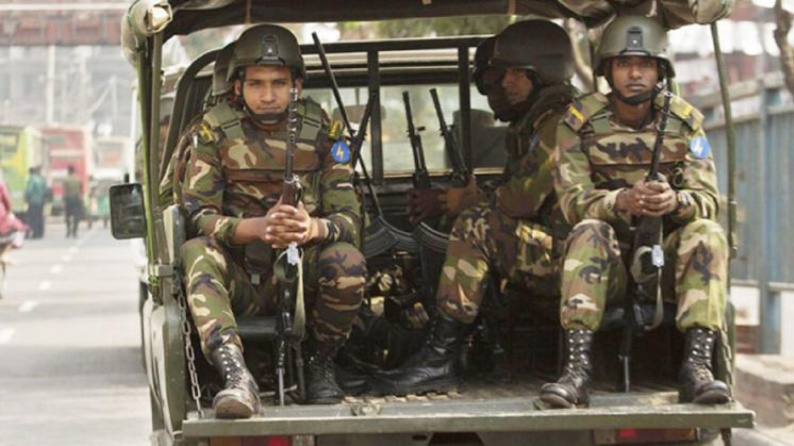
For much of Sheikh Hasina’s time in power, Bangladesh’s opposition parties were rarely visible on the streets during election periods. In many cases, they either boycotted polls altogether or were pushed to the margins as senior leaders were arrested ahead of voting day. As the country heads toward the 13th national parliamentary election scheduled for next Thursday, the political landscape looks strikingly different.
The Awami League, led by Sheikh Hasina, is now banned from political activities. Many young people who played a role in the 2024 mass uprising that led to the government’s collapse say Bangladesh is preparing for its first genuinely competitive election since 2008—the year Hasina began her 15-year rule in the Muslim-majority nation.
Young voters like 21-year-old Mohammad Rakib say they hope the next government will create an environment where citizens can express their opinions freely and vote without fear.
There is widespread expectation that the Bangladesh Nationalist Party (BNP) is positioned to win the election. At the same time, an Islamist alliance led by Jamaat-e-Islami is expected to mount a strong challenge. Adding a new dimension to the race, a Gen Z–led political party made up largely of anti-Hasina protesters—the National Citizens’ Party (NCP)—has joined forces with Jamaat after failing to transform its street momentum into an independent electoral base.
BNP is contesting 292 of the 300 parliamentary seats. Party leader Tarique Rahman told Reuters that his party is confident of securing enough seats to form the next government.
Joint surveys conducted by the Communication and Research Foundation and Bangladesh Election and Public Opinion Studies show that corruption is the top concern among the country’s 128 million voters, followed closely by inflation.
Political analysts say the months following Sheikh Hasina’s removal were marked by prolonged instability, disrupting major industries, including the garment sector—one of the world’s largest exporters of ready-made clothing. For a country of nearly 175 million people, the outcome of the February 12 election carries enormous significance. Observers say the results will also influence the roles of regional powers China and India in South Asia.
“Opinion polls clearly put BNP ahead, but a large portion of voters remain undecided,” said Parvez Karim Abbasi, executive director of the Centre for Governance Studies in Dhaka. He noted that several factors will shape the final outcome, particularly the votes of Generation Z. Nearly one-quarter of all voters are under 30, making young voters a decisive force in this election.
Across Bangladesh, election campaigning is in full swing. Black-and-white posters and banners line streets, walls, utility poles, and trees, displaying BNP’s “sheaf of paddy” symbol and Jamaat’s “scales,” alongside materials from independent candidates. Campaign offices have sprung up along major roads, with rallies, processions, and campaign songs creating a festive atmosphere.
Such scenes were largely absent in previous elections, when the Awami League’s “boat” symbol dominated the political space.
Polls suggest that while Jamaat-e-Islami may not win outright, it could achieve its strongest electoral performance to date. The party, which opposed Bangladesh’s independence from Pakistan in 1971 and was once banned, appears to be benefiting from its reputation for organizational discipline and a relatively clean image.
Analysts emphasize again that Gen Z voters will be critical. Their preferences could significantly shape the outcome of the 13th parliamentary election.
The election is also expected to redefine Bangladesh’s foreign relations. Since Sheikh Hasina—widely viewed as pro-India—fled to Delhi after losing power, Beijing has moved quickly to strengthen its influence in Dhaka. While India’s sway appears to be diminishing, many analysts believe BNP would maintain more workable relations with New Delhi than Jamaat.
A Jamaat-led government, by contrast, is seen as more likely to draw closer to Pakistan, India’s long-standing regional rival. Gen Z allies of Jamaat have voiced concerns about what they describe as excessive Indian influence in Bangladesh and have recently held meetings with Chinese diplomats.
Jamaat-e-Islami, however, insists it will not align itself with any single foreign power, saying its focus remains on building society based on Islamic values rather than geopolitical loyalties.
BNP leader Tarique Rahman has said that if his party forms the government, it will pursue friendly relations with any country that offers proposals beneficial to Bangladesh and its people.
Bangladesh, one of the world’s most densely populated nations, faces serious economic challenges, including persistent poverty, high inflation, weakening foreign currency reserves, and slowing investment. Since 2022, the country has increasingly relied on external financing, including billions of dollars in assistance from the International Monetary Fund and the World Bank.
Surveys indicate that voters are highly engaged in this election. Rather than religious or symbolic issues, concerns such as corruption, economic management, accountability, and effective leadership dominate public discussion.
Tarique Rahman, son of former prime minister Khaleda Zia, is widely seen as the frontrunner to become the next head of government. However, if the Jamaat-led alliance outperforms expectations, its leader Shafiqur Rahman could also emerge as a leading contender.
First-time voters like Mohammad Rakib say their main hope is simple: that whoever wins will protect freedom of expression and the right to vote. Reflecting on the previous era, Rakib said people had grown frustrated under Awami League rule, elections felt meaningless, and ordinary citizens had no real voice. This time, he and many others are hoping for something different.