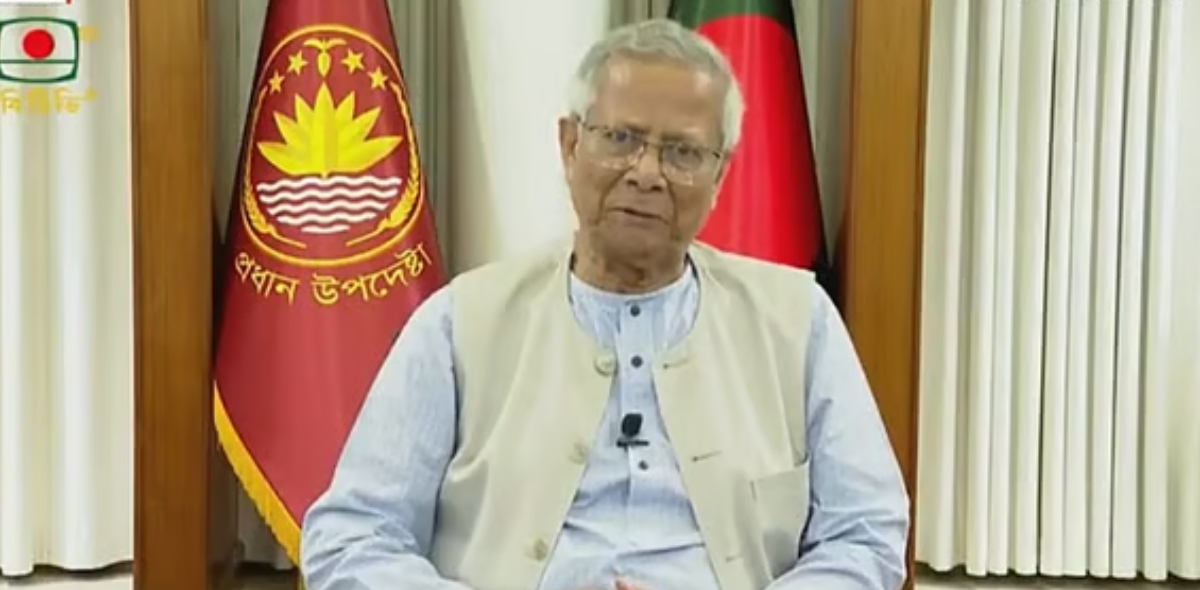
Yunus-led Interim Government Completes One Year in Power

- Update Time : 03:59:18 am, Saturday, 9 August 2025
- / 696 Time View


The interim government headed by Nobel laureate Professor Muhammad Yunus marks its first anniversary today, August 8, 2025. It came to office on August 8, 2024, just days after the August 5 popular uprising that ended the rule of Sheikh Hasina’s government. That mass movement claimed the lives of many students and citizens and left hundreds injured.
In line with the hopes of those who died in July’s protests, the interim administration has implemented reforms across key sectors — including electoral processes, governance, media freedom, economic stability, judicial independence, public security, and the prosecution of those responsible for killings during the uprising.
This year, the government observed the anniversary of the August 5 uprising by unveiling the “July Declaration.” Work on the “July Charter,” being developed through consultations with political parties under the National Consensus Commission, is in its final phase.
On August 5, Prof Yunus announced that the next national elections would take place in February 2026, ahead of the Ramadan season. The following day, the Chief Adviser’s Office sent a formal request to the Election Commission to make preparations for the polls within that timeframe. Election officials later confirmed that the election schedule will likely be released in the first half of December 2025.
Over the past year, the government has set up a series of reform commissions — covering elections, policing, the judiciary, anti-corruption measures, public administration, healthcare, media, labour rights, and women’s affairs. Reports from these bodies have guided new policy steps.
Economic indicators have shown signs of improvement. In June, overall inflation fell to 8.48 percent — the lowest in nearly three years — and food inflation is projected to drop to 6 percent by December. The administration credits this progress to market monitoring, reduced middleman influence, and timely action during last year’s severe floods, which threatened food supplies.
The interim government also reports renewed confidence among expatriate Bangladeshis, reflected in record remittance inflows of $30.33 billion last fiscal year, alongside a 9 percent rise in export earnings. This stability has strengthened the local currency, with the taka appreciating against the dollar for the first time in years.
In the past 11 months, Bangladesh repaid $4 billion to foreign creditors — the highest amount ever — while still managing to build up foreign exchange reserves.