Travel ban proposed for 43 countries by the US

- Update Time : 09:06:39 am, Saturday, 15 March 2025
- / 742 Time View
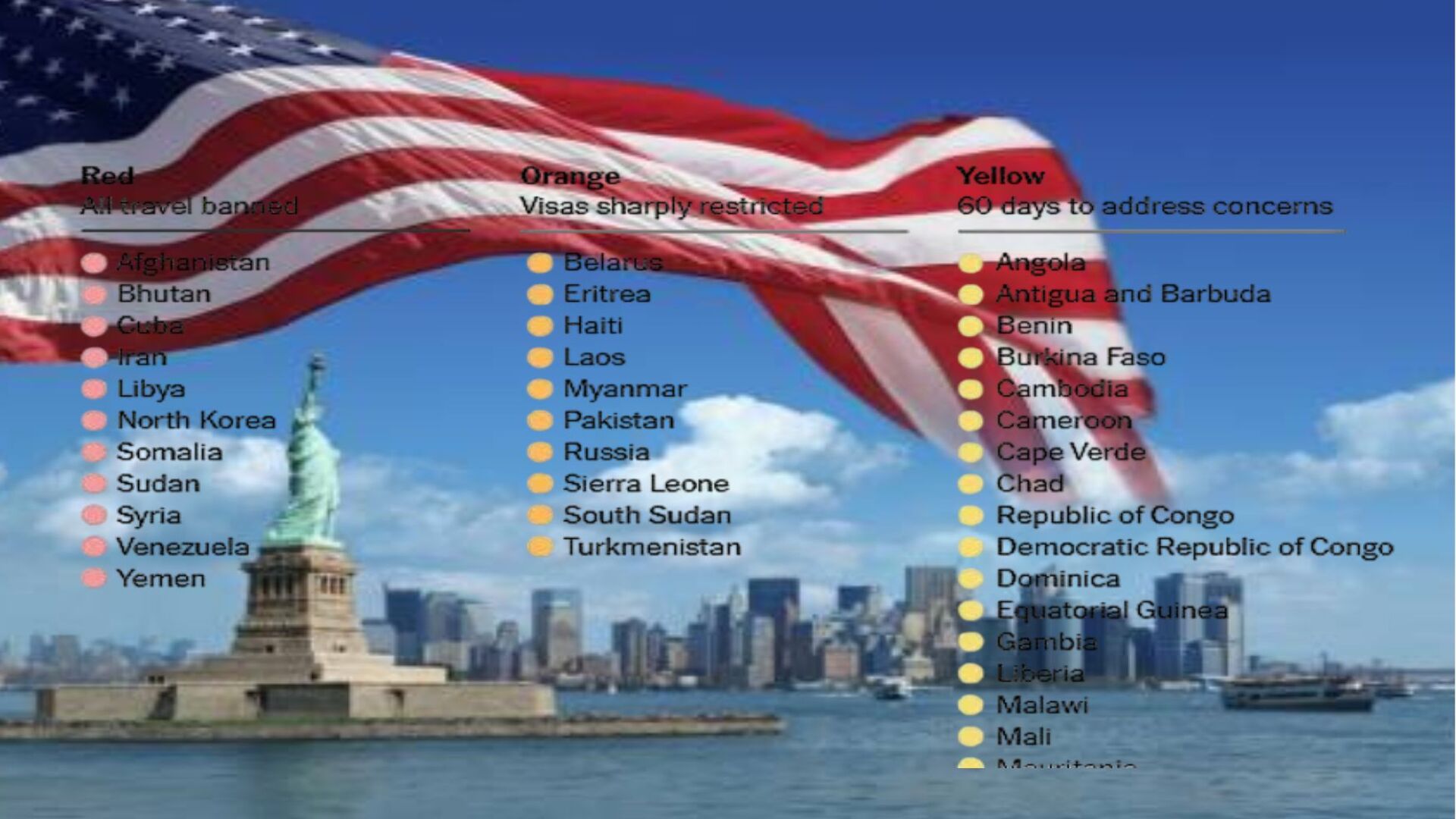

The Trump administration is planning to impose travel restrictions on citizens from 43 countries, according to US media reports, including the New York Times, citing officials involved in the process. A draft list has been prepared by US diplomatic and security officials, though final changes may still occur. The travel ban is divided into three categories: countries on the “red” list will face a complete ban, countries on the “orange” list will have a halt on new visas, and countries on the “yellow” list will have 60 days to address US concerns.
The draft includes countries such as Afghanistan, Bhutan, Cuba, Iran, Libya, North Korea, Somalia, Sudan, Syria, Venezuela, Yemen, Belarus, Eritrea, Haiti, Laos, Myanmar, Pakistan, Russia, Sierra Leone, South Sudan, Turkmenistan, Angola, Antigua and Barbuda, Benin, Burkina Faso, Cambodia, Cameroon, Cape Verde, Chad, Republic of Congo, Democratic Republic of Congo, Dominica, Equatorial Guinea, Gambia, Liberia, Malawi, Mali, Mauritania, St. Kitts and Nevis, St. Lucia, São Tomé and Príncipe, Vanuatu, and Zimbabwe.
Eleven countries are slated to be on the “red” list, facing a full travel ban, including Afghanistan, Bhutan, Cuba, Iran, Libya, North Korea, Somalia, Sudan, Syria, Venezuela, and Yemen. Ten countries are on the “orange” list, with stricter visa requirements but not an outright ban, including Belarus, Eritrea, Haiti, Laos, Myanmar, Pakistan, Russia, Sierra Leone, South Sudan, and Turkmenistan. Twenty-two countries are placed on the “yellow” list, which includes Antigua and Barbuda, Benin, Burkina Faso, Cambodia, Cameroon, Cape Verde, Chad, Republic of Congo, Democratic Republic of Congo, Dominica, Equatorial Guinea, Gambia, Liberia, Malawi, Mali, Mauritania, St. Kitts and Nevis, St. Lucia, São Tomé and Príncipe, Vanuatu, and Zimbabwe.
This is part of President Trump’s second term in office, aimed at enhancing the safety of US citizens by tightening travel restrictions. While the first term saw attempts to impose such bans, court challenges prevented their full implementation. However, the US Supreme Court later allowed a revised version of the bans, which could now be more expansive in Trump’s second term.