Times change, but the lament remains

- Update Time : 07:35:28 am, Friday, 10 October 2025
- / 374 Time View


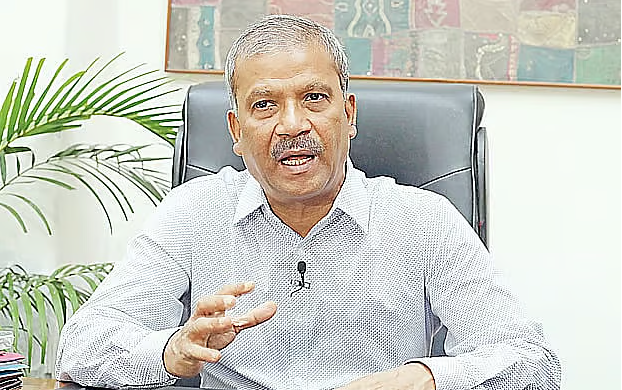
Regarding the discussions and criticism over the approval of two new television channels under the old licensing process, Information and Broadcasting Adviser Mahfuz Alam stated:“The outcry you see today over television approvals—this outcry comes from the old establishment and from those who believe that no new people or new faces should enter the field. We understand their frustration.”
He was speaking as the chief guest at a seminar titled “Media in July and After,” organized by the Press Institute of Bangladesh (PIB) on Thursday evening at the PIB auditorium.
“New media means new voices”
Addressing the issue of approving new television channels, Mahfuz Alam said:“Even if I remain in government for a single day, I’ll make an effort to open doors for new media. Since we did not shut down fascist media, we will create space for new ones. New media will bring new faces, new narratives, and new discourses—and there will be a battle of ideas rather than violence. We believe we will prevail in that intellectual struggle. There’s no ambiguity about this.”
“No government interference, but little responsibility”
He emphasized that the government has not interfered with the media but added:“I don’t see much sense of responsibility in journalism today. Instead, certain sets of narratives are being repeatedly pushed. The same old narratives that sustained Hasina’s long rule are resurfacing, and familiar faces—both at home and abroad—are being brought back under new names. We are observing all of this closely.”
Mahfuz Alam revealed that a letter had been sent to the United Nations requesting an independent investigation into how journalism in Bangladesh was used to justify killings, disappearances, and human rights violations over the past 15 years. The UN, he said, suggested discussing the matter with UNESCO, which later offered to help draft a code of conduct for the media instead.
“The lack of an independent investigation leaves a deep scar. Those who owned or ran those media outlets owe the public an apology and accountability,” he said.
“More crises are approaching”
Referring to a 2024 Facebook post by Sajeeb Wazed Joy, where he used the term ‘mobocracy’, Mahfuz Alam said:“That’s where Bangladesh has ended up today—a mobocracy. It’s a failure, I admit it. We couldn’t manage everything. The enthusiasm and unity of the people across classes, professions, and faiths that once stood with us—we may have lost that moment. But their democratic spirit hasn’t vanished. We need self-reflection because greater struggles are ahead. Student and political leaders must ask themselves if they have failed the revolutionary masses of July.”
He also noted that over the past year there had been attempts to “erase” the memory of July:“The crisis remains—and new crises are coming. Everyone can sense it. Gradually, the spirit of July is being pushed aside.”
“Every partial success still matters”
As special guest, economist Professor Mahbub Ullah said:“People may ask what was achieved through the July uprising. One thing was achieved—we can still speak freely, without fear. Mistakes may happen after any uprising, but learning from them prevents bigger dangers.”
He added that the revolution’s dream remains unfulfilled, as the lack of a strong socio-economic base makes reform difficult:“Still, whatever success comes—no matter how small—is meaningful. Let wisdom prevail among our politicians.”
He further remarked:“We often lament the rise of mob culture. But even that has its social roots. We need to work toward stability. Yet, if fascism or dictatorship returns, another people’s uprising will be inevitable.”
“No revolution is entirely a failure or success”
Writer and scholar Professor Salimullah Khan added:“So many lives were lost—each one is a family, not just a number. No revolution ever completely fails or fully succeeds. History shows that revolutions in England, France, and China were followed by bloodshed. By comparison, post-revolution killings in Bangladesh have been far fewer. Don’t mistake this as encouragement for violence.”
He observed that what has been seen in Bangladesh over the past year “has not been encouraging.”
“Fascist narratives still visible in media”
Researcher Saimum Parvez said:“During the fascist rule of Hasina, many media outlets promoted fascist narratives. Yet, many journalists resisted and suffered repression for it.”
PIB Director General Faruk Wasif, in his welcoming remarks, said:“Even though the spirit of July still burns in society and politics, it’s the most obscured in the media. The supporters of the July massacre are still visible in the media.”
The discussion was chaired by PIB Board Chairperson Professor Firdaus Azim and moderated by Information and Research Officer Sohul Ahmed.
During the event, PIB unveiled five publications on the July uprising — “Tarikhe July,” “July Uprising and Political Intellectualism,” “Niriksha: Uprising Media Narratives,” “The Journalists We Lost,” and “Chronology 2024.” PIB also launched its new fact-checking platform “Bangla Fact.”