If Netanyahu Loses, Will Israel’s Palestine Policy Change?

- Update Time : 01:10:44 pm, Sunday, 25 October 2026
- / 18 Time View
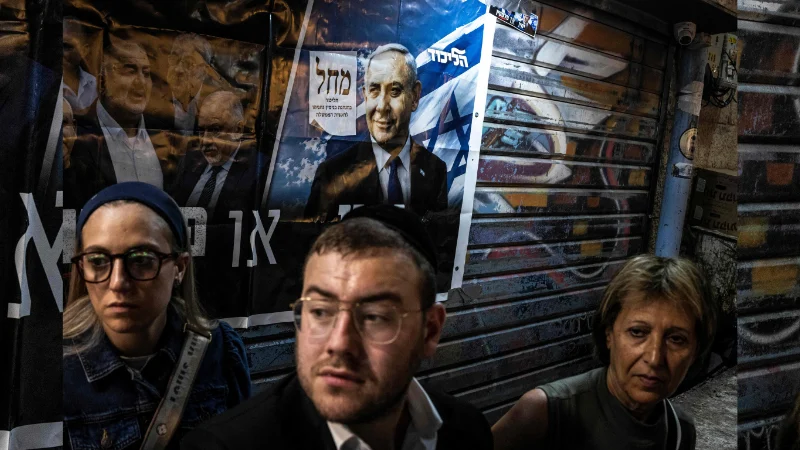

Israeli Prime Minister Benjamin Netanyahu’s political future will be decided by voters in the October 27 election. But the outcome could have implications far beyond a change of government, potentially shaping the future of the Gaza war, Israeli settlement expansion in the occupied West Bank and Palestinian aspirations for an independent state.
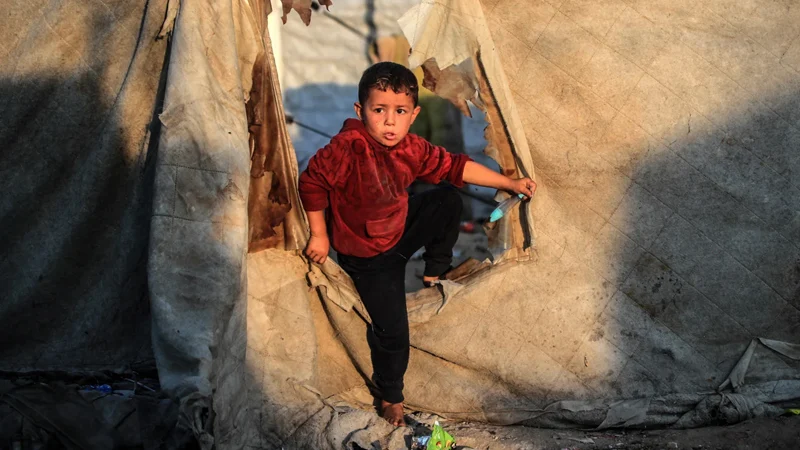
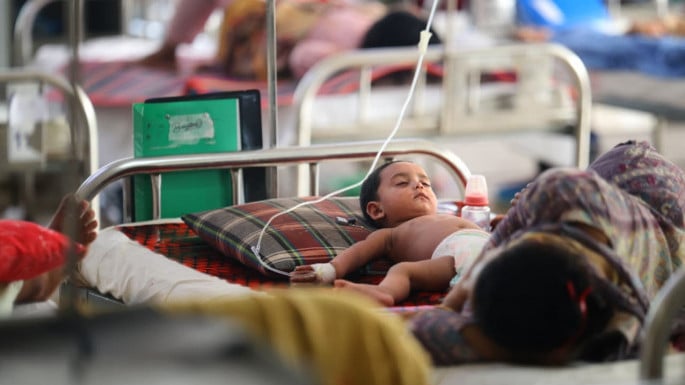
Israel launched its military campaign in Gaza following the Hamas-led attack on October 7, 2023. Since then, more than 74,000 Palestinians have been killed in the enclave, according to the figures cited in the report. Widespread destruction, displacement and food shortages have devastated civilian life. Tensions have also recently escalated in the occupied West Bank.
Against this backdrop, a central question is emerging: would Palestinians see any meaningful change if Netanyahu loses power? And could a new Israeli government create greater opportunities for a two-state solution?
Public opinion polls and the potential influence of Arab and Palestinian-descended political parties in government formation have brought these questions into sharper focus.
Why Is Netanyahu Facing the Prospect of Defeat?
Netanyahu has built much of his political identity around a hard-line approach to Israel’s adversaries, the expansion of Jewish settlements in the West Bank and opposition to Palestinian statehood. These policies helped him cultivate his image as “Mr Security.”
That reputation suffered a major blow after the October 7 attack, when Israel’s security establishment failed to prevent Hamas from carrying out the assault.
Since then, relatives of those killed or taken hostage, along with opposition politicians, have demanded an independent commission to investigate the security failures.
On Saturday, thousands of people gathered in Tel Aviv to renew calls for accountability. According to Agence France-Presse (AFP), the demonstration was organised by the October Council, with leaders of four major opposition parties attending. Among them was former military chief Gadi Eisenkot, who is competing closely with Netanyahu in public support.
Israeli newspaper Haaretz reported in September that the United Arab Emirates had warned Netanyahu about the possibility of an attack approximately a week before October 7. The report, published on September 8, alleged that the prime minister did not pass the information on to security chiefs.
The revelations added to the pressure on Netanyahu ahead of the election. Reuters reported last week that the security failures surrounding October 7 had affected his public standing.
A Sunday opinion poll published by Haaretz projected that the Change Bloc, led by Eisenkot, could win 56 seats in the 120-member Knesset, compared with 50 seats for Netanyahu’s coalition. A majority requires at least 61 seats.
However, dissatisfaction with Netanyahu does not necessarily mean that Israeli voters support ending the Gaza war or establishing a Palestinian state. Economic concerns, regional security, settlement expansion in the West Bank and compulsory military service for ultra-Orthodox Jews have also emerged as important electoral issues, according to Middle East Eye.
Would Netanyahu’s Rivals Offer Palestinians Hope?
To assess the prospects for change, it is necessary to examine the opposition bloc’s policies and commitments.
The Change Bloc, also known as the Eisenkot Bloc, is led by Gadi Eisenkot, a former chief of staff of the Israel Defense Forces. Its constituent parties include Yashar, founded by Eisenkot; Together, associated with former prime ministers Naftali Bennett and Yair Lapid; The Democrats, led by retired military chief Yair Golan; and Israel Beiteinu, led by former deputy prime minister Avigdor Lieberman.
Netanyahu and his right-wing allies have warned during the campaign that a victory for the opposition could lead to the establishment of a Palestinian state. Yet the major opposition parties have not offered clear support for a two-state solution in their political commitments.
Eisenkot has presented himself as an alternative leader with extensive military experience and a firm stance on security. In a recent podcast interview with Israeli outlet Channel 7, he said his position on the Palestinian issue remained unchanged and described establishing separate states for the two peoples as a mistaken policy.
At the same time, Eisenkot warned against incorporating the approximately 2.8 million Palestinians in the West Bank — referred to by many Israelis as Judea and Samaria — and another two million Palestinians in Gaza into Israel, arguing that such a move would be disastrous for the country.
Bennett, another prominent figure in the opposition bloc, has also opposed Palestinian statehood. In an interview with Israeli broadcaster Channel 12 in July, he said he would not allow a Palestinian state to be established, even in exchange for normalising relations with Saudi Arabia.
In a report published on October 13, Turkey’s Anadolu Agency said the Change Bloc parties broadly shared the view that a political settlement with the Palestinians was not feasible under current conditions.
These positions suggest that Netanyahu’s defeat would not automatically bring a fundamental shift in Israel’s approach to Palestinian statehood.
Could Arab Parties Become Kingmakers?
Recent campaign coverage by AFP and Reuters suggests that the Gaza war has not been a dominant issue in the candidates’ election campaigns. However, Middle Eastern outlets Al Jazeera and Middle East Eye have highlighted the potential influence of Arab and Palestinian-descended political parties in determining who becomes prime minister.
Arab citizens make up approximately 20 per cent of Israel’s population. In a report published on October 19, Al Jazeera said the Arab parties Ra’am and the Joint List could become kingmakers in the negotiations to form a government.
With neither major bloc projected to secure a parliamentary majority on its own, the parties’ decisions about potential alliances could prove decisive.
Ra’am previously played a role in removing Netanyahu from power. In 2021, the party joined a multi-party coalition led by Naftali Bennett and Yair Lapid, helping end Netanyahu’s tenure as prime minister at the time.
Before that coalition was formed, Netanyahu had also shown interest in negotiating a conditional arrangement with Ra’am leader Mansour Abbas. Abbas ultimately joined the Bennett-Lapid coalition instead.
Both Netanyahu’s camp and Eisenkot’s electoral bloc have indicated that they would not form coalitions with Arab parties. However, Yossi Mekelberg, a Middle East analyst at the London-based policy institute Chatham House, recently told Al Jazeera that Netanyahu could work with Ra’am if doing so became necessary to remain in power.
Voter turnout among Palestinian-descended citizens is therefore emerging as a significant factor in the electoral calculations.
A report published by The Conversation on October 20 highlighted the dilemma facing many Palestinian citizens of Israel. Some fear that voting could legitimise political forces they believe seek to silence their voices. Others worry that abstaining could help sustain a system that imposes various conditions on citizenship.
Palestinian Citizens’ Rights Versus Statehood
Netanyahu has repeatedly promoted the view that Israel is the nation-state of the Jewish people rather than a state defined by equal national belonging for all its citizens.
According to Anadolu Agency, Netanyahu signed orders in February revoking the citizenship of two Palestinian citizens of Israel and announced that more people could face the same process.
Ra’am has sought to address violent crime affecting Arab communities and challenge discriminatory government policies. The party won five seats in the previous election. If it and the Joint List secure representation in the next Knesset, they could gain greater leverage in negotiations over government formation.
That influence could create more opportunities to discuss the rights of Palestinian citizens of Israel and the policies affecting their communities.
However, the prospects for establishing an independent Palestinian state based on a two-state solution appear limited, given the positions expressed by the leading opposition figures as well as Netanyahu’s camp.
Even if Netanyahu loses the election, the emergence of a new government would not, by itself, guarantee a change in Israel’s policy towards the Palestinians. The extent of any shift would depend on the composition of the governing coalition, the influence of Arab parties and whether political leaders are willing to reconsider their positions on Palestinian statehood.